Against all odds – how carbon credits create opportunities
December 16, 2025
The Upper Tanna project works with around 170,000 smallholders to help them manage their land more effectively in exchange for performance-based payments. The project supports smallholders in drawing up farm-specific action plans, discussing the measures that will have the greatest impact and implementing them. Read more about Jackline's story here.
Upper Tana – from challenge to opportunity with carbon credits
The first step in implementation is usually to terrace sloping land and plant grass along the terraces. Terracing prevents erosion, keeps the soil fertile, and prevents silt from entering downstream water reservoirs. The roots of the grass further stabilize the soil, while the grass provides a high-protein source for livestock.
In the next step, native tree species are planted to increase agricultural yields, support biodiversity, and create carbon credits. Alternatively, food-bearing trees such as avocado or tree tomatoes can be grown. All seedlings are provided free of charge by the project.
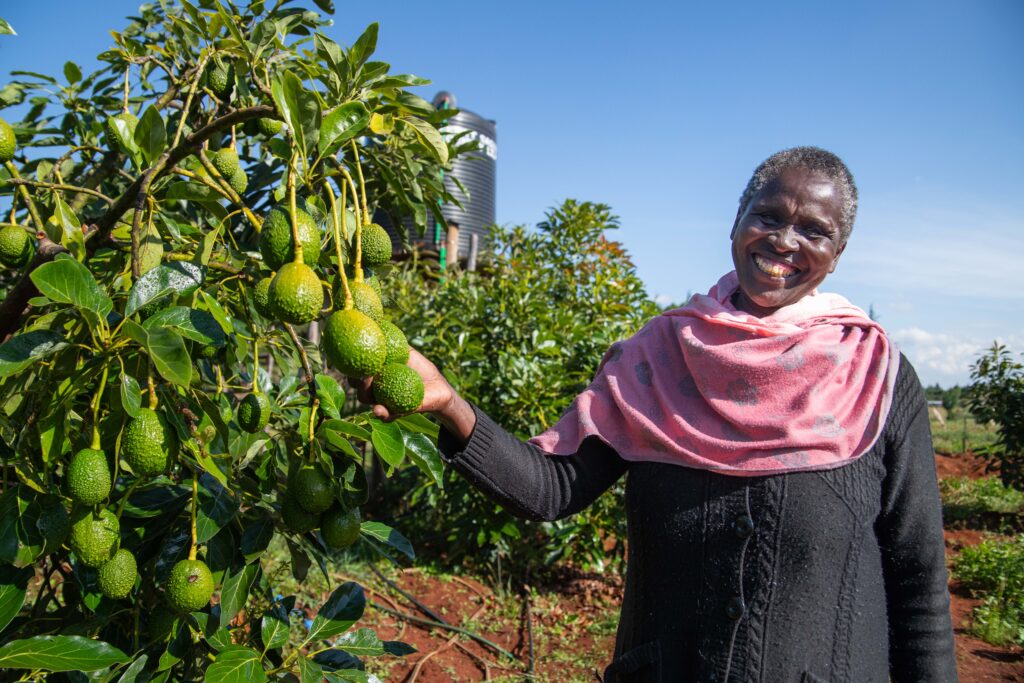
The Upper Tana project in Kenya is certified by Plan Vivo an organization focused on climate benefits, biodiversity, and social added value.
After completing some key actions on their land, participating farmers are provided with equipment to collect water. The system works by collecting rainwater in large ponds that can be used to irrigate crops during dry periods and as a space for keeping fish. Access to water all year round contributes to security in future plantings, as smallholders become less dependent on rainy seasons for their income or food security.
Jackline's story – how Plan Vivo carbon credits are driving local change
In the semi-arid areas of Laikipia County outside Nairobi, where the soil is often dry and dusty under the harsh sun, farming has always been a gamble. Rain is not guaranteed, and for many smallholders, harvests are unpredictable.
For many years, this was Jackline's reality. A mother doing her best to provide for her children in a country where the soil seemed to resist every seed she planted. Her crops sprouted, but soon withered. Putting together a nutritious meal for her family was a constant struggle.
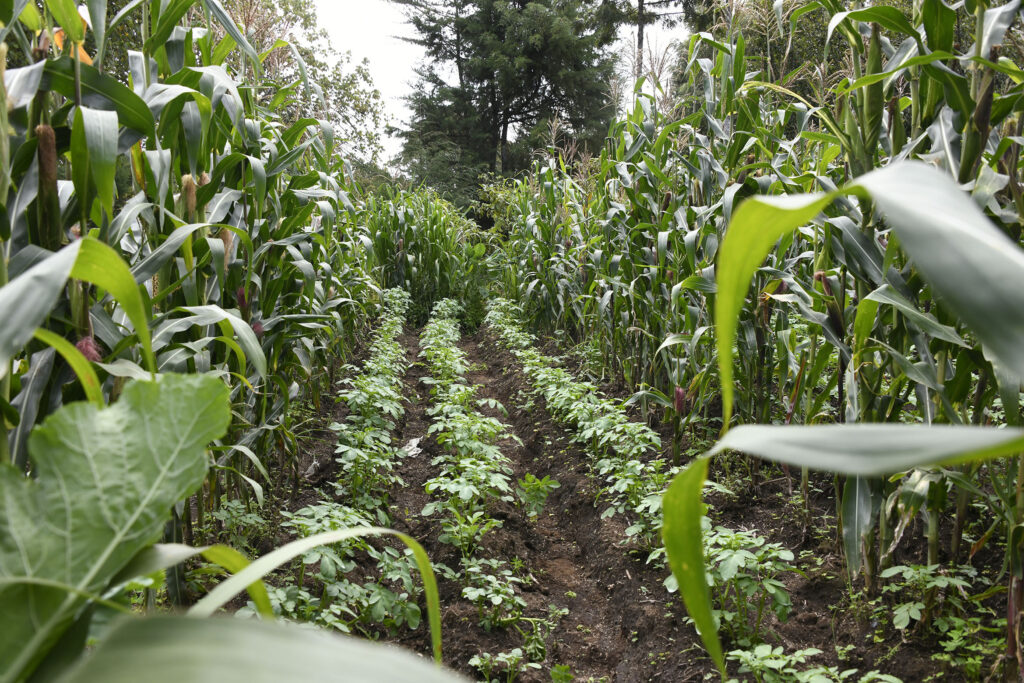
“Food wasn’t just scarce, it was expensive. Fruit was a luxury we could hardly afford.” – Jackline
Her health deteriorated. The stress of trying to make ends meet took its toll on her, and her weight dropped to just 27 kilograms—a clear picture of the difficulties she was going through.
But then something changed. In 2017, Jackline received a 100,000-liter water reservoir from the Upper Tana Nairobi Water Fund (UTNWF) project. This single intervention opened the door to entirely new opportunities for her farm. For the first time ever, Jackline had a sustainable and reliable source of water.
Along with the water reservoir came support from UTNWF: 20 grevillea trees, brachiaria grass, and tree alfalfa (local varieties in Kenya), which she planted around her farm. The trees created natural windbreaks, and the grass helped stabilize the soil, retain moisture, and provide fodder for her livestock.
Plan Vivo-certified carbon credits are making a difference
But perhaps the most touching part of Jackline's story was the deeply personal reason for what came next. Her children had always loved fruit, but in Laikipia it was expensive and hard to come by. Empowered by her newfound confidence in water security, Jackline began planting fruit trees—not just one or two, but a whole variety, row after row.
Today, her farm is a tapestry of color and life. Fifteen Washington orange trees, Wambugu apples, bananas, passion fruit, pepino melons, strawberries, and gooseberries are grown with love and watered with care.
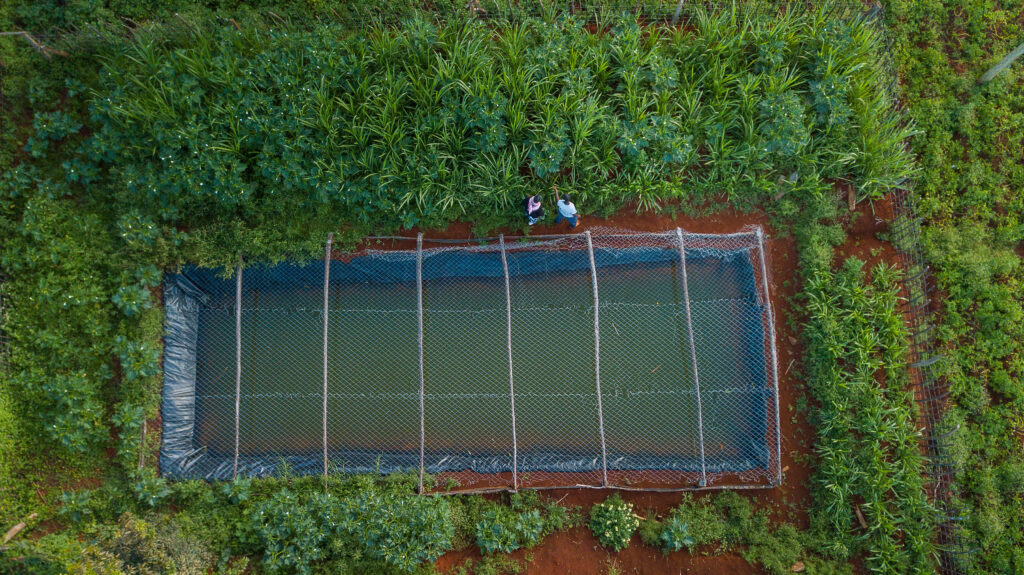
Water reservoirs provide security for smallholder farmers in rural Kenya outside Nairobi.
Jackline eventually saw not only an opportunity to feed her family, but also to earn a living. Today, she sells her strawberries and gooseberries to nearby schools, thereby increasing her income.
Her kitchen garden, once sparse and seasonal, is now green all year round. She grows kale, beans, and even herbs such as ginger, lemongrass, and rosemary. Today, Jackline even has a drip irrigation system connected to the water reservoir that she uses to water her crops and trees.
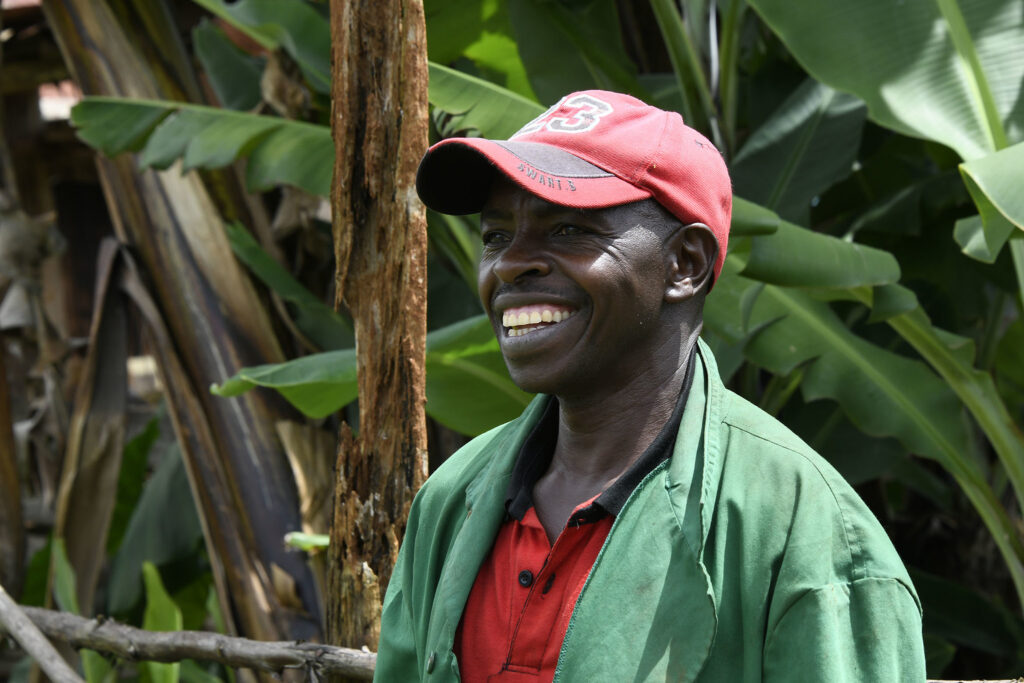
The Upper Tana project not only generates climate benefits but also many socioeconomic benefits. Among other things, it creates many local jobs.
Jackline's farm, once characterized by stunted and shriveled crops, now thrives with strong and vigorous plants—thanks to the Upper Tana project and a single water reservoir.
From scarcity to abundance, Jackline has become a voice for change in her community, educating other farmers on best practices for farming in dry areas. Together, they are transforming their landscape, one step at a time.
Contact us to learn more about the project.