Twelve years with the voluntary carbon market
October 23, 2023
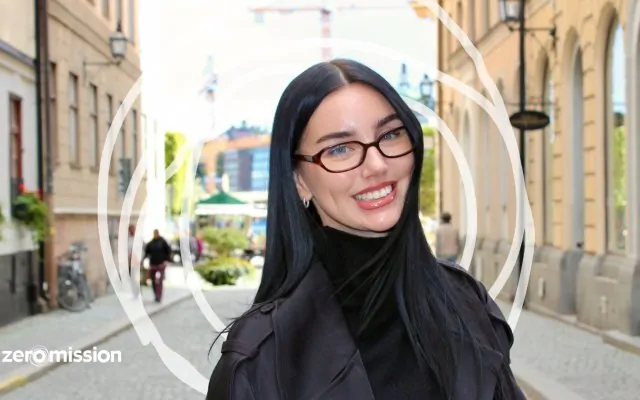
After more than a decade in a changing industry, what is happening? What are the biggest differences now compared to the past? Having worked in the industry for 12 years, ZeroMission's climate strategist Jenny Blomberg has all the answers.

Jenny Blomberg
Du har ju arbetat inom den frivilliga marknaden för klimatkompensation i över tio år. Vad skulle du säga är den största skillnaden nu mot hur det var inom vår marknad tidigare?
Today, there is a much greater demand for carbon credits from business that did not exist before. In the past, we had to start every meeting by explaining climate change, why it was important for companies to have a climate strategy and how it could help them do better business. Back then, nature-based climate solutions, i.e. forestry projects, were also a bit fuzzy and we had to work hard to describe the professional and scientific basis for them. And other core values that these projects provide.
In your opinion, have developments been generally positive or negative?
It has mostly been positive because we, together with a couple of industry colleagues and several good customers, have established an important product on the Swedish market. Demand has increased steadily, as has the price. Something that is important for the projects locally and the climate globally. We know today that the market for these projects needs to grow in order to bind carbon dioxide that has already been emitted, and to achieve the social and environmental global goals.
Are there any developments you would have liked to have seen but have not yet happened in the voluntary carbon offset market?
Yes, two things: carbon offsetting as a hygiene factor and more knowledge about the core values that climate projects create locally.
ZeroMission had a dream over a decade ago that it would become a hygiene factor for companies to take responsibility for all emissions that actually occur. Yet we still hear that companies intend to first reduce their emissions and later, perhaps far in the future, buy climate credits. We need to work on a broader level to achieve our climate and environmental goals. It is not either/or, but both/and if you want to adopt a comprehensive approach.
It has also been difficult to get the public and consumers to see the local benefits created in the carbon offset projects financed by Swedish companies. Often all the attention is on how companies communicate about the credits or tons they buy. The media usually focuses on what is challenging for the projects and turns it into general truths for an entire industry. Any positive developments rarely come to light because the agenda of revealing negative things seems to be more appealing.
What are your key messages for companies that want to set up an effective climate action plan? Which elements are most important to include, and why?
A comprehensive climate strategy requires companies to make climate assessments, set out a plan for emission reductions and take responsibility for unavoidable emissions by purchasing certified and traceable emission reductions. It is important to have a short-term and a long-term plan. In the short term, reducing emissions is easy and doesn't cost much. This is where carbon credits come in as the only way to take responsibility. In the long term, companies need to budget for investments that transform production or operations. When it comes to finding projects to buy credits from, in addition to climate benefits, it is also important to look at the broader picture of whether a project builds strong local economies that can withstand changes in climate, politics, social demographics and global markets.
Ten+ years is a long time in business. Can you highlight any funny moments?
There are many, but in 2014 we celebrated a milestone: having issued 1 million certificates in our projects, equivalent to 1 million tons of CO2e. In 2018, it was time for 2 million tons, in 2021 3 million tons and in 2022 5 million tons. This is real climate benefit because offsetting puts a price on emissions and drives change within companies. It also helps the people we work with locally in the projects to earn an additional income. We who work at ZeroMission have different driving forces and my main one is climate justice. The fact that we have built a market where Swedish companies can buy carbon sequestration from, for example, shepherds in Mongolia or small farmers in Uganda feels meaningful.
Note: For a long time, saying that a company “offsets” its emissions was a popular phrase in corporate sustainability communications. Since 2024, ZeroMission—like other players in our industry—has instead started referring to this practice as carbon offsetting a term we feel better describes what it’s actually about. Read more here.