Over the years, we have received feedback from journalists and researchers investigating carbon offsetting. They have looked at standards, different activities and countries.
It is very important. At the end of May, Propublica published a report on why carbon offsetting CAN be worse than nothing. Among other things, it shows the difficulties of establishing projects in Brazil. We at ZeroMission have so far not managed to get any sustainable project there in 13 years. In addition, a report from 2016 shows that 85% of CDM projects have a low probability of creating real effects. There are also many problems with REDD+, the conservation of forests. A mechanism that has both succeeded and failed.
But is it possible to generalize?
What we do know is that knowledge is key to achieving sustainable carbon offsetting. For example, we at ZeroMission visit our projects regularly. Sometimes we are asked about the emissions that occur when we fly to the projects, but we know that it is worth traveling from a knowledge perspective and in terms of relationships with our partners. It is also worth it from a climate perspective. We have calculated that we have emitted around 200 tons of Co2e from our flights over the years and we have sold over 2,000,000 tons of Co2e thanks to our knowledge and conviction. That's a return on investment of several thousand. It is worth it.
So how do we keep track?
There are several sources of knowledge. From journalists, researchers and industry. One example is The REDD monitor , which focuses on examining REDD+ projects. These are projects that conserve forests. Here you can read about general criticism and specific projects. A general criticism of REDD+ projects is that the communities that have ownership of their forests do not get to share in the money that comes from the sale of carbon offsets. So what are we learning here? We need to follow the money. Although the carbon offset market may seem like a jungle, it is actually built on a high level of transparency. All methodologies, all project documents and verification reports are fully accessible. Therefore, it is entirely possible, for example, to follow the money and to see if a project is issuing new credits this year or if they are only offering credits several years old. Also ask for feedback from the projects. What have they used the money for?
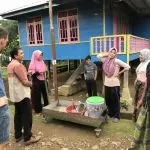
My colleague Filip and I visited two of our REDD+ projects in Indonesia last summer. A smaller one, Durian Rambun and a slightly larger one, Bujang Raba. Below is an example of the real impact in Durian Rambun. With part of the income from carbon offsetsPlan Vivo credits), the women's cooperative purchased a coffee grinder and coffee roaster. This way, they can now package and sell their finished coffee.
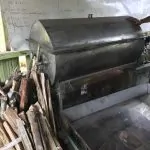
The investment thus generates income for the future. This is an example of how social sustainability is addressed when you carbon offset. Is it fair?