REDD+ Nakau Drawa Fiji - Plan Vivo
The REDD+ Nakau Drawa project aims to reduce the vulnerability of local communities by conserving and restoring forests, while creating sustainable livelihoods for local people.
Background information
The Pacific islands are highly vulnerable to climate change, and their populations are severely affected by floods, soil erosion and saltwater intrusion. These islands are often only a few meters above sea level and are at risk of disappearing if sea levels continue to rise. At the same time, local communities are exposed to extreme weather events such as severe droughts, cyclones and hurricanes.
About the Project
The area where the project operates is threatened by deforestation. Forests are often cleared to make way for pastures or plantations, with serious consequences. Deforestation causes, among other things, increased soil erosion, reduced biodiversity and faster run-off of rainwater, which dries out the soil and makes it less fertile. Protecting forests reduces these negative impacts while preserving their carbon sequestration capacity.
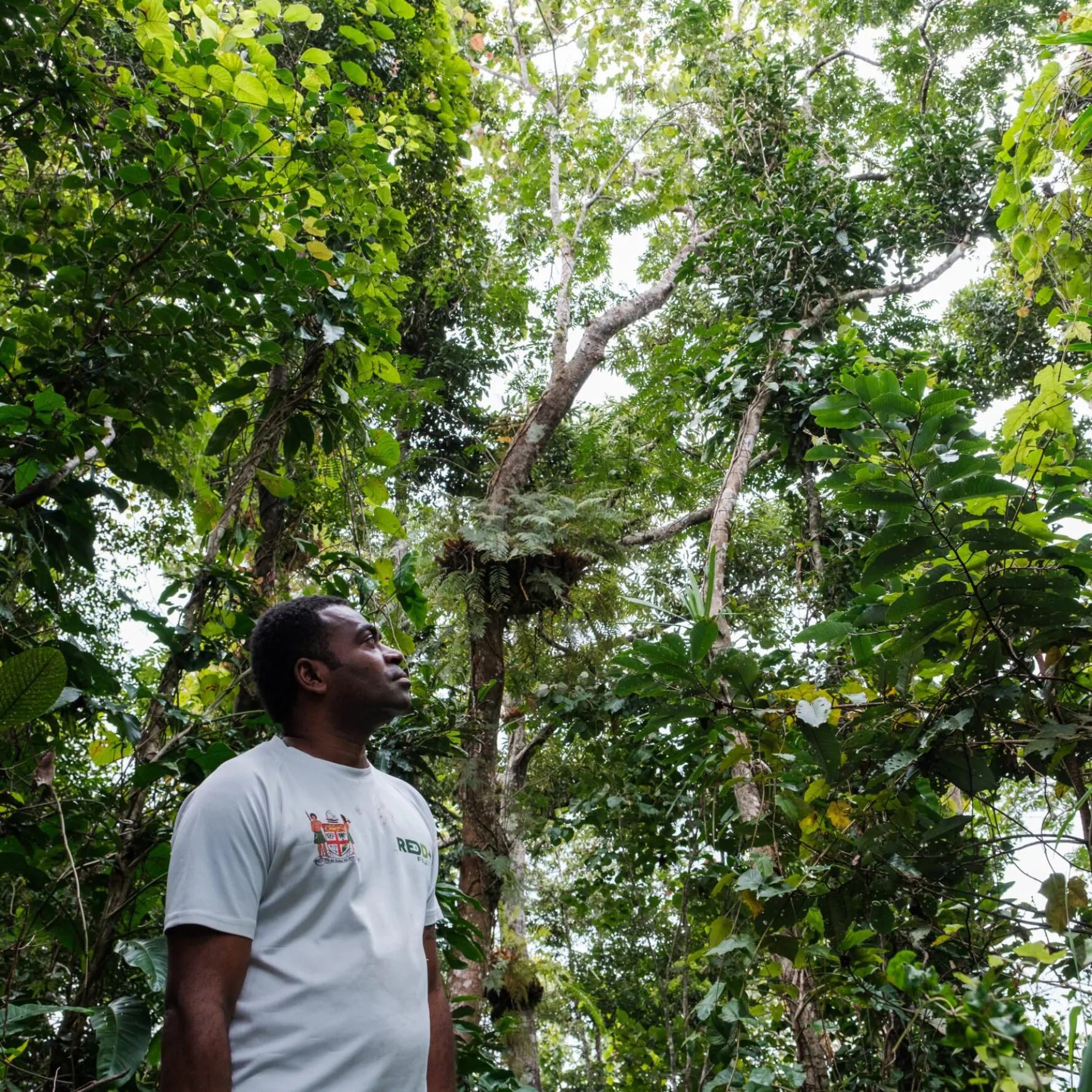
Jeremy Lotawa, Head Forest Ranger, Drawa Village. Photo by Rob Rickman
The REDD+ Nakau Drawa project started in 2012 when eight matagali - Fijian clans - came together to form the Drawa Block Forest Communities Cooperative. The project is part of the Nakau program, which operates on several islands in Oceania with a focus on sustainable forestry and climate action. Today, the project protects over 4,000 hectares of forest and has received several international awards, including the Pacific Community Award and the Secretariat of the Pacific Regional Environment Program Award 2015, as well as the International Energy Globe Award for Fiji 2020.
Unique feature
The REDD+ award demonstrates the climate benefits and social sustainability of the project. In addition to the important climate work, the project also generates direct economic benefits. Revenue from the sale of carbon credits enables local people to develop alternative incomes. A concrete example is beekeeping, which is run by villagers and provides a sustainable addition to the economy. As in all Plan Vivo, 60% of the revenue goes directly to the project participants.
The project contributes to the following objectives