Takeaway Almedalen - sustainability, collaboration and the need for rules
June 28, 2025
Almedalen Week 2025 was characterized by discussions on sustainability, collaboration and transition - but also by a palpable frustration. Many actors, from business to the public sector, are ready to drive change. Yet too little is happening. The big obstacle? A political direction that is perceived as wobbly and unpredictable. Read this year's takeaway Almedalen.
In our takeaway Almedalen 2025, we present a picture of a business community that is both willing and able to drive the transition. But without clear rules from politicians, it will be difficult to scale up the work. At the same time, there is no resignation - rather a desperate optimism, where courage and collaboration are pointed out as the way forward. We must dare to show leadership in an uncertain world - sustainability and profitability can be reconciled, but it requires clarity, responsibility and drive!
Cooperation between politics and business - who takes the lead?
A recurring theme in this year's Almedalen was the need for interaction between business and politics. Many panels discussed who should finance the transition and how companies in the same industry can work together to accelerate development. At the same time, there was a clear call: when politics hesitates, the business community must dare to take a clearer stand and push forward!
Several voices expressed the view that it is better to have a bad framework that stays in place than a good one that is repeatedly torn up or paused. Examples such as CSRD, the reduction obligation and subsidies for electric cars were mentioned as policy decisions where uncertainty paralyzes investments.
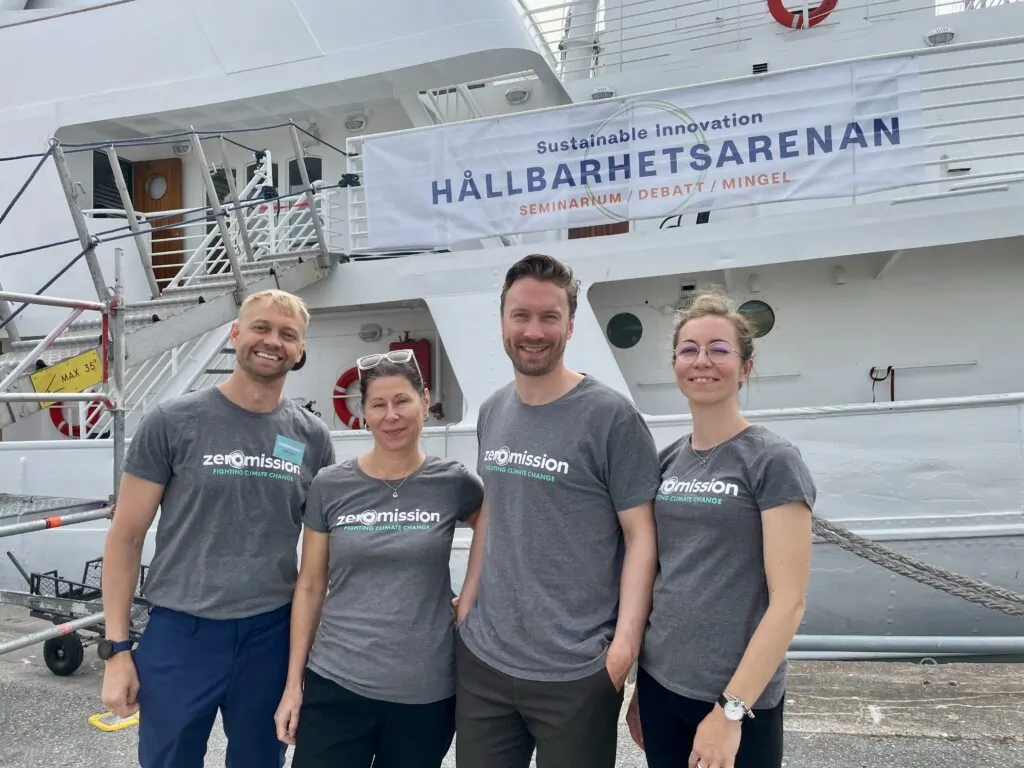
Part of team ZeroMission outside Sustainable Innovations Sustainability Arena at Teaterskeppet.
Sustainability work is increasingly done behind the scenes
A worrying trend is that many companies have chosen to tone down their sustainability communication. This work is often done internally, but the reduced transparency risks slowing down progress. Visibility, accountability and transparency are crucial to driving the transition forward. The message from many quarters: courage is needed - especially now.
Lack of carbon capture in Almedalen
Carbon capture is a necessary piece of the climate change puzzle, according to research. Yet the topic received very little attention during the week. There is a lack of political vision and concrete answers on how carbon capture should be financed, quality assured and integrated into the market system.
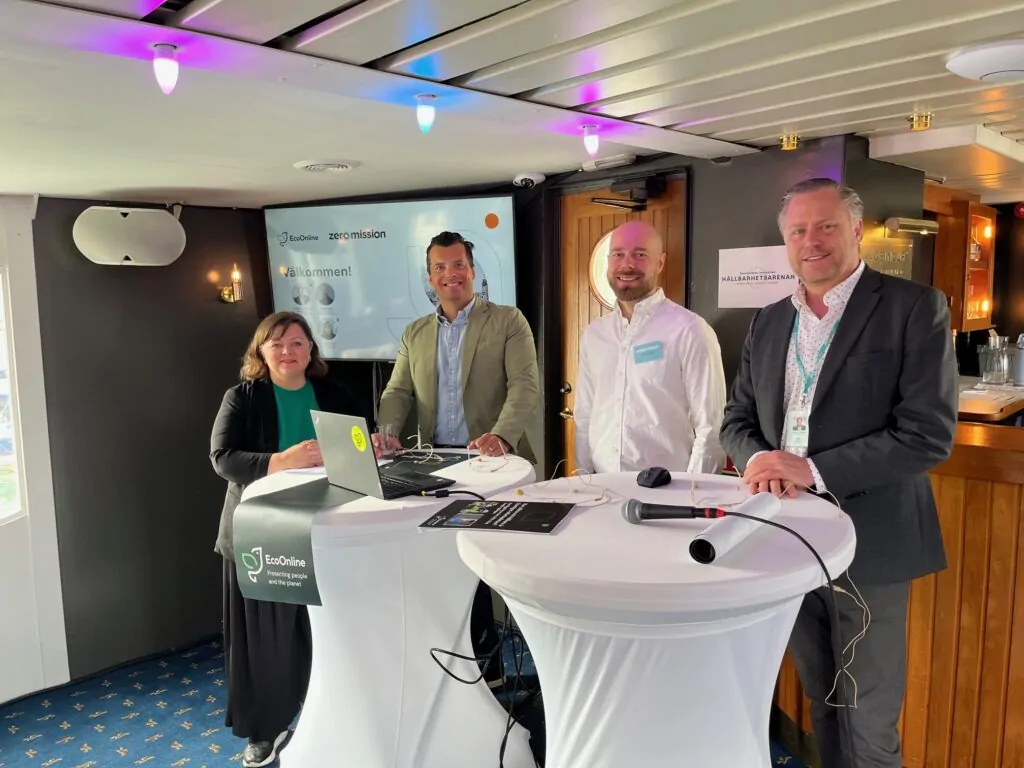
We held a well-attended seminar on energy and CSRD together with EcoOnline and Stenvalvet.
Transport sector united on electrification - but takeaway is that behavioral changes are required
The transport sector was unusually consistent: electrification is the future, while biofuels are seen as a transitional option. But for electrification to succeed, a rapid expansion of infrastructure is needed.
At the same time, several stakeholders warn that the focus on electric cars must not be at the expense of public transport, walking and cycling. It's not just the technology that needs to change - behaviors and incentives need to be steered in the right direction.
Energy sector on hold - a moment 22 in Almedalen
Despite the constant talk about the green transition, the energy sector is effectively at a standstill. Many point to the fact that actors are waiting for each other, in the absence of clear signals from policy. The result is a lack of investment and a loss of momentum in the development of future energy systems.
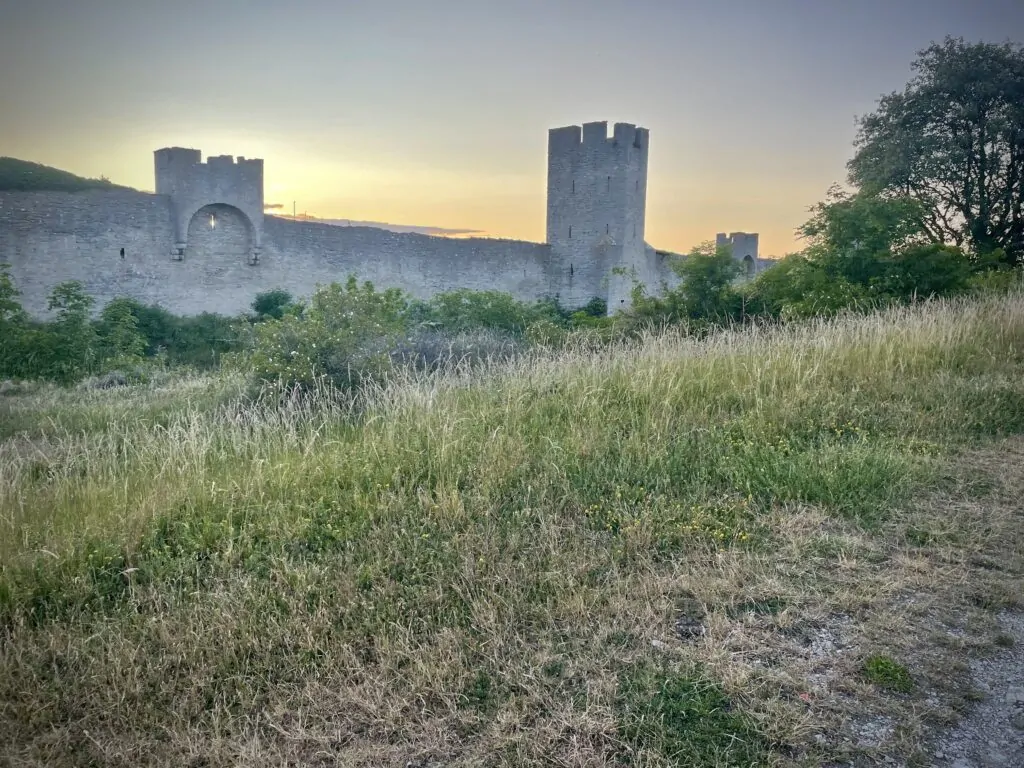
As usual, Almedalen contributed to many interesting meetings, mingling, dinners and valuable insights.
Preparedness and resilience - this year's hottest topic in Almedalen
A clear trend shift is that preparedness and resilience are now seen as key elements of sustainability - especially in the shadow of an increasingly uncertain geopolitical situation. With political decisions to earmark 5% of GDP for preparedness, it is becoming clear that this money should not only be spent on defense - but also on strengthening companies' ability to adapt and withstand climate impacts. This is where climate impact analysis and double materiality play an important role.
Read more about our partner here EcoOnline with whom we organized our seminar.