Warning: Trying to access array offset on false in zeromission.php online 5
We comment on Aftonbladet's article
June 19, 2024
Aftonbladet has published a report describing a project through which we at ZeroMission mediate carbon credits. We take the report very seriously and present our view of it here. The text is updated continuously.
This is a collection article for our comments regarding Aftonbladet's article. The newest at the top.
June 16, 2026
FINAL REPORT – ARTICLES ON THE TREES FOR GLOBAL BENEFITS PROJECT
Between May 4 and June 30, 2024, Aftonbladet published several articles and videos examining the Trees for Global Benefits tree-planting project in Uganda. The focus was on MAX Burgers, which had been purchasing credits from the project for many years. This report summarizes the entire sequence of events and the investigations conducted following the publication; this is ZeroMission’s final report on the matter.
SUMMARY
Aftonbladet published its first, highly critical article—which included video clips—on Saturday, May 4, 2024. Prior to publication, ZeroMission was contacted ZeroMission comment on a number of sweeping statements regarding an article they had written. We responded in writing to the newspaper’s claims in an email.
ZeroMission the reports very seriously, and during the first week of June, CEO Henrik Juhlin and Maria , Head of Sales and Carbon Offsetting, traveled to Uganda to conduct their own investigation and in-depth interviews with the participants. They were assisted by independent external researchers from Sweden and Uganda, as well as an interpreter.
In their interviews and testimonies, they found that the allegations in the articles were inaccurate and misleading. However, the criticism regarding late payments and the desire for the project to provide participants with more information was confirmed; at the same time, these concerns were consistent with feedback that ZeroMission was already aware of ZeroMission annual reports and regular third-party audits.
MAX also commissioned an independent audit through the accounting firm EY, which was conducted on-site in Uganda in June 2024. ZeroMission also ZeroMission in terms of processes, payments, and other matters as part of this third-party audit.
Local authorities in Uganda also conducted their own investigation in response to international reports of criminal activity and corruption. They have produced a report that is essentially consistent with what ZeroMission and heard on the ground, and describe Aftonbladet’s investigation as factually incorrect and a targeted attack on the project and its environmental and gender equality efforts.
Following the Aftonbladet article, another third-party review of the project was conducted by the company Aster Global on behalf of ECOTRUST, the organization behind the Trees for Global Benefits project. This review of the project is part of a routine monitoring process that Plan Vivo all certified climate projects to undergo every three or five years. At the time of writing, this review is not yet complete and no report is available.
Based on other reviews and reports, as well as statements from external researchers, ZeroMission has ZeroMission that Aftonbladet’s articles are, in all material respects, inaccurate. The articles have, on questionable grounds, discredited both the Trees for Global Benefits project and MAX Burgers and ZeroMission companies.
ZeroMission has ZeroMission the areas for improvement identified during our visit and by the external auditor as part of the project, and has ensured that a plan is in place with specific actions and improvements.
Contact the project developer ECOTRUST
ZeroMission generally ZeroMission close contact with the projects we collaborate with, and TGB is no exception. In fact, TGB is one of our most extensive project collaborations, and ZeroMission the site numerous times over the years.
In our ongoing communication with all the projects we work with, we discuss everything from the purchase of credits to challenges, opportunities, and general progress. In addition to meetings and site visits, we review and follow up on the annual reports that all certified projects are required to publish each year in accordance with the Plan Vivo standard.
All in all, this gives us a very good insight into the projects. Following the Aftonbladet articles, our communication intensified further, and we had numerous interactions during which we asked a wide range of questions and received just as many clear answers.
Collaborative relationships with Plan Vivo other stakeholders
We also reached out to Plan Vivo early Plan Vivo hear their perspective on the project and Plan Vivo find out how they could assist us with our assessment. Other stakeholders we have been in contact with include various major buyers of credits in the TGB. We exchanged information with them and sought their input on how they perceived the project and ECOTRUST during their time as buyers.
ZEROMISSIONS' OWN TRIP TO UGANDA
To clarify the allegations reported in Aftonbladet, we conducted our own visit to the project in Uganda from June 1 to 9, 2024. Considering the time required for preparations, planning, vaccinations, visas, and other arrangements, this can be considered a swift response, which demonstrates how seriously we took the situation and the criticism directed at the project.
Purpose of the trip:
- Ensure that no farmer has been forced to take their children out of school or marry them off as a result of the project.
- Determine whether there was a risk of food shortages or a lack of access to crops, as well as whether there were challenges or competition from other land uses.
- Understand whether, and if so why, farmers cut down their trees, as well as whether and why they might have planted trees across their entire land.
- Ensure that payments to farmers had been made in accordance with the agreements.
- Form your own opinion of the criticisms and challenges that have been raised.
- Understand how we—ECOTRUST, Plan Vivo other external auditors—failed to identify these serious issues if the allegations turned out to be true.
Implementation
- Independent visit and review by ECOTRUST in the Hoima and Kikuube areas.
- The goal was to meet as many of the farmers profiled in the Aftonbladet articles as possible.
- External expertise – We were joined by three researchers: two from Makerere University in Uganda and one from the Swedish University of Agricultural Sciences (SLU). All interviews with smallholder farmers in Uganda were conducted by Klara Fischer from SLU or Patrick Byangaba from Makerere University. These three researchers were completely independent of us and were not funded by ZeroMission by research grants from their respective institutions. The conclusions we present here are ZeroMission’s and not those of the researchers.
Participants
Henrik Juhlin – ZeroMission
Maria – ZeroMission
Klara Fischer – Associate Professor of Urban Development at SLU (independent)
Patrick Byangaba – Professor of Ecology at Makerere University (independent)
David Tumusiime – Professor of Forestry at Makerere University (independent)
Marvin Mugarra – Local guide/interpreter (independent)
Raymond – driver/guide (independent)
Brief summary of what we found on site
There are a number of serious inaccuracies in the articles’ descriptions of small-scale farmers. The most important findings we uncovered on the ground—and which we wish to share—are:
– The people involved in the project aren’t going hungry because they’ve planted trees
– No underage girls have been forced into marriage due to poverty resulting from their families planting trees
– The children of participating farmers have not been taken out of school because they planted trees
– The project and ECOTRUST as an organization are very popular among farmers in the area
– It wasn’t a small-scale farmer who cut down all his trees
– The project is not corrupt; payments have been made to farmers in accordance with the agreement
Furthermore, it turns out thattwo of the nine people profiled in the Aftonbladet articlesare not participating in the project.
The above are our responses to the claims made in the Aftonbladet articles that we consider most important to address. In addition, we have also received many responses regarding point 5 above.
Overview – these are the people we met on site
The Aftonbladet article featured interviews with nine farmers. We were able to meet with all of them. In addition to these, we also interviewed three other participants in the project. We also organized a group meeting in the form of a workshop with about 20 participants.
In addition to the above farmers, we also met representatives from the National Agricultural Research Organisation (NARO), National Resource in Kikuube, and representatives from ECOTRUST's local office in Hoima and headquarters in Kampala.
We have made a thorough list of each person – how they have been portrayed in Aftonbladet, what we ourselves found on site, and what ECOTRUST has information about regarding land area and payments. We have recorded each interview and have extensive photographic material.
Reflections from ZeroMission
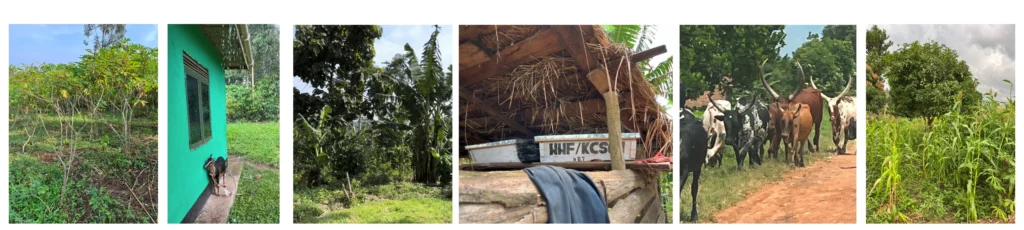
What we saw when we visited the lands of the nine different smallholder families was a wide variety of food in the form of crops, fruit trees, and livestock. Several have lawns, satellite dishes, and solar panels on their roofs. The families have enough food to get by, and all the children in the families we met attend school—the majority of them attend or have attended private school.
Our view of how farmers live is thus clearly different from the one portrayed by Aftonbladet. We are relieved to see that the people involved in the project are doing well, that the children are attending school, and that no one has married off their underage daughters simply because they planted trees on their land. We feel reassured that the monitoring systems we have in place for our projects are working.
EXTERNAL REPORTS AND OTHER REVIEWS
In addition to our own visit to the project site in June 2024, there are three external reports and reviews:
- Report from the local authorities in Hoima, Uganda
- Independent audit by EY on behalf of MAX Burgers
- Third-party audit of Aster Global, the audit conducted every five years in accordance with Plan Vivo
- TGB’s 2023 Annual Report in accordance with Plan Vivo
1 – Report from the local authorities in Hoima, Uganda
Local authorities in Uganda launched their own investigation after articles in Aftonbladet described irregularities and corruption. The report was released in August 2024 and is consistent with what we ourselves observed and concluded during our visit in June. It also aligns with the picture we have of the project after working with it for over 15 years—namely, that the project and the trees being planted benefit farmers in multiple ways, and that the benefits extend far beyond the direct income it generates. While the project certainly has some areas for administrative improvement, it contributes overall to creating conditions for greater resilience, more diversified farms, a better microclimate, cleaner water, and more.
Some conclusions from the report:
"The accusations in the article were completely unfounded. All the farmers interviewed had a good balance between crop cultivation and tree planting, with a diversity of both food and cash crops... There is nothing about these farmers, their homes and the landscape in general that should justify the claim in the newspaper article".
“We therefore recommend that the district security committees in Hoima and Kikuube consider conducting a thorough investigation into what appears to be a deliberate attack on smallholders’ access to the charcoal credit market.”
Link to the report of the Kikuube District Local Government:
Inter-District Monitoring Report - ECOTRUST
Link to ZeroMission’s own brief summary of the report, translated into Swedish:
Summary and translation-20241003
2 – Independent report by EY commissioned by MAX Burgers
In June and July 2024, EY conducted an audit of ZeroMission ECOTRUST, ZeroMission the Trees For Global Benefits project. The purpose of the audit was to confirm or refute Aftonbladet’s claims that the TGB project had caused famine, increased poverty, child marriages, and non-payment of farmers in Uganda.
Overall conclusion
Based on the measures implemented, EY has not identified any evidence suggesting that Aftonbladet’s main claims—such as starvation and increased poverty—are occurring as a result of the project.
Conclusions broken down by statement
EY considers these claims to be completely unfounded:
- Systematic criminal activity, corruption, or the double-selling of carbon credits
- The fact that the trees are no longer there (carbon dioxide not sequestered)
- That the project threatens the participants' food security
- That children would have been taken out of school or forced into marriage as a direct result of the project
EY can partially confirm these two shortcomings in the project:
- Plan Vivo has not been fully complied with —according to the standard, 60% of the revenue from the sale of certificates should be paid out to participants, but EY found that an average of 56% was paid out. The difference can be partly explained by exchange rate fluctuations. There is also a lack of documentation regarding tree identification and planting methods.
- Payments have not always been made in accordance with the contracts —of the transactions reviewed, 11% were not paid in accordance with the contracts, with discrepancies in amount, timing, and documentation.
The participants' own experiences of the project
Participants were asked to rate various aspects of the project on a scale of 1 to 10. Both food security and financial security were reported to have improved as a result of the project. The question that received the highest rating was “How strongly would you recommend that MAX continue to invest in the ECOTRUST project?”, which received a rating of 8.8.
Recommendations from EY
Improve documentation of trees and land boundaries, ensure that payments are made on time and in accordance with the contract, and improve communication and training for participants. EY also recommends that ZeroMission ECOTRUST in managing the growing number of project participants.
Conclusion
EY finds no evidence to support Aftonbladet’s most serious allegations, but identifies shortcomings in administrative and payment procedures that need to be addressed.
3 – Actions taken since the audit was published
In the two years since EY conducted its audit, TGB has already addressed the shortcomings identified in the report.
Improvements that have been made
- enhanced risk and compliance function
- established reporting channel
- established a database for complaints and feedback
- appointment of a dedicated staff member to handle feedback and inquiries
- Expansion of skills centers in all regions
- newly established field schools for farmers
- launched Farmer Voice Radio to share knowledge
4 – Aster Global third-party audit in accordance with Plan Vivo
The audit of the TGB project has been unusually delayed due to reasons beyond the project’s control. According to Plan Vivo , these include Plan Vivo and a change in ownership at Aster Global, a change in the lead auditor for the engagement, the unavailability of the new lead auditor (due to illness), and an Ebola outbreak in the region that has restricted the domestic travel required for the site visit.
ZeroMission continues ZeroMission closely ZeroMission the process and will share the third-party verification as soon as it becomes available, which is expected to be in the fall of 2026.
5 – TGB’s 2024 Annual Report in accordance with Plan Vivo
In April 2025, TGB released its annual report for the year 2024 (which is on schedule). Publishing an annual report is a requirement under Plan Vivo’s standard for continued certification. The annual reports, which transparently present key performance indicators, successes, and setbacks, are freely available on Plan Vivo’s website.
Aftonbladet in its annual report
Aftonbladet’s series of articles is mentioned in the section on setbacks for the 2024 project. The report describes how the articles not only damaged the project’s reputation, but also traumatized individuals.
“The articles published not only caused significant damage to the reputation of the various carbon market actors, but also left the communities traumatized and distressed by the extent to which their lived experiences had been completely distorted in order to justify the subsumption theory.”
– Annual Report 2024: Trees for Global Benefits, 2.4.2 Misinformation
The report also highlights how the small-scale farmers featured in the articles filed two complaints with the Media Ombudsman regarding their portrayal by Aftonbladet. According to the complaints filed, the journalist behaved threateningly during an interview, shouted, and published photos of people without their consent. This incident has also been reported to the police.
Key figures from the annual report
- During the year, 9,976 new households applied to join the project, bringing the total number to 51,874.
- The project has expanded into a new region in northern Uganda, with support from the British government.
- A new center for knowledge and innovation, known as a “Center of Excellence,” has been established with the aim of facilitating the dissemination of knowledge about beekeeping and sustainable forestry. More such centers are planned for the future.
- A new mobile app and database have been developed to facilitate the monitoring of tree growth, regeneration, and related activities.
- An annual follow-up survey of 23,426 farmers was conducted. Of these, 87% met their set targets.
- The project is popular locally. There are still many new small-scale farmers who want to join the project.
- The project contributes to several of the UN’s Sustainable Development Goals, such as Goal 1 – No Poverty, Goal 6 – Clean Water and Sanitation, and Goal 13 – Climate Action. In 2024, TGB helped improve 10 water catchment areas, supported 30 local businesses, and created 38 full-time local jobs.
- In total, ECOTRUST has paid out $2,720,370 to farmers (Payment for Ecosystem Services). In addition to cash payments, $399,150 has been provided in the form of seedlings, and $19,721 in technical assistance, such as help with starting businesses.
EXTERNAL RESEARCH
A great deal of research has been conducted on projects aimed at rural development in East Africa. Over the past 20 years, no fewer than 11 academic papers have been written specifically about the Trees for Global Benefits project. Below is a summary of the key findings from these studies.
- Financial incentives are the main reason farmers join the TGB, but many also say they plant trees to leave a legacy for their children.
- According to research based on perceived fairness, the vast majority of farmers in the project consider it fair.
- Participants have limited leeway to negotiate the terms of the project. For example, they can decide how to plant but not the price of their carbon—and this is a necessary trade-off to keep the project standardized and scalable.
- The project excludes the poorest farmers from participating because they lack sufficient land to set aside for tree planting and cannot afford to jeopardize their food security—but this exclusion also means they miss out on the economic benefits of the project.
- Delegating monitoring responsibilities to local communities enhances legitimacy and cost-effectiveness, and digital satellite monitoring does not necessarily provide greater accuracy than on-site visits.
- Factors such as farmers’ material well-being and access to knowledge about agroforestry are just as crucial to tree growth as purely environmental factors such as water availability.
- TGB is considered a project with a high degree of additionality, but whether a project actually adds value depends on national policy and the project’s structure.
Link to the report "A Literature Review of the Trees for Global Benefits Project in Uganda"
IN CONCLUSION
The articles published by Aftonbladet in May and June 2024 have, for the most part, been false. Some claims have been outright grossly inaccurate, while others have contained a degree of truth but drawn heavily biased conclusions. We have also never been given access to the recorded and transcribed interviews conducted by Aftonbladet.
We do not know what motivated the newspaper and the reporter, but publishing inaccuracies on this scale is troubling and regrettable. This is especially true for a newspaper with the history and reach of Aftonbladet.
The two men who tipped off Aftonbladet and served as their guide and interpreter—and who were also among the farmers interviewed in their articles—have previously been featured in other international articles about abuses in the area, though in connection with different projects. The short-term impact on us as a company and on our client MAX has, of course, been significant.
In the longer term, these articles have also, on false grounds, had a negative impact on climate projects. On the one hand, there is, of course, the TGB, where there is an imminent risk that the incomes of thousands of farmers could decline; and on the other hand, the significant climate benefits—which we need most of all right now—may fail to materialize.
Local authorities in Uganda described the articles as a “targeted attack” in their report. We are inclined to agree. We, along with many others, have now shown that
- the project is running smoothly,
- that climate benefits are generated,
- that purchasing carbon credits is an important way for companies to take responsibility for their emissions, while also serving as a means of channeling funds to vulnerable people.
That is why we remain confident in offering carbon credits from Trees for Global Benefits.
Moving forward, we will continue our close collaboration and ongoing critical monitoring with TGB to ensure that corrective actions have been taken and that follow-up and demonstrable improvements have been made in the areas identified by us and by external auditors—namely, knowledge sharing and information, documentation, and consolidated payments.
We encourage external review of all the projects we work on. Unfortunately, Aftonbladet’s methods, headlines, and grossly inaccurate and misleading reporting have deeply damaged a project that contributes to climate benefits, biodiversity, social benefits, and gender equality, as the project addresses issues surrounding women’s right to own land and has a majority of women in leadership roles within the organization.
…………………………………………………………………………………………………………..
July 2, 2024
Correction – In the text below from June 19, we have now clarified that the Swedish researcher Klara Fischer and the two Ugandan researchers traveled with us completely independently and also through their own funding. We also clarify that what we write here on our website are our own conclusions, not the researchers'.
…………………………………………………………………………………………………………..
June 30, 2024
Aftonbladet has today published another article about us and about the Trees for Global Benefits project. After our site visit, we continue to feel confident in the conclusions we present here on the website. We are currently awaiting the third-party reviews that are now being carried out.
…………………………………………………………………………………………………………..
June 19, 2024
We have now carried out the previously planned visit to the Trees for Global Benefits project in Uganda to get an updated picture on site with our own eyes. The trip was carried out June 1-9.
Purpose of the trip
- Ensure that no farmer has been forced to take their children out of school or marry them off.
- Understand whether there is a shortage of food or availability of crops, and what the challenges/competition with other land uses are.
- Understand if and why farmers cut down their trees. And if and why they would have planted trees all over their land.
- Ensure that payments to farmers have been made according to the agreements.
- Get your own picture and deeper understanding of the criticisms and challenges raised in reports and also by Ecotrust itself.
- If the claims are true, we want to understand how we, Ecotrust, Plan Vivo and other external reviewers have failed to capture these serious problems.
Implementation
Independent visit and review by Ecotrust in the Hoima and Kikuube area.
Aim to meet as many of the farmers portrayed as possible.
External expertise – We had three researchers with us; two from Makarere University in Uganda and one from SLU. The majority of the interviews with the farmers have been held by either Klara Fischer from SLU or Patrick Byangaba from Makerere University. These three researchers were with us completely independently from us and have also not been financed by us, but by research funds in their respective works. The conclusions that we write here are ZeroMission's and not the researchers'.
Participants
Henrik Juhlin – ZeroMission
Maria King - ZeroMission
Klara Fischer – Lecturer in urban development at SLU
Patrick Byangaba – Professor of Ecology at Makerere University
David Tumusiime – Professor of Forestry at Makerere University
Marvin Mugarra – Local guide/interpreter
Raymond – Driver/guide
Brief summary of what we found on site
There are a number of gross inaccuracies in the descriptions of the farmers in the articles. The most important responses we found on site and want to convey are:
– people in the project are NOT starving because they planted trees
– NO underage girls have been married off due to poverty as a result of the family planting trees
– children of participating farmers have NOT been taken out of school as a result of planting trees
– the project and Ecotrust are very popular among the farmers in the area.
– NO ONE has cut down all their trees.
The above are answers to the claims in the article that we think are most important to describe. In addition, we have also received many responses regarding point 5 above.
Overview – these are the people we met on site
In Aftonbladet's article, 9 farmers were interviewed. We managed to meet all of them, and in addition to these, we also held interviews with three more people. We also organised a group meeting in workshop form with approximately 20 participants.
In addition to the above farmers, we also met representatives from the National Agricultural Research Organisation (NARO), National Resource in Kikuube, and representatives from ECOTRUST's local office in Hoima and headquarters in Kampala.
Of the nine portrayed individuals, it turns out that two are not involved in the project.
We have made a thorough list of each person – how they have been portrayed in Aftonbladet, what we ourselves found on site, and what ECOTRUST has information about regarding land area and payments. We have recorded each interview and have extensive photographic material.
Reflections from us at ZeroMission
What we have seen when visiting the nine different farming families' land is a large variety of food in the form of crops, fruit trees, livestock, etc. Several have lawns, satellite dishes and solar panels on the roof. The families have enough food and are also better off than the average in Uganda. Our picture of how the farmers live therefore differs clearly from the one Aftonbladet has painted. For us, it is a relief to see that the people in the project are doing well, that the children are going to school and that no one has married off underage daughters because they have planted trees on their land. We feel strengthened that the control systems we have for our projects are working.
This is what's happening now
We will now await the three different external reviews that are ongoing or will soon be started:
- MAX third-party review conducted by EY, where both we ourselves and ECOTRUST are reviewed (expected to be completed in July)
- The third-party audit according to the Plan Vivo standard, which is done every five years and is half completed (expected to be completed in August)
- The Ugandan government's investigation following complaints from farmers in Kikuube about being offended by Aftonbladet's descriptions of them
Once we have all these pieces in place, we will put the puzzle together and act accordingly. We have previously described that over the years we have had annual reports, our own visits, and recurring third-party audits to rely on when it comes to our confidence in the project. We have also had over 15 years to build relationships and to see and understand how the local communities work. After this visit, we remain confident in working with the project.
…………………………………………………………………………………………………………..
May 23, 2024
Aftonbladet has contacted us again to comment on further information that we assume they intend to publish. In consideration of the review that we are conducting ourselves, we have declined to comment. As part of creating our own picture of the various details in the series of articles, ZeroMission will travel to Uganda on June 1st. We are doing this together with, among others, independent researchers and an interpreter. However, we would like to reiterate that, based on all annual reports, third-party audits, and continuous communication with the project developer Ecotrust, we continue to feel confident that Trees for Global Benefits is of great benefit to over 25,000 farming families and to the climate.
…………………………………………………………………………………………………………..
May 8, 2024
In a follow-up article, Aftonbladet highlighted researchers who had previously conducted a study on the Trees for Global Benefits project. When the researchers contacted us about their study, we invited them to our office to present their findings to us and to specially invited customers. Max Burgers were the ones who attended the presentation.
Contrary to what was written in Aftonbladet's article, we at ZeroMission took a number of measures to review the problems they raised. Here it may be appropriate to point out that their research at the time could not be seen as criticism, but rather that they raised risks in the project as well as already known problems, especially regarding payments that there were explanations for.
The following actions were taken on our part:
1) After the initial meeting with the researchers to present their critique, ZeroMission met with ECOTRUST and Plan Vivo to ask follow-up questions to clarify the picture provided by the researchers.
2) We reviewed all documentation such as previous audit reports and annual reports, as well as other articles that had been written about the project and asked questions to Plan Vivo Foundation. The challenges that existed were documented and addressed and the project is constantly evolving to improve. The project / ECOTRUST had nothing to hide, it was fully transparent.
3) We were in contact with researcher Professor Mark Purdon, Université du Québec in Montréal, who had also conducted broader studies of Trees for Global Benefits since 2009. In June 2019, Mark Purdon, together with Patrick Byakagaba at Makerere University in Uganda, conducted a follow-up research study of Trees for Global Benefits to look at the project's overall effectiveness and compare this with areas outside the project. Unlike the Lund researchers who only conducted qualitative analyses, Purdon / Byakagaba's study included both qualitative and quantitative analyses. In his study, Purdon pointed out the problem of the Lund researchers unilaterally highlighting problems and completely disregarding benefits, advantages, and opportunities for participating farmers.
4) In spring 2019, the project was third-party reviewed by the independent party Environmental Service Inc. Ahead of this, we asked the Plan Vivo Foundation to expand the third-party review to look more closely at the criticisms raised by the Lund researchers, e.g. "does the project take sufficient account of farmers' needs and wishes? Do farmers feel that they have made informed choices? (e.g. on where to plant, choice of species, etc.). The results showed that the project met the Plan Vivocriteria.
Trees for Global Benefits project in constant development
As stated in what we have already said about the project, we are completely transparent about the fact that there have been challenges of various kinds, which have emerged in, for example, third-party audits. Over the years, there has been a degree of learning in the project, which has also led to development and improvements in various procedures.
…………………………………………………………………………………………………………..
May 8, 2024
We note that ZeroMission's general comments to Aftonbladet, which were originally included in their first article, have been removed. Our comments were written in response to a number of general statements that we received via email and were therefore not direct responses to the article, which we had not seen at the time. Our comments are reported below:
AB: The trees have been planted on land previously used for agriculture. After a few years, they have grown so large and the crowns have become so dense that other cultivation is not possible. This has led to problems with food supply.
This is a land use project, farmers are switching from seasonal crops, e.g. sugar cane, tobacco and maize, to integrating trees on part of their farms.
Households in this part of the country who participate in the project own on average between 5 and 10 hectares – so these are quite large areas of land. TGB records show that these farmers only plant trees on about 1 to 2 hectares of the land. This is done according to a well-developed model, with selected tree species and in a specific way adapted for each farmer's land. There are three general planting models – ‘woodlot’, ‘boundary planting’ and ‘agroforestry’. The agricultural plan differs, for example, for a farm with completely flat land and another located on hilly land.
Food insecurity in Hoima has been documented for decades, but it is due to heavy rains and drought, not because of trees planted according to Plan Vivo's agricultural plans. On the contrary, the trees planted in that way help to bind the soil and thus reduce food insecurity.
We also want to point out that these are agricultural communities in the tropical forest area, farmers know for sure what a forest plot looks like and they know which crops can be grown even under canopy cover. For example, sugar cane cannot be grown under trees but a number of other plants/crops thrive better in shade than in direct sun.
AB: Payments from Ecotrust have not followed the timetable in the contracts. In many cases, the money has not arrived at all, with no explanation given. The payments that have been made have been too small to cover the loss of food.
The contractual schedule has been followed on an annual basis. There may be delays in the disbursement of a specific payment but the schedule is followed, the delays may be a few months. This has also been found in third-party audits. The explanation may be different spelling of names, change of mobile subscription (payments are often made as mobile phone payments, a kind of Swish) etc. which makes them stuck in the administration. Ecotrust ensures that money is only paid to the right person. There are reasons to try to improve this deviation through routines, and information to project participants to minimize delays.
Plan Vivo is intended to support food security and is not expected to lead to any food loss at all for the farmer and payments are therefore never intended to cover food loss.
The goal of the payments that come in years 0, 1, 3, 5, 7 and 10 is not intended to replace existing income that the farmer has, but instead to provide an additional income in order to achieve better resilience for the households. One purpose of the project is to create a certain overall change in how farmers view their household management. In this case, it includes encouraging farmers to think more long-term by being able to supplement the short-term income from annual crops with income from trees on a much longer time horizon. Trees such as avocado provide both food and income for many years after the payments from the project cease after 10 years. Other trees are intended entirely for timber, and when they are felled, a new one should be planted.
There is food insecurity, but not famine, in this region and it is linked to a variety of factors including, for example, irregular rains and drought. Tree planting, which binds the soil, retains more moisture in the ground and provides shade that creates a better microclimate, is a solution to these kinds of problems, not the cause! The most recent third-party review included interviews with 20 randomly selected farmers, 19 of whom confirmed that their yields from the land had increased. One participant had reduced yields from his crops and this was due to overplanting of trees.
AB: In addition to famine, farmers report taking children out of school, marrying off girls, etc. as a result of the deteriorating economic situation caused by tree planting.
The project's management believes that people would never resort to such desperate measures. With the government's Universal Primary Education and Universal Secondary Education programs providing free schooling, farmers in this region are unlikely to actually trade their children for a smaller amount of food.
Marrying off girls is illegal in Uganda. These communities may be poor but are decently working communities that have been documented to have quite varied sources of income.
The project argues that it is unfortunate, and false, to paint the farmers in the project as victims.
Trees for Global Benefits is often invited to talk about the project because it has a good local reputation. The project's expansion in recent years from 2,000 farmers in 2012 to 15,000 in 2022 and now over 20,000, also demonstrates that it has a strong local presence and reputation.
AB: Farmers are now cutting down trees to grow food instead.
People in this area are not short of land. They may well cut down trees to sell and make money but have absolutely no need to cut down trees for food production or their own food supply.
In the region, there are larger commercial farms (that are not part of the project). The main driving force behind deforestation has largely been documented to be linked to this type of agriculture – mainly sugar cane and tobacco. Aftonbladet's claim may be true, but if so, it is taken out of context. A smallholder family in the area can manage their food supply on as little as 0.5 hectares. Participants in the project have at least 3-4 hectares of land for their own food supply / food production left when the trees are planted, in other words, significantly more than the minimum.
An addition here that we did not write to the reporter but which may be good to know is that in the area in question in Hoima there are several actors and several different tree planting initiatives. Some landowners who do not belong to Trees for Global Benefits only plant trees on certain plots, not any crops at all, and these are intended for e.g. timber and charcoal production. Some of these tree plantations are on small plots and on considerably larger areas. In Aftonbladet's article there are pictures showing a more large-scale tree plantation, which is grossly misleading. These should not be confused with the type of tree planting that takes place within Trees for Global Benefits.
…………………………………………………………………………………………………………..
May 5, 2024
We repeat what we have said before, namely that we take Aftonbladet's article very seriously. What emerges is not the picture we have had during many years of collaboration with the project developer ECOTRUST.
Since the report was published, we have tried to find out as many facts as possible in order to be able to act on what has emerged in the report and also to provide information in as correct a way as possible.
Our concrete actions now are to
- continue dialogue with the management of ECOTRUST, the local organization running the project in Uganda
- continue the dialogue with the management of Plan Vivo, the organization that certifies the project
- find out about the methodology of the newspaper's reporting to get an idea of how it was done
- urgently push forward and, if possible, expand the scope of the third-party audit currently being carried out under the Plan Vivo standard.
In order to get as comprehensive a picture as possible, we intend to revisit the project in Uganda as soon as possible to re-evaluate the Aftonbladet article. Independent experts and interpreters will then be part of the work. We will be completely transparent about what we find. We will then take whatever action we deem necessary with respect to the participants in the project and our stakeholders.
…………………………………………………………………………………………………………..
May 4, 2024
ZeroMission was given the opportunity to comment in advance on a number of discrepancies that Aftonbladet found in its report. The discrepancies were relatively general, which made it difficult to give specific answers. Our written response is partly attached to the article in the newspaper. We chose not to meet with Aftonbladet for a taped interview before the article was published, but we have subsequently, through our CEO Henrik Juhlin, participated in TV4 Nyhetsmorgon to give our view live after all the material had been published.
ZeroMission takes the report very seriously
Aftonbladet's article points to a number of different shortcomings and abuses in the Trees for Global Benefits project in Uganda. We take the report very seriously and have already begun our own investigations to, to begin with, create as accurate a picture as possible. We are now in contact with the organization behind the project, ECOTRUST. We will also follow up on the content of the article by, for example, checking whether those interviewed in the report are still part of the project.
ZeroMission has been working with ECOTRUST and the Trees for Global Benefints (TGB) project for over 15 years. In addition to having a close dialog directly with ECOTRUST, there is also a well-defined framework for how the project should progress, which is reflected in annual reports and third-party audits every five years. We have also visited the different areas of the project ourselves on several occasions, most recently last year. From what we have seen, read and captured, our assessment has been that the project is functioning well.
TGB is certified by Plan Vivo, one of several standards available for carbon credits. The Plan Vivo standard is more far-reaching than any other standard, and ZeroMission has therefore chosen to primarily work with projects that have their certification. Annual reports are an example of what is written into the standard, which is more far-reaching than other actors'.
We are of course very concerned when we see Aftonbladet's report. What is shown is a picture of the project that we, based on the above, do not recognize. It is tragic to see stories of starving children, payments that have not been made, etc. that emerge in the article. The project involves over 20,000 farmers and does not exclude that there are individual people who are dissatisfied. The report presents about ten witnesses, and we believe that it is difficult to get a fair picture based on only these people. We will seek many more answers than that, as we ultimately want to see that everyone is satisfied.
The project is well known and popular in the regions where it operates. The number of participating farmers has increased every year since its inception and, in our view, this can only be because the project brings benefits to participating farmers. The project is entirely voluntary. If you are not satisfied with how it works, you are free to leave. You can keep the trees that have been planted, sell them and owe the organization nothing. Since the project has existed for almost two decades, we believe that if there had been widespread dissatisfaction among participating farmers, the project would never have been so in demand and had the growth it has.
ZeroMission has been working with full focus on the climate since 2006. We are well known for our commitment and have been active in the sustainability sphere long before it became the big issue it is today. Since the start, we have driven development, tried to inspire companies to do more to reduce their climate impact and set an example. We work actively with our customers to calculate emissions, set reduction plans to reduce emissions and then take responsibility for the emissions that you still have. Our intentions have always been good and we will continue on this path.