VSME or CSRD? It's best for SMEs
June 5, 2025
As sustainability reporting becomes increasingly important for companies across Europe, several different reporting standards have been developed. Much of the attention has been focused on the EU CSRD Directive and the associated ESRS standard. Now, with the proposed 'Omnibus' package that may reduce the number of companies subject to CSRD, another standard has come into the spotlight: VSME - the voluntary sustainability reporting for small and medium-sized enterprises (SMEs).
At ZeroMission , we support companies in working strategically with sustainability data - not only to comply with regulations, but also to create long-term value and credibility. In this article, we explore the similarities and differences between CSRD and the new voluntary standard VSME so you can make informed decisions, no matter where you are on your sustainability journey. So which is better - CSRD or VSME?
Differences between VSME and CSRD
Although both theVoluntary Sustainability Reporting Standard for non-listed SMEs (VSME) and the ESRS cover the same ESG topics (sustainability categories), such as climate impact, water use, biodiversity, labor and governance, there are several important differences.
- Mandatory vs. voluntary reporting
- ESRS: Mandatory for large companies under CSRD.
- VSME: voluntary and targeted at SMEs outside the scope of the CSRD.
- Reporting principle
- ESRS: Requires a double materiality assessment (DMA), where companies must assess both how sustainability issues affect the company and how the company affects the environment and society.
- VSME: Follows an "if applicable" principle, which means that companies only report on those ESG topics that are relevant to their business.
- Reporting structure and scope
- ESRS: Comprehensive requirements with detailed quantitative information and action plans.
- VSME: Modular structure with two levels: a basic module with 11 items of information and a comprehensive module with 9 additional items of information. The reporting allows for simpler, narrative-based answers.
- Publication
- ESRS: Requires disclosure of sustainability information in accordance with CSRD.
- VSME: No disclosure requirement. SMEs can choose to share their report with specific stakeholders, such as investors.
- Support and guidance
- ESRS: Detailed guidance and requirements, but can be complex for SMEs to implement without external resources.
- VSME: Developed with the limited resources of SMEs in mind, with simplified requirements and supporting material to facilitate implementation.
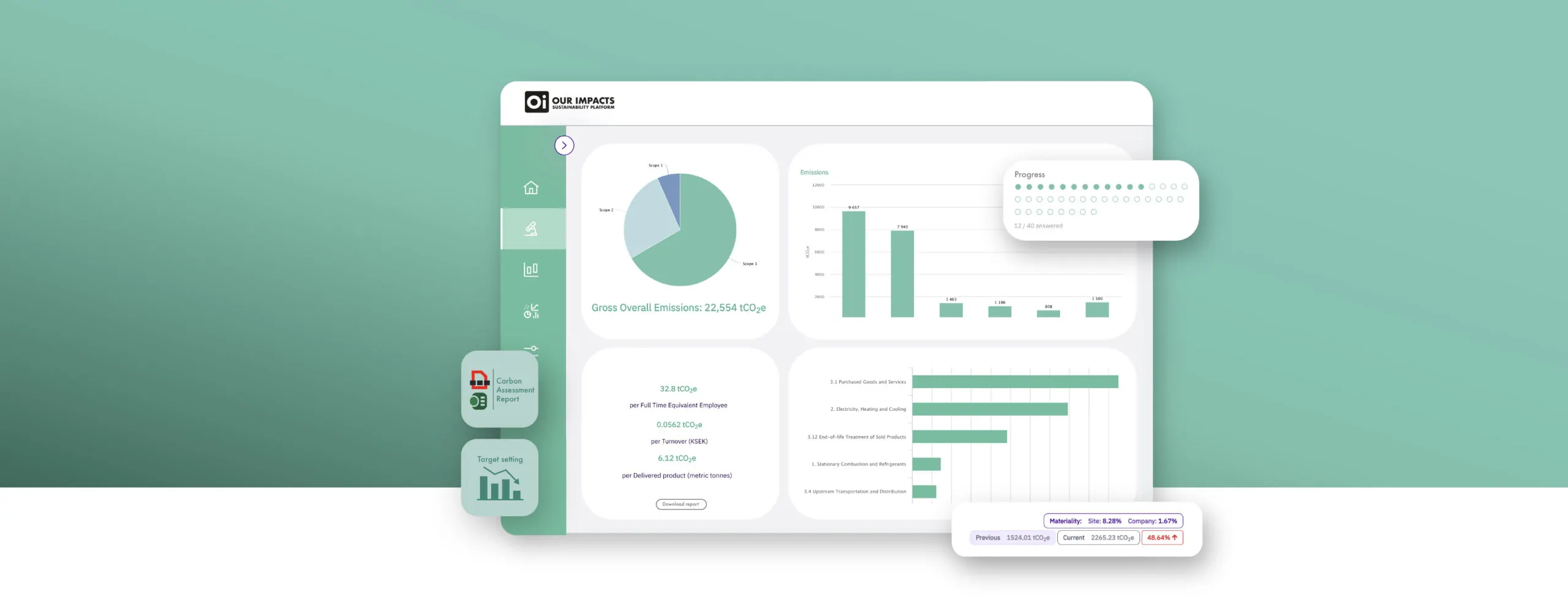
Through our sustainability platform, you can easily collect, analyze and report sustainability data simply and efficiently. An essential support in VSME reporting.
Key considerations for VSME
If you are considering working with the VSME standard, it is crucial to start from two things: what your company is legally obliged to report on - and what is actually relevant to your business. Sustainability reporting is not just about following rules, but about creating meaningful insights that can contribute to business development, risk management and credibility.
What about Dual Materiality in VSME?
As mentioned above, the VSME standard does not require a formal Double Materiality Assessment (DMA). Instead, VSME applies the principle of "if applicable", which means that you only report on the ESG aspects that are relevant to your business.
However, even if DMA is not a requirement, a basic materiality assessment can still be very valuable. By examining how your company impacts people and the environment, and how sustainability issues affect your business, you will get a clearer picture of where you should focus your resources. It can make your reporting more accurate, but also:
- Laying the foundation for future compliance with CSRD and ESRS
- Strengthen the trust of investors, customers and other stakeholders
- Give structure to your internal sustainability work and risk management
And most importantly, a materiality assessment does not have to be complicated. A simple, internal process can go a long way as long as it is transparent and documented.
Whichever of the directives you choose to follow, ZeroMission can help you with system support, strategic advice, training and gap analysis.
Is CSRD or VSME right for you?
Not all companies have a choice. If your company is legally bound by CSRD , you must report under ESRS. But for many SMEs that are not yet legally bound, VSME may be a more realistic first step.
To come to a decision, you can ask yourself the following questions:
- Are we legally obliged to use ESRS? If not - consider whether VSME is sufficient.
- Do we have the resources to manage the ESRS? It's about data, skills and systems.
- What is our ambition? Are we reporting to comply, or also to understand, improve and influence?
Finally: work strategically, not just reactively
It is important to take with you
Whether you choose ESRS or VSME, the main point remains: good reporting is based on good data.
This means that you should:
- Measuring what is relevant
- Understanding your impact
- Using the insights to make better decisions - not just filling in reports
With the right approach, you can create a sustainability program that lasts over time - and supports both business and responsibility.
Whichever of the directives you choose to follow, ZeroMission can help you with system support, strategic advice, training and gap analysis.
Want to read the VSME standard in full? Click here for more information.