ZeroMission's Trend Analysis 2025
January 30, 2025
The climate year 2025 is already in full swing for ZeroMission, with peak season for climate calculations. As usual at the beginning of the year, lists of upcoming trends are often published. To contribute to this discussion, we have asked our CEO, Henrik Juhlin, to share the most important trends he believes companies should pay attention to in the coming year.
1. Climate risks and climate adaptation – Companies that do their homework can gain an important advantage
We have already begun to see devastating consequences of the climate crisis worldwide. The German insurance company Munich Re calculates the direct costs associated with climate disasters and extreme weather each year, and for 2024 the costs amounted to over 320 billion dollars, which is equivalent to just over half of Sweden's GDP. It is one of the most expensive years ever, while we know that 2025 has started worse than any previous year. This cost also does not include all indirect costs such as the impact on agricultural productivity, adaptations in infrastructure and lost deliveries, etc. World Economic Forum also recently published a new risk report, where the 4 largest risks to economic growth over a 10-year horizon are directly climate-related.
The costs of the climate crisis will begin to be seen much more clearly for companies and consumers in the future. This year, the two ISO standards 9001 and 14001 will also be updated, requiring all companies to investigate how climate changes affect their operations, as well as how the operations affect the climate. I think it will be an eye-opener for many companies that there are both great risks but also opportunities with the changes we see. Those companies that are already doing real analyses of how the climate is expected to change in the next 5-10 years and developing strategies for these will have a great advantage over their competitors. We at ZeroMission have a tool for geoanalysis as support for just this.

Henrik Juhlin, CEO at ZeroMission
2. New regulations – A headache that will lead to wonders
A lot has already been written about CSRD, CCCD and the Green Claims directive, and it will continue to be discussed and debated during the coming year. The new regulations from the EU are a major headache for many in the sustainability industry and require a lot from businesses. But I am positive that it is the right way to go and believe that once we have sorted out all the data flows, new processes and structures for sustainability reporting, it will drive and create positive change. We need to remember the real purpose: that the reporting is a basis for business decisions and measures to reduce both climate and environmental impact. I believe that the focus during the year will begin to shift more towards how reported data should be interpreted and used to better manage the business and sustainable investments.
Greenwashing has also been one of the great enemies of genuine climate and sustainability work, but with the EU's Green Claims Directive, there will be more order in sustainability communication. My prediction is that there are great opportunities for those companies that work long-term with sustainability to really stand out and talk about and communicate their work in a credible way and without the noise of labels and short slogans. My hope is that communicators and management see the opportunities with the directive and do not choose to back away from the challenge!
3. Nature-based solutions – Back to the roots
There has been a lot of talk in the past year about how new technologies such as bio-CCS will save us by capturing and storing carbon dioxide from the atmosphere. We will need these technologies and it is necessary that they are put in place. But even fully developed, they will only solve part of the problem with carbon capture. I believe that in 2025 we will see a strongly increased insight and understanding of how dependent we actually are on our nature and the forest, both for biological diversity and as a carbon sink.
I recommend everyone to watch the documentary "Trees Can Save the Climate" on SVT Play, which shows how much benefit and value the forest contributes. Unfortunately, our projects for nature-based climate solutions have been subjected to much incorrect criticism, while the rate of deforestation globally continues to increase and important and unique natural areas around the world lack protection. carbon offsetting as a way to take responsibility for the mountain of carbon dioxide that we are building up in the atmosphere by protecting forests and nature is extremely important.
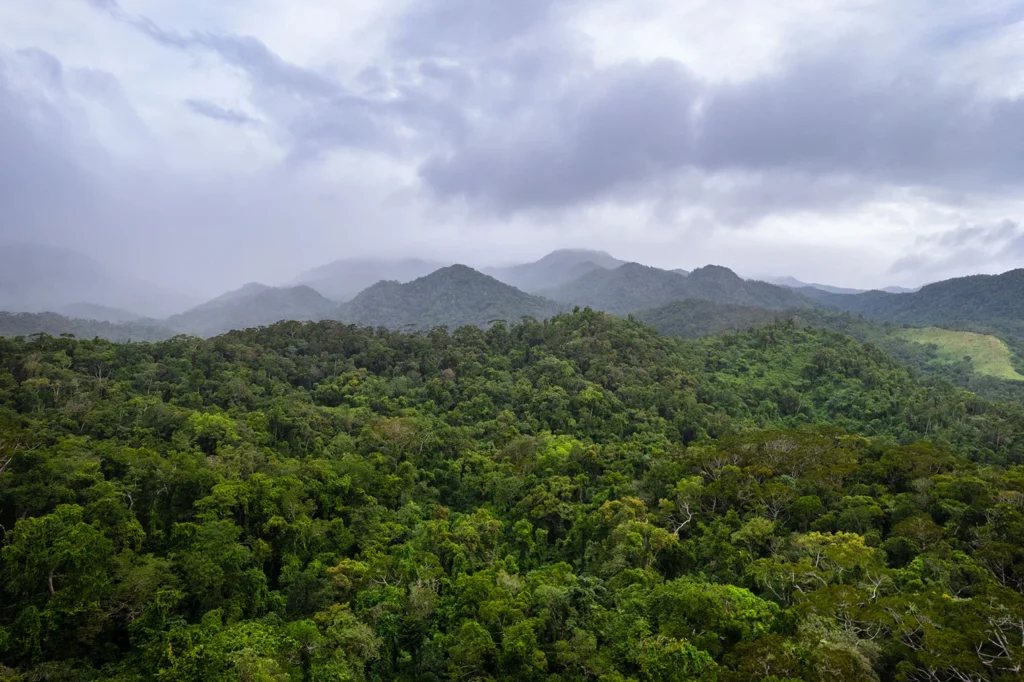
From ZeroMission's Plan Vivo-certified climate projects in Uganda
It is also difficult to avoid talking about Trump in this context and all the directly negative measures he plans to implement in the climate and sustainability area. An analysis in carboncredits.com states that Trump's initial political proposals regarding the climate will lead to just over 1,000,000,000 tons (1Gton) more emissions of CO2 per year, compared to the current track, and that is only up to 2030. But instead of hopelessness over what is happening in the USA, there must be a counter-reaction. Companies must roll up their sleeves even more and take responsibility for the climate. We know that the transition can be both commercially sustainable and profitable. We have already seen some counter-reactions where, among other things, Michel Bloomberg has said that he will step in and financially cover for the USA if they leave the Paris Agreement.
Of course, the AI revolution and the wave of useful tools and automation solutions will continue to grow in all areas, sustainability is certainly no exception and our EcoOnline Sustainability Platform is a leader in this. We make CSRD reporting and analysis much easier and with increased quality and security. We will have many reasons to return to the opportunities and risks of the development and present the benefits of our platform later this spring.
We look forward to following you on your transformation journey in 2025!