BVCM, Beyond Value chain Mitigation – Science Based Targets initiative
February 17, 2025
To achieve the Paris Agreement's 1.5-degree target, more is required than just reviewing a company's own operational emissions – it also requires actions outside its own value chain. The Science Based Targets initiative (SBTi) calls this “Beyond Value Chain Mitigation” (BVCM), which, in line with traditional carbon credit purchases, involves investments outside of the company's own operations. It can also include, for example, investments in new technology.
Beyond Value Chain Mitigation (BVCM) is a method where companies take action to reduce their climate impact outside their own value chain, for example, by supporting climate projects through the purchase of carbon credits. These actions complement the company's own commitments to reduce emissions and are an important part of an overall climate strategy.
The Science Based Targets initiative (SBTi), which is behind the strategy, believes that companies must take responsibility here and now in order for the Paris Agreement's 1.5-degree target to be achieved.
How to integrate BVCM into your climate strategy
SBTi's Net-Zero Standard contains four steps to create an effective climate strategy:
- Set short-term science-based targets (a reduction plan for the next 5-10 years)
- Set long-term science-based targets (a reduction plan in line with the 1.5°C scenario by 2050)
- Implement BVCM measures
- Neutralize remaining emissions
BVCM is something your company should start with now, for immediate effect, as opposed to neutralizing remaining emissions once you have done what you can to reduce emissions. But both measures are important. When you are going to neutralize emissions you cannot reach, Science Based Targets advocates projects that permanently remove carbon dioxide from the atmosphere, in order to achieve the goals according to your long-term plan to achieve climate goals. Exactly what type of project remains to be seen.
The BVCM methodology allows for the use of various types of measures, such as investing in climate projects through the purchase of carbon credits, or investing in other climate actions such as supporting the development of new technologies and policy measures. Common to all measures is that they should always take place outside the company's own value chain and that the focus should be on financing climate projects that provide quantifiable, long-term impact.
Financing climate projects through carbon credits
Carbon credits can include projects that prevent greenhouse gas emissions by protecting forests (REDD+), reduce emissions in various energy projects, such as efficient stoves, or that remove carbon dioxide through tree planting.
BVCM also means that companies can invest in technologies such as DACS (Direct Air Capture and Storage), or in research.
Regardless of what you choose to invest in outside of your company's own operations, the measures should also:
- contribute to the global goals
- have maximized climate benefits
- deliver climate justice
The investment should be transparent in terms of both financing and reporting. There are also clear references to financing projects that are underfunded.
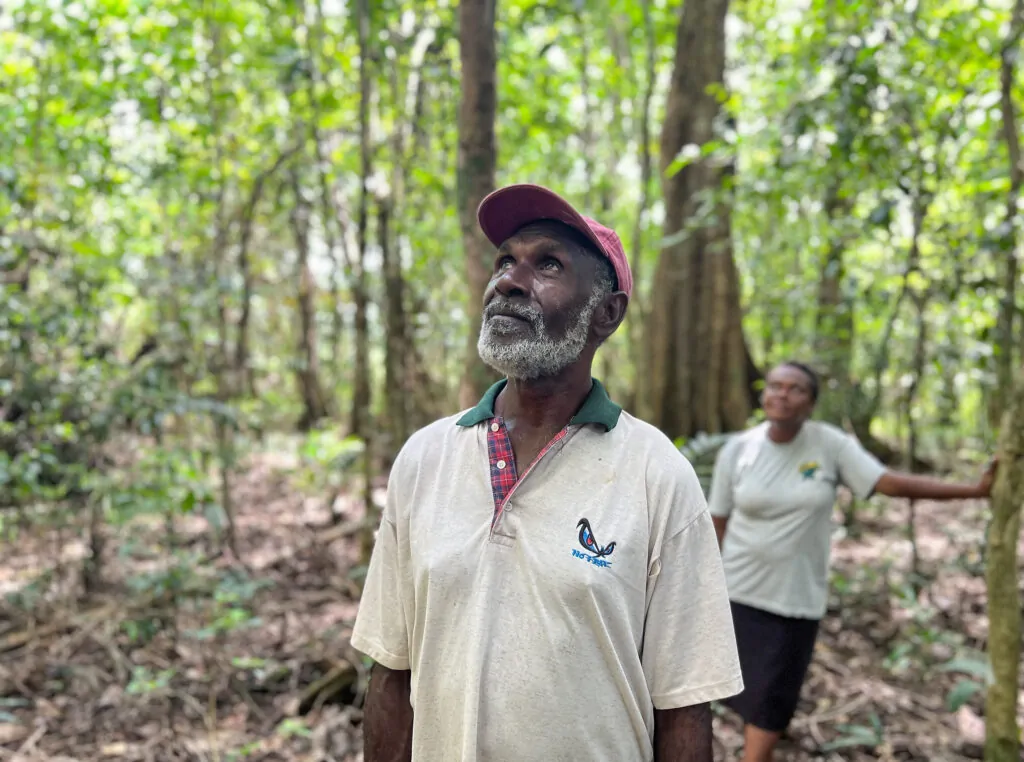
ZeroMission offers a range of different climate projects that, in addition to high climate benefits, also contribute to the global goals. Our projects are mostly located in the Global South, which is the part of the world that is least responsible for climate change but is currently being hit hardest by it. By purchasing carbon credits in these projects, you can help mitigate the effects of climate change. When trees are planted, soil erosion is reduced, and the trees improve the local microclimate as they provide shade and protection against storms.
Different ways to finance BVCM
SBTi has developed three models for financing BVCM:
- Ton for ton – Financing climate projects corresponding to your own emissions. If your emissions are 1,000 tons, you buy the corresponding amount of carbon credits.
- Money for ton – Your company sets a price for your unabated emissions. For example, you can set an internal carbon price for the emissions that you then use to finance climate measures.
- Money for money – Investment of a certain percentage of your turnover or profit in climate projects.
Of these methods, you can choose one, all, or mix between different ones.
Take direct responsibility through BVCM
BVCM is an effective way for companies to take immediate responsibility for their climate footprint beyond direct emission reductions. The method is available to everyone, even companies that have not joined SBTi. By combining internal measures with external climate projects, you can both strengthen your climate work and improve your credibility with customers and investors, while contributing to the Paris Agreement's 1.5°C target. Here and now.
Studies from Ecosystem Marketplace, MSCI (formerly Trove) and Sylvera, a company that specializes in providing data and analysis on carbon reduction projects, show that companies that invest in climate projects through the purchase of carbon credits reduce their emissions faster than those who do not. BVCM can thus help you on the way to reaching your net-zero goals according to your set plan. Or maybe even faster?
Sources:
SBTi Above and Beyond February 2024
SBTi Raisin the Bar February 2024