CSRD – support for sustainability reporting
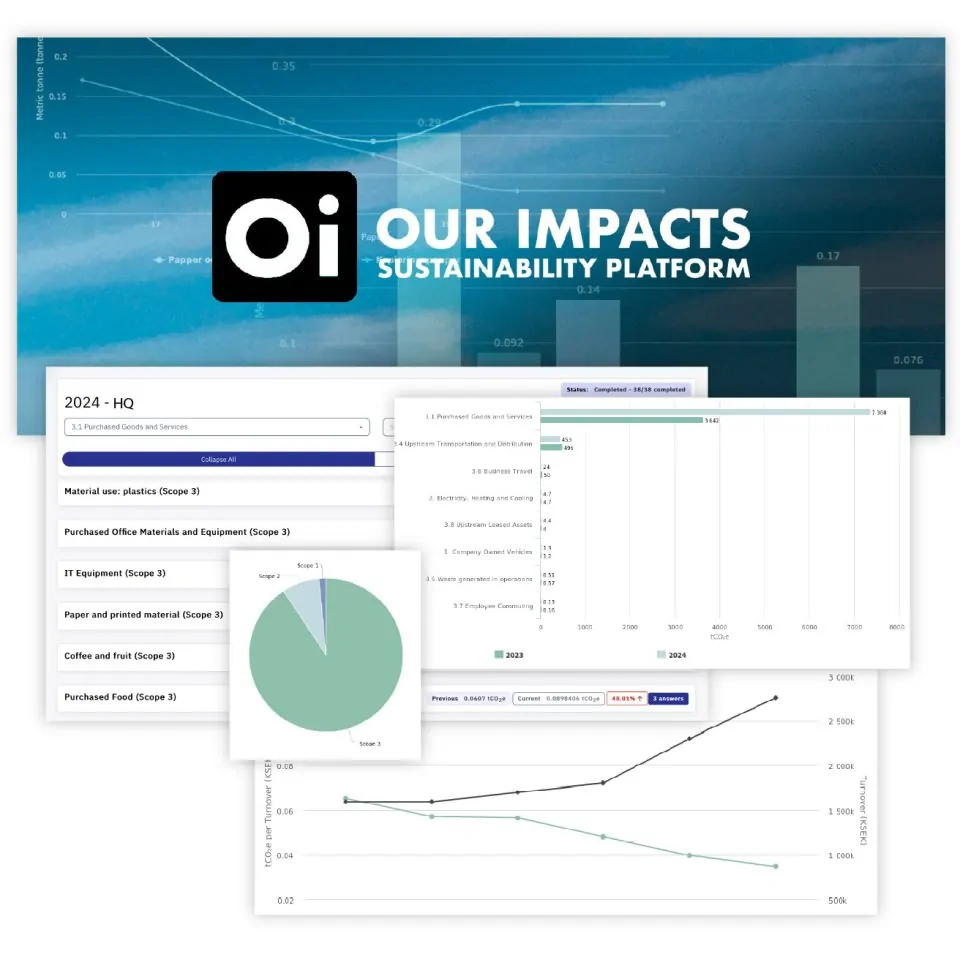
CSRD that climate data and sustainability reporting be linked. With Our Impacts Sustainability Platform , youSustainability Platform everything in one place: climate calculations, energy data, and other ESG reporting in accordance with the ESRS. We’ll help you get started and track your progress.
• System support for the CSRD: Collect , analyze, and report sustainability data easily and efficiently on our platform—using the same tool you use for your climate calculations.
• Strategic consulting: Our experts help you interpret regulations and develop a sustainability strategy.
•Gap Analysis: Our consultants help you identify what is required to comply with the CSRD directive and where you stand today.
•Training and Support: We support you with workshops and ongoing guidance throughout the entire process.
What does CSRD mean?
CSRD requires companies to report on their environmental, social and governance (ESG) impacts. This means that companies must disclose more detailed and reliable information on:
1. greenhouse gas emissions, energy use and measures to reduce climate impact
2. use of natural resources, waste management and impact on biodiversity
3. working conditions, human rights, diversity and inclusion
4. anti-corruption, risk management and board composition

CSRD after Omnibus—what has changed?
Through the Omnibus I package, the EU has significantly simplified and streamlined the regulatory framework CSRD . Here’s what applies right now:
Fewer companies are covered. The thresholds have been raised: mandatory reporting now applies primarily to large companies with more than 1,000 employees and revenue exceeding 450 million euros.
Postponed deadlines. Several groups of companies have had their deadlines postponed. In many cases, companies that were previously required to report for the 2025 fiscal year have had the reporting requirement pushed back by up to two years.
Simplified ESRS on the way. The EU is working on a significantly simplified version of the ESRS reporting standard, with far fewer mandatory data points than those currently in effect.
Sector-specific standards are being eliminated, and companies will have expanded opportunities to opt out of disclosing certain information if it is deemed to cause serious harm to the company.
We are closely monitoring these developments and will update this information on an ongoing basis. Please feel free to contact us if you have any questions.

Frequently asked questions
Is my company still covered by the " CSRD"?
-
It depends on the size of the company. Under Omnibus I, mandatory reporting applies primarily to companies with more than 1,000 employees and net revenue exceeding 450 million euros.
We are closely monitoring this situation and updating our information on an ongoing basis. If you’re unsure where you stand, we can help you make a quick assessment— contact us.
Why CSRD?
-
CSRD reporting is important from several perspectives. First, it creates greater transparency about companies' sustainability work through specific reporting requirements. Second, the regulations make it easier for investors to make sustainable choices. Third, CSRD is expected to drive more sustainable development throughout the business community. Companies that adapt early to CSRD can strengthen their competitiveness and attract informed consumers and customers.
Do I need to be familiar with CSRD to use the platform?
-
No. The platform guides you through the relevant ESRS disclosures, and you can get help from our consultants to interpret the requirements and prioritize tasks.
Do you need help with reporting? At ZeroMission , you can hire an experienced climate strategist on a part-time basis or as needed. Read more here.
What do companies need to do in CSRD?
-
To comply with CSRD , companies are required to:
- Develop a sustainability strategy: A clear strategy that describes the company's sustainability goals and how they will be achieved.
- Collect data: Companies need to collect data on their operations to report on their sustainability impact.
- Report according to standards: Reporting must comply with the European Sustainability Reporting Standards (ESRS).
- Continuously improve: Sustainability is a continuous process and companies need to regularly evaluate and improve their efforts.
What is a double materiality analysis?
-
Double materiality analysis is a mandatory part of CSRD, and aims to analyze how a company affects the world and the environment through its activities (outward perspective), as well as how the world affects the company (inward perspective) in the event of, for example, weather extremes.
The outward perspective looks at the environmental impact of companies and the inward perspective looks specifically at the financial risks of companies if, for example, an unexpected weather event occurs.
The double materiality analysis also aims to identify and prioritize the most relevant sustainability issues, through a so-called materiality assessment.
Other services



We help you pick up the pace
Contact us for an informal meeting on how to calculate, reduce or take responsibility for your emissions through the purchase of carbon credits.
Latest News
Sign up for our newsletter.