ITMOs – carbon credits under Article 6 of the Paris Agreement
May 13, 2026
The climate market is undergoing a fundamental transformation. Internationally transferred carbon credits—ITMOs—are at the heart of a new, government-sanctioned system for trading carbon credits. Here, we explain what this means, why it matters, and how ZeroMission is involved in these developments.
What are ITMOs?
ITMO stands for Internationally Transferred Mitigation Outcome. It is a collective term for the type of carbon credit regulated by Article 6.2 of the Paris Agreement, which was adopted in 2015.
Simply put: one ITMO represents one ton of carbon dioxide equivalents (tCO2e) that has been verifiably reduced or removed from the atmosphere—and officially transferred from one country to another. It’s the same method used in the EU’s emissions trading scheme.
What sets ITMOs apart from other carbon credits?
What distinguishes ITMOs from traditional carbon credits on the voluntary market is the system of government authorization and reporting that governs them. The credit can be used to help achieve Sweden’s or the seller’s country’s national climate goals—NDCs (Nationally Determined Contributions). For a climate action to qualify as an ITMO, the following is required:
- That the climate benefits are real, verified, and additional —that is, that the reduction in emissions has actually occurred and would not have happened otherwise.
- The host country authorizes the transfer, that is, officially approves the counting of the climate benefits toward another country.
- That a corresponding adjustment is applied—an accounting principle that ensures that the same reduction in emissions is not counted twice, neither by the selling country nor by the purchasing country.
It is the last point that is crucial. Corresponding adjustments resolve the classic problem of double counting, which has long been a headache in the regulated carbon credit market.

One ITMO represents one ton of carbon dioxide equivalents (tCO2e) that has been verifiably reduced or removed from the atmosphere—and that has been officially transferred from one country to another. Biochar projects are an alternative type of climate project that may be relevant.
Ten years of negotiations under Article 6
Article 6 has been part of the Paris Agreement since 2015, but it took nearly a decade to agree on the technical rules. COP26 in Glasgow in 2021 laid the groundwork, but issues regarding transparency, reporting, and revenue sharing remained unresolved. It was not until COP29 in Baku in 2024 that the regulatory framework was adopted, which now enables full implementation of the mechanism.
The result is a three-track system:
- Article 6.2 – bilateral and multilateral cooperation between countries, the primary framework within which ITMOs operate.
- Article 6.4 – a UN-supervised system intended to replace the CDM credits under the Kyoto Protocol.
- Article 6.8 – Non-market-based cooperation, such as capacity building and technology transfer.
As recently as March 2025, 97 bilateral agreements had been concluded between 59 countries, and 155 pilot projects had been registered under Article 6.2. The figures show that the market is finally starting to pick up after years of stagnation.
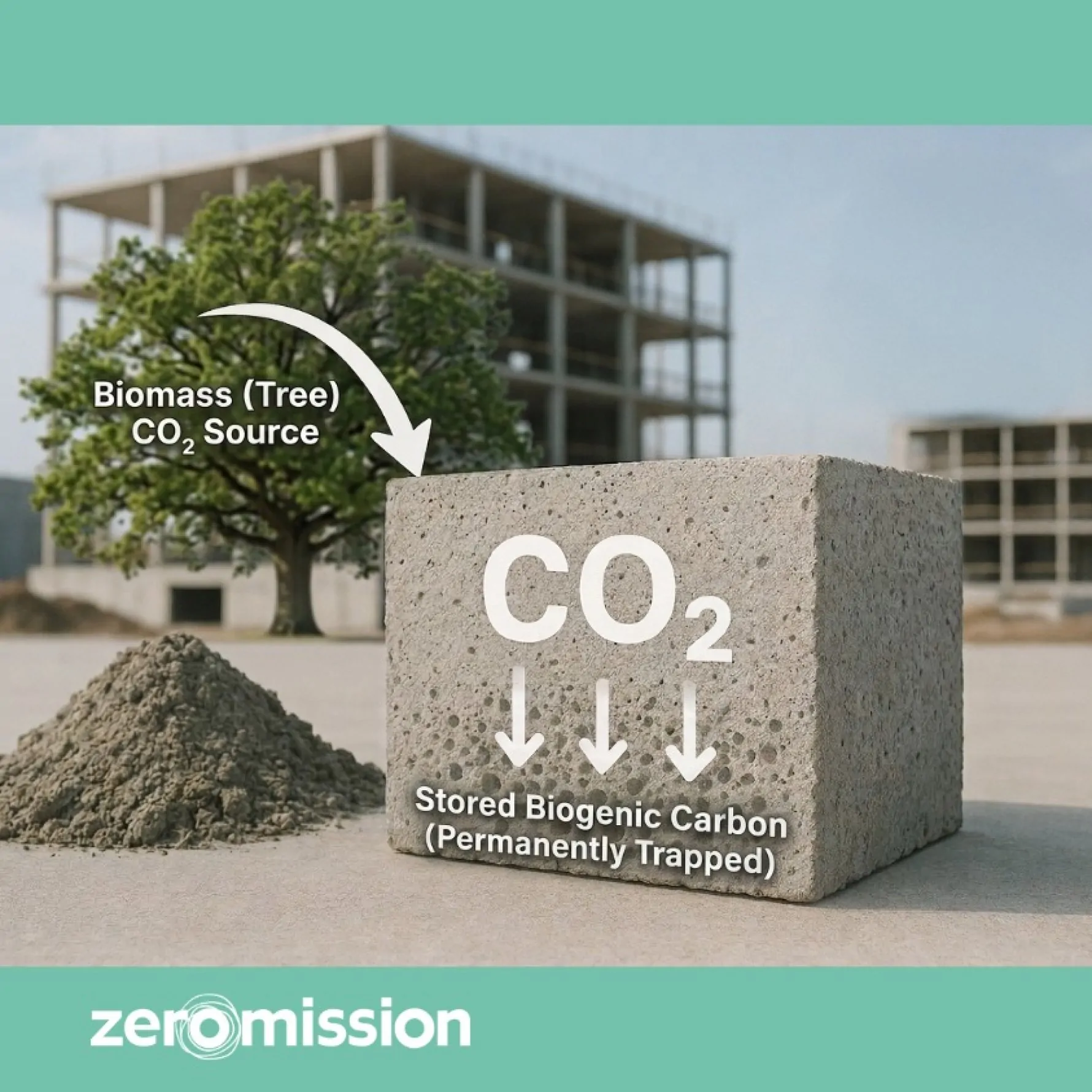
What sets ITMOs apart from traditional carbon credits on the voluntary market is the system of government authorization and reporting that governs them.
How does ITMO affect the carbon credit market?
In recent years, there has been a decline in the voluntary market for carbon credits. A recovery is now underway, though buyers of carbon credits are now more selective and demand credits with high integrity, robust verification, and clear traceability—something ZeroMission since its inception. The premium for credible credits is rising. It is in this climate that ITMOs is stepping in.
Countries such as Switzerland, Japan, and Sweden are active buyers of ITMOs to meet their national climate targets. In addition, Article 6 allows private companies to participate in ITMO transactions under bilateral government agreements—creating a new category of demand.

ZeroMission's role in the ITMO system
ZeroMission an active participant in the pilot project currently establishing the infrastructure for trading ITMOs between Sweden and Switzerland, led by the Swedish Energy Agency. ZeroMission over 20 years of experience in trading certified carbon credits and climate work ZeroMission is contributing its expertise and experience because we believe and hope that this work will lead to scaling up the market for carbon capture and storage.
Zurich Climate Week 2026
On May 6, 2026, Sweden and Switzerland signed a bilateral agreement during Zurich Climate Week under the framework of Article 6.2. On the same day, the first concrete pilot projects between Swiss and Swedish companies were launched.
To date, Article 6 has almost exclusively been a matter for states. ZeroMission’s work in the pilot project shows that private actors can and should play a role in this system—and that the infrastructure currently being built is not just a matter for diplomacy, but also for the market.
ZeroMission's expertise in carbon offsetting
ZeroMission to share the knowledge gained from the project with Swedish companies that want to contribute to the Paris Agreement and facilitate trading in this type of credit.
In this project, ZeroMission on:
- Connect Swedish and Swiss companies with verified climate projects that can generate government-authorized ITMOs.
- Navigate the administrative processes required for authorization, verification, and reporting under Article 6.2.
- Help establish standards and practices for handling ITMO transactions in a transparent and credible manner.
Concluding Remarks: From Theory to Practice
For nearly ten years, Article 6 has existed as a commitment under the Paris Agreement. What is happening now—in Zurich, in negotiation rooms, and in pilot projects between Swedish and Swiss stakeholders—is that the mechanism is finally beginning to live up to its potential.
It is not merely a technical matter of reporting and record-keeping. It is a question of what carbon offsetting become when governments and private actors collaborate in a structured and transparent manner.
ZeroMission helping to build that market. Get in touch if you’d like to learn more.