Carbon credits and local development - a researcher's view of the market
September 12, 2025
How can carbon markets contribute both to global climate goals and to strengthening the livelihoods of smallholder farmers in Uganda? Patrick Byakagaba, a researcher at Makerere University, believes that well-designed climate projects can be crucial - not only for storing carbon, but also for creating long-term security and new opportunities for local communities. We contacted him for an interview to get his views on the Trees for Global Benefits project in Uganda and the importance of financing resilience.
How do you see the carbon credit purchase market as a tool to help individuals in Uganda, while reaching the global climate goals?
First of all, we need to go back to what carbon credit trading means. It is a phenomenon that emerged during the Rio Convention in 1992. The idea of carbon trading emerged around then, but only became a reality with the Kyoto Protocol, which was the real start of the voluntary market. As a new market, it was always a given that there would be challenges in getting people to understand and appreciate what it can, and should, do.
But now, with the signing of the Paris Agreement, almost every country in the world has faith in carbon credit trading, as reflected in Article Six of the Agreement. We clearly see that the world has agreed on this, and there is a level of consensus that it is the right thing to do. So, in terms of whether I agree that the market is good or not, my view is simply that I agree with the rest of the world.
What is new now is that we are talking about high-integrity credits, which means that they contribute positively not only to the climate, but also to the well-being and livelihoods of local people. Carbon credits are simply a credible way to tackle climate change.
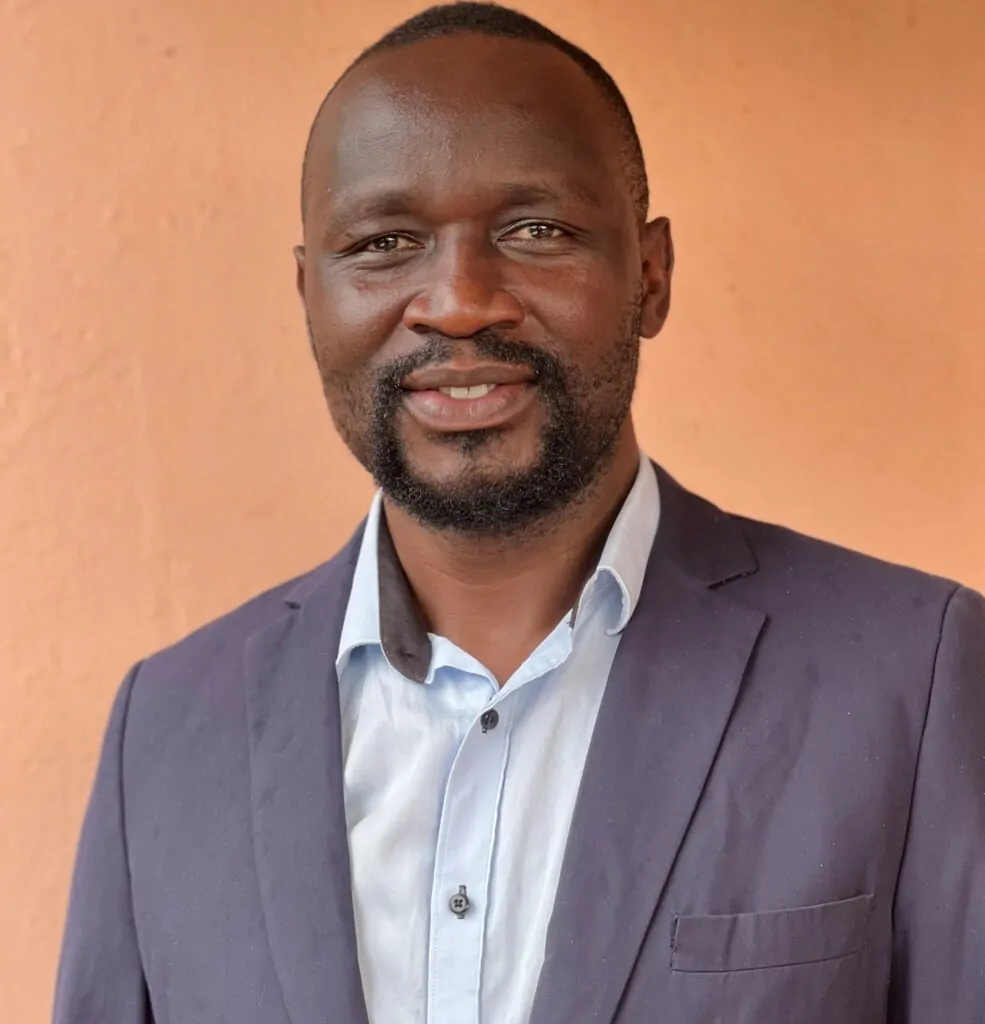
Patrick Byakagaba is a researcher at Makerere University in Uganda specializing in environmental governance and policy.
Why do you think carbon credit trading is such a divisive issue?
In my opinion, the main reason for the differences in opinion around carbon credits is ideological differences. As scientists, academics and policy makers, there are those who do not believe in ecosystem services trading at all, and especially not in carbon trading.
It is about ideology, and quite often it appears that the critical research is there to justify the ideology on which the researchers' preconceptions are based. The authors present a particular narrative to support a particular theory, without necessarily seeing how their research methodology and theoretical framework inevitably influence the results. In this way, it becomes the research methodology that generates the results, rather than an independent investigation.
Lately, I have come to accept that we are different and that we cannot force people to think in a way they do not agree with. If someone thinks that paying for climate action or offsetting their own emissions based on a certain ideology is wrong, they are entitled to that opinion. But it is very important that they then clearly declare their positions. It is good research practice to openly declare one's interest or opinion when conducting research and presenting one's findings as an objective perspective.
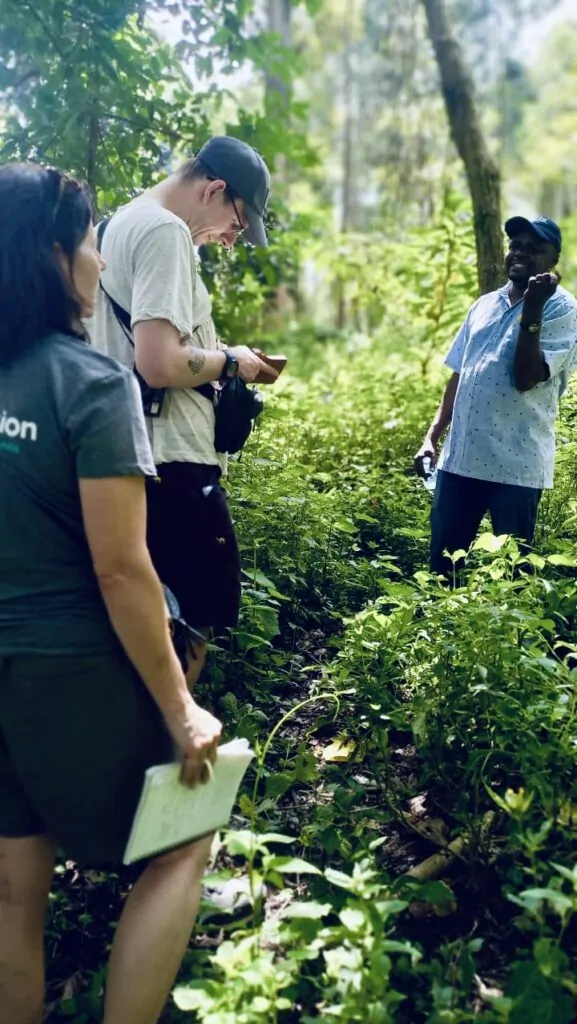
ZeroMission has visited the Trees for Global Benefit project in Uganda several times, most recently in June 2024.
Do you also see differences in research results depending on who is doing the research?
Of course it is. If you fail to take into account or understand the local context of a study, you are likely to get only a superficial understanding of what is actually going on. Because of this, there is a huge gap between researchers from the Global North and those of us in the Global South when it comes to understanding climate projects in Uganda - and the South in general.
It's understandable that the nuances are missed by researchers from the global north when they are only here for two weeks or a month. I am Ugandan, but I still need a lot of time in the field to really understand the local context - the social, cultural and economic conditions. If someone is here for just a few weeks or a month, they are very likely to miss it. But I still think that the main difference between us and most researchers from the Global North is ideological.
When I research carbon credit projects, I look at how they are actually implemented. But there are others who approach the research with the attitude that we should never have even considered using climate projects as a tool against climate change. And that greatly influences the results and conclusions they draw. I think it's unfortunate that some people think that way, but it's their right to do so.
How does participation in the Trees for Global Benefit project differ from other similar projects focusing on land use?
First of all, trees have always been part of agriculture in our societies. There are very few communities that don't have fruit trees or trees for firewood on their land. We are not like Europeans or Americans who use gas or electricity - here almost everyone uses biomass for their energy needs. Around 92% of the population uses biomass, and the source of it is the farm - either you keep existing trees or you plant more.
The TGB project typically works with smallholders who integrate trees, so you won't find large tree plantations of hundreds of hectares. Instead, you'll find people who have single trees on their farms, and they sell the carbon credits together in cooperatives.
The trees they plant interact positively with the crops they grow. This means that harvests are not reduced. For example, coffee requires shade, so they plant trees that provide that shade, which leads to better yields. There is evidence of this in our own research, and the same can be seen in Brazil.
When comparing the alternatives, land size is a crucial factor. If you have half a hectare, no sugar company will want to work with you, as it would threaten food security. Tobacco used to be a common crop here, but it is no longer profitable compared to food crops. I therefore believe that a large part of the success of the TGB project is due to the positive interaction between the trees and the crops grown. If yields had been negatively affected, I can say with certainty that people would drop out - farmers are not stupid, they make decisions based on yield.
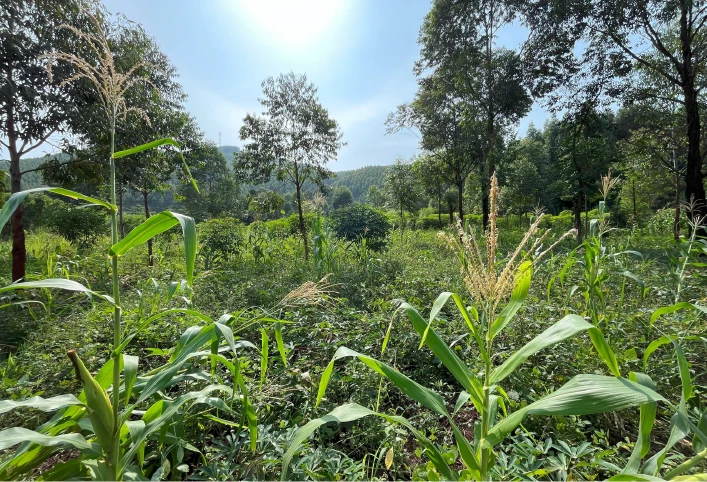
Through agroforestry - the practice of planting indigenous trees alongside cash crops - the project contributes to increased food security, access to firewood, improved soil quality and more stable incomes.
Has TGB found a niche in terms of who they work with and what farmers get in return?
Yes, if you look at the statistics, the majority of farmers in the project area have a little less than one hectare of land. There are very few who have large tracts of land, so the project has targeted the right category - those with small plots, who need to grow food crops but also need trees for shade, firewood or fruit.
TGB also encourages farmers to plant fruit trees such as jackfruit, avocado and mango. These provide both income through carbon credits and through fruit production - a double win for farmers.
But the project has to adapt to which tree species are suitable for the local communities. This is why species such as eucalyptus and pine are not used. It is important that the project fits with the needs and aspirations of the communities, otherwise it risks undermining people's livelihoods.
How do you respond to claims that the project increases inequality in communities?
First, you have to decide whether we are talking about inequality or injustice, because there is a big difference. If you grow beans and corn, no one asks how I share my income. When I plant trees and sell carbon credits, which is my product, I fully own the credits and can decide for myself to whom I sell and how I use the money.
It is okay to discuss revenue sharing, but it must be on my initiative, as the owner. It's an important discussion we need to start having, because these credits are not coming from a forest managed in the public interest, but from private land. If I put in the work, time and resources to grow these trees, and somebody says I should share a certain percentage of the revenue, I think that is unfair.
As to whether the projects create inequalities in land ownership, the answer is no. The land ownership system we have clearly defines who owns what. We are not talking about people planting trees on commonly owned land and keeping the profits for themselves, but about people planting trees on their own land.
Again, I think the problem often lies in the lack of understanding of this context by researchers from the global north. They often assume that all land in Africa is commonly owned. That may have been true in the 19th century, but not anymore. Sure, there are pockets of commonly owned land, but most of it is privately owned.
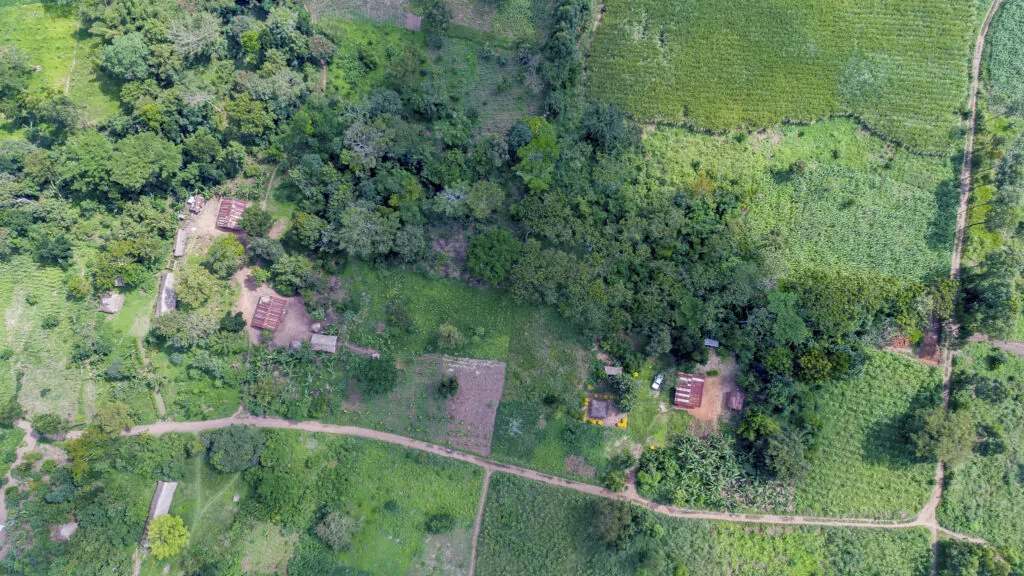
Views of farms in rural Uganda, outside Kampala.
How does TGB contribute to climate adaptation and resilience?
When we talk about resilience, we need to think about four things: two P's and two R's. The two P's stand for prevention and preparedness, and the two R's for response and recovery. This is the basis of disaster risk management.
Planting trees on agricultural land prevents soil erosion - a major risk that trees help reduce. Heavy rains are becoming more frequent, and without trees, nutrient-rich soil can be washed away, leading to poorer harvests.
In addition, TGBs provide access to income from carbon credits and other sources, making farmers more prepared if parts of their livelihoods are disrupted by extreme weather. Trees are not affected by drought in the same way as annual crops are. If the maize harvest fails, income from carbon credits and fruit trees can act as a buffer.
The risk of extreme weather is increasing all the time, and we cannot stop it - only prepare for it. The project's activities make it easier to recover from droughts or torrential rains, as they reduce the negative impacts from the outset and strengthen communities' ability to rebuild their lives.
Patrick Byakagaba is a researcher at Makerere University specializing in environmental governance and policy. He previously studied natural resource management and sustainable agriculture in Oslo before completing his PhD in forest governance.
Today, he researches agroforestry and carbon sequestration in Uganda, supports the Ugandan government in the development of their climate change policy, and chairs the Uganda Forests Working Group to contribute to the development of forest policy and ensure good practice.
This is a summarized and translated version of the original interview. Click here to read the full interview.
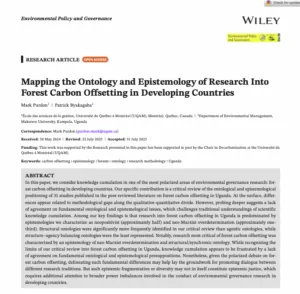
Here you can read Patrick's research report: "Mapping the Ontology and Epistemology of Research Into Forest Carbon Offsetting in Developing Countries".