Efficient stoves for coffee producers - Fairtrade Climate Standard
Indoor air pollution is one of the biggest causes of poor health worldwide. Eye diseases and breathing difficulties are common symptoms, and people even die prematurely. The efficient stoves for coffee producers project reduces the need for firewood while improving the indoor environment for the families using the efficient stoves.
Background information
The coffee sector in Ethiopia is threatened by both deforestation and climate change. Coffee bushes are very sensitive to rising temperatures, so if the earth's temperature continues to rise, it will have devastating consequences for smallholder farmers worldwide. An increase of as little as one degree results in a clear loss of coffee bean quality. A two-degree increase would result in a significant loss of productivity.
About the Project
Oromia Coffee Farmers Cooperative Union/OCFCU is the Ethiopian partner in this project which is part of the Fairtrade Carbon Partnership (FCP). In the Efficient Stoves for Coffee Producers project, efficient stoves are distributed to families, reducing firewood consumption and thus carbon emissions by 40%.
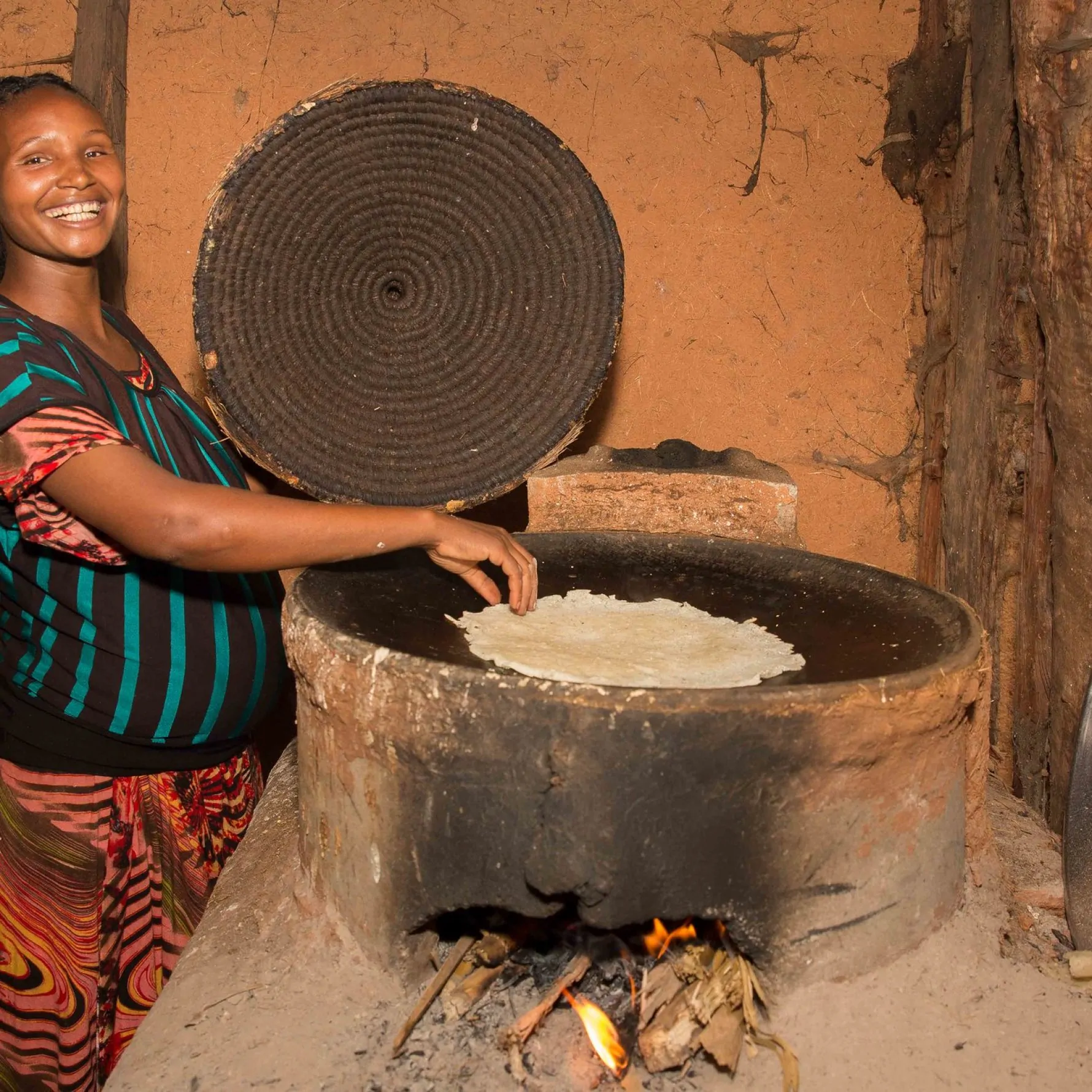
In the "Efficient Stoves for Coffee Producers" project, efficient stoves are distributed to families, reducing firewood consumption and, consequently, carbon dioxide emissions by 40%.
Each household uses two different types of stoves, one for general use and one for baking Injera which is a flat round bread made of tef flour. Coffee farmers pay for the stove partly in cash and partly with the carbon credits generated by the use of the stoves. When there is less need for firewood, less time is spent collecting it. This frees up time for women and children, who are the main collectors of firewood, to do other things.
Unique feature
As with Fairtrade commodities, there is a minimum price for the credits to ensure that projects are financially sustainable for project participants. In addition to the minimum price, the credits also generate an additional Fairtrade, which is used for investments that reduce the climate impact of producers and local communities.
Fairtrade carbon credits were launched internationally in 2015 and are regulated by Fairtrade's climate criteria. The carbon offset has been developed together with Gold Standard, which is one of the leading organizations in the field of carbon credits and sustainable development.
ZeroMission is the first distributor of Fairtrade carbon credits in Sweden, complementing its broad offering of carbon offset with a focus on social development. By purchasing Fairtrade carbon credits, customers also commit to making a plan to reduce their own emissions, a requirement that no other standards set today.
The project contributes to the following objectives