Efficient stoves in Madagascar - Gold Standard
The hunt for new farmland, timber and firewood in Madagascar threatens its unique ecosystems and climate. According to the WWF, about 90% of the island was covered by forest in the early 20th century. Today, barely 10% remains, and more than 400 000 hectares disappear every year. By introducing efficient stoves in Madagascar, pressure on forests can be reduced and emissions reduced.
Background information
Deforestation is an acute problem in Madagascar - 90% of the original forest is already gone. This has a dramatic impact on the island's biodiversity, with more than 90% of animals and around 80% of plants found only on the island. The problem of extinction is real. For example, 94% of lemur species are considered endangered. The causes of deforestation, apart from slash and burn techniques where fire is used to prepare land for cultivation, are cooking with wood and charcoal. 97% of Malagasy households cook in exactly this way.
About the Project
This project aims to replace this need by replacing traditional wood- and coal-fired stoves with efficient stoves. The Efficient Stoves in Madagascar project has been active since 2008, starting with the installation of solar-generated stoves, but since 2012 energy-efficient stoves have also been developed. It is from these that the carbon credits are generated due to the climate benefit created by reducing the need for firewood.
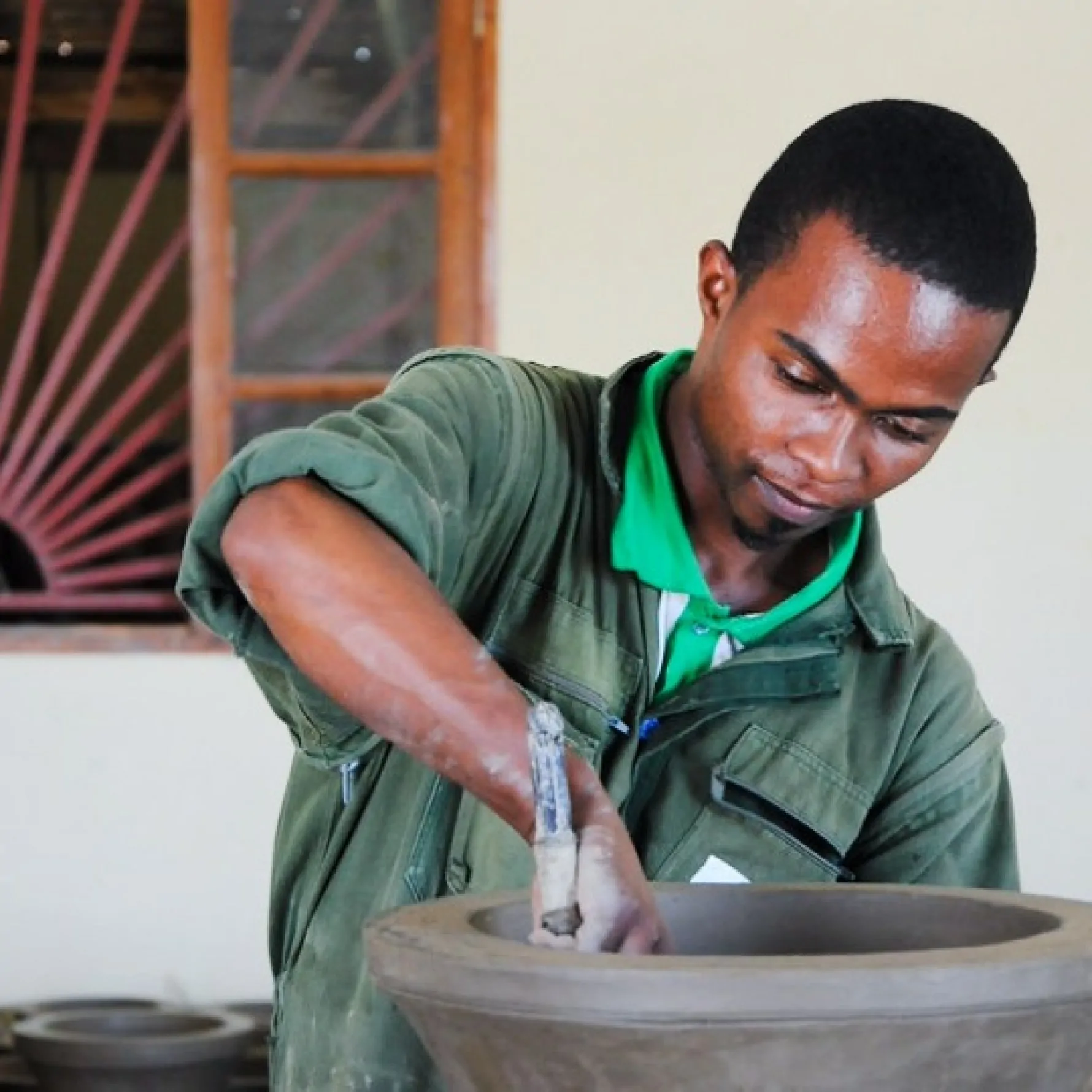
The project helps not only households but also restaurants, food trucks, businesses, schools, and hospitals by installing energy-efficient stoves.
The stoves are up to 70% more energy efficient than traditional wood-fired ones, which creates financial and time savings. In addition, it is much better for health as the efficient stoves produce the hazardous smoke to a much lesser extent. To date, 164,000 stoves have been produced and installed, creating 181 permanent jobs, 7 new training centers and over 1,270,000 tons of wood have been saved.
Unique feature
The project not only helps households, but also restaurants, street kitchens, companies, schools and hospitals with the installation of efficient stoves. So far, approximately 967,000 people have benefited from the technology, which is subsidized through the purchase of carbon credits. The project also includes training and Workshops with schools and institutions that highlight the importance of preserving forests.
The project contributes to the following objectives