Gula Gula Food Forest Program, West Sumatra – Plan Vivo
The Gula Gula Food Forest project recruits smallholders to plant trees and reforest land in West Sumatra. Trees and useful plants are co-planted according to agroforestry models to promote carbon sequestration in trees and soil. At the same time, the project provides smallholders with income opportunities through the sale of coffee, essential oils, etc.
Background information
Like Indonesia as a whole, the area around Lake Singkarak in West Sumatra has been severely degraded. Previous deforestation and poor agricultural practices have left the village-owned landscape largely free of trees and replaced by grass and shrubs.
About the Project
The Gula Gula Food Forest was set up as a pilot project in 2009 based on research papers on agroforestry, or forestry, with its potential to store carbon while benefiting the local population.
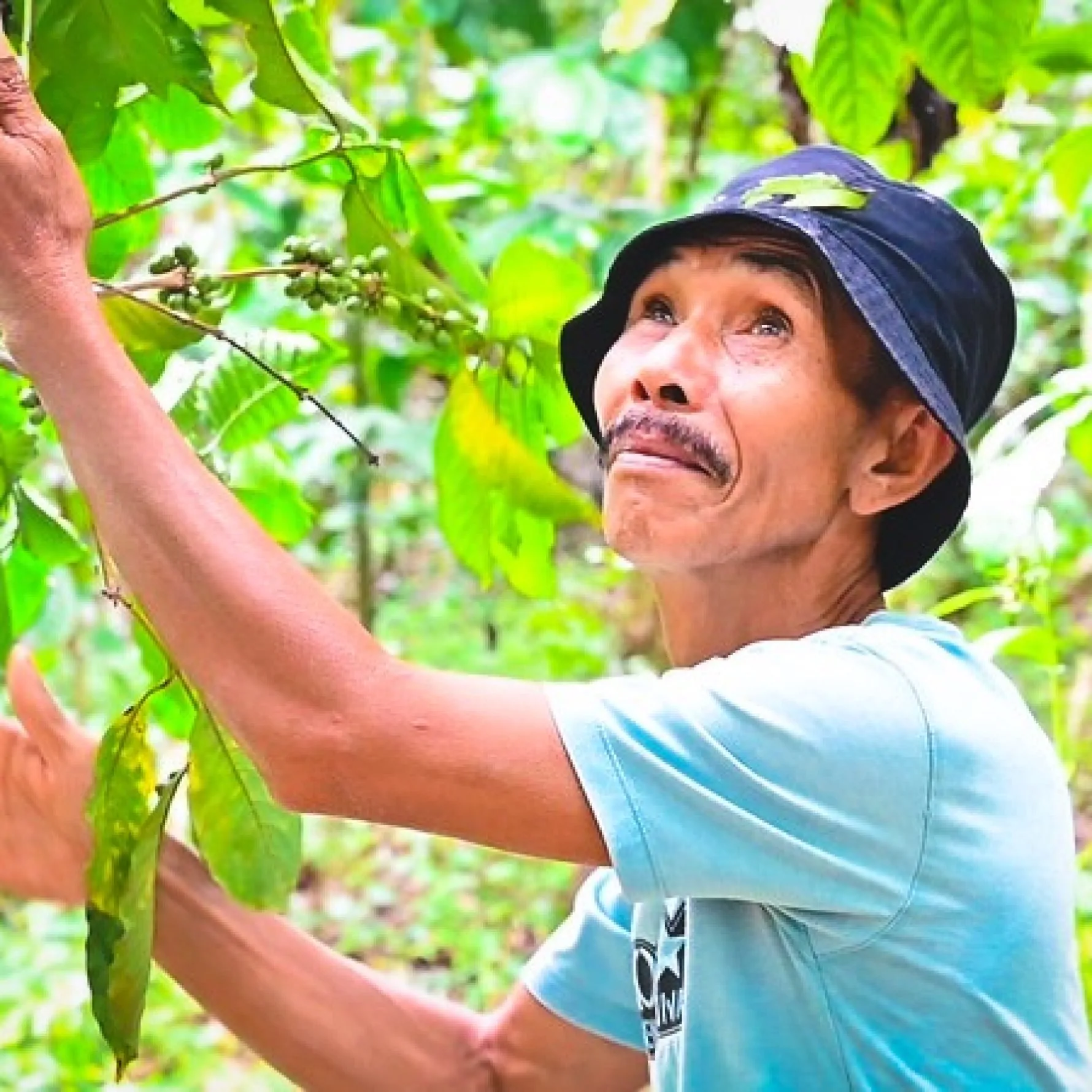
The project aims to restore degraded land by using the "Assisted Natural Regeneration" (ANR) method and planting a mix of species for forestry and agriculture.
The project aims to restore degraded land by working with the 'Assisted Natural Regeneration' (ANR) method and planting a mix of species for forestry and agriculture. The sale of carbon sequestration certificates as well as income for agricultural and forestry products has created positive development for the community as a whole and many local jobs.
The reforestation method is so effective and simple that even those with very limited resources can participate in the project. With simple tools and training in good forest management, as well as local processing of forest products such as coffee, cloves, cinnamon, and wood products, a good platform is created for favorable development of the area.
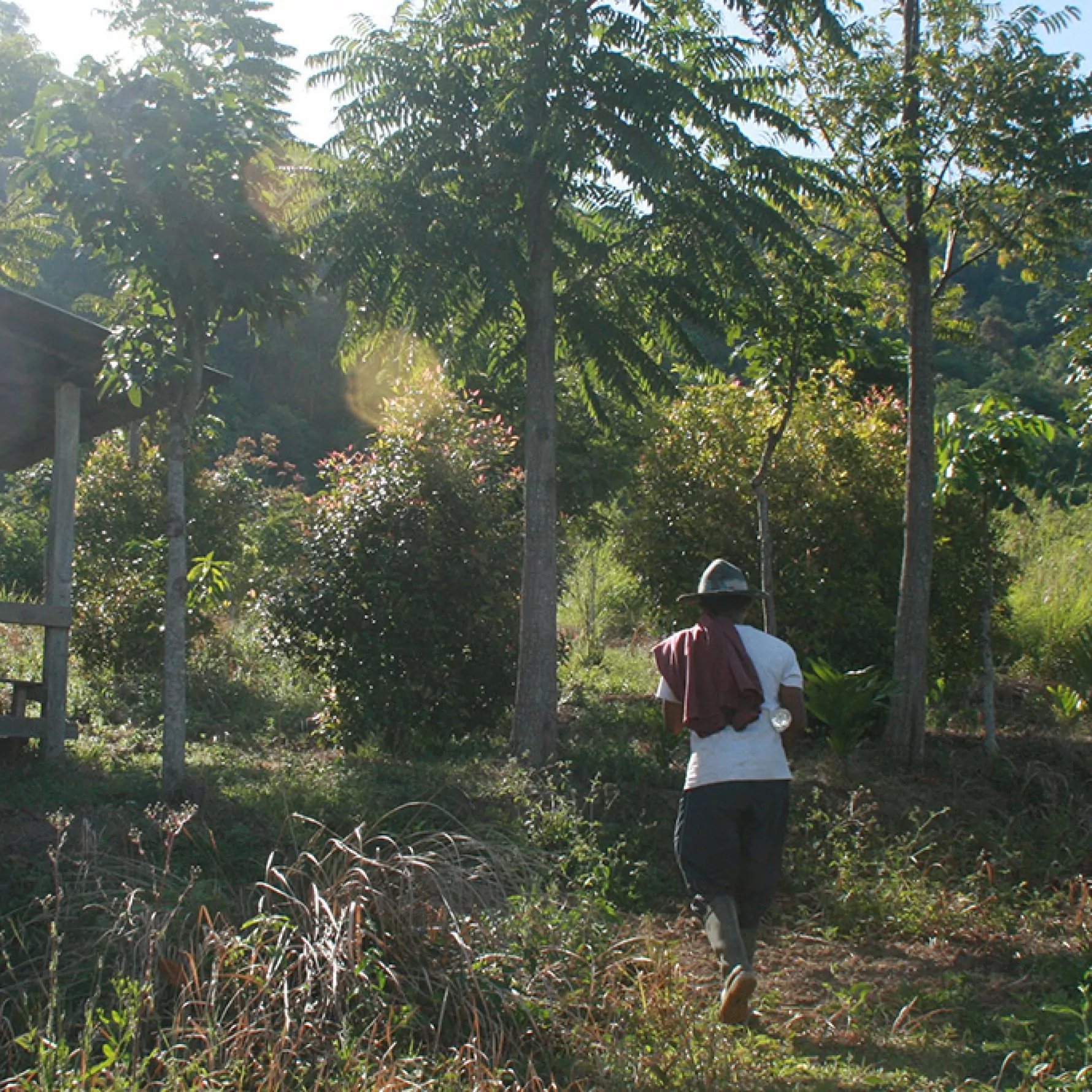
By working with nature rather than against it, a “food forest”—with a focus on biodiversity and productivity—can be created in just five years.
Unique feature
Today, over 500 smallholder families have joined the project and over half a million trees have been given the opportunity to grow on an area of approximately 500 hectares. Through a cost-effective method, they have succeeded in reforesting degraded areas. By working with nature instead of against it, a 'food forest', with biodiversity and productivity in focus, can be created in just five years.
The project contributes to the following objectives