Sustainable pastures in Mongolia - Plan Vivo
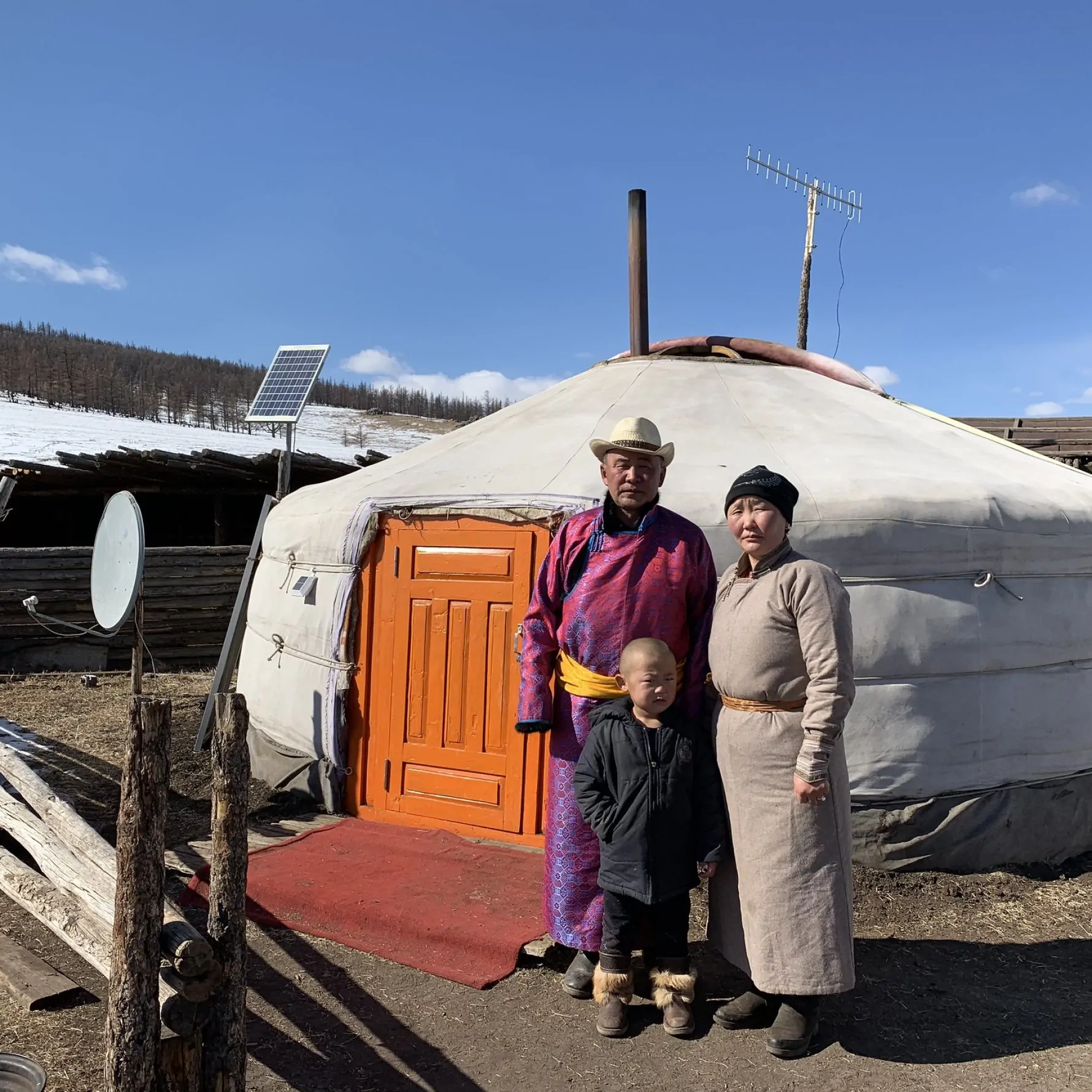
The project involves more than 140 different herder families in three different areas totaling 78,500 hectares. In a nutshell, the project is about creating sustainable pastures by shifting towards more sustainable land use, conserving biodiversity and improving social conditions.
Background information
In recent decades, political and cultural changes in Mongolia have altered the traditional way of life of nomadic pastoralist groups. Pastoralist groups now have larger herds and carry out fewer migrations, which has resulted in excess pressure on land and ecosystems. The project works with pastoralists in Mongolia to reduce land degradation and pressure from grazing livestock. Active participation creates sustainable pastures that are more resilient, while sequestering carbon.
About the Project
Shepherds' work to protect native species and manage pastures also enhances biodiversity while preserving an important culture. The shepherds involved in the work are financially rewarded, providing greater security and a better standard of living.
Three strategies are used to achieve the project's objectives: reducing pressure on pastures, conserving biodiversity and diversifying family income. Pressure on pastures is reduced through more efficient land use and resting, which is achieved through cooperation and coordination between herding groups. Regular and coordinated movements reduce the risk of too many cattle gathering in one place.
Around 130,000 tons of carbon dioxide are expected to be sequestered in the soil during the project through improved land use practices.
A prerequisite for the sustainability of the pastures is also that the amount of livestock is reduced. The project therefore focuses on a number of different activities to stimulate other sources of income, and to maximize the families' income from the livestock they already own. This is done, for example, through the production and sale of wool, skins and dairy products. Enabling nomadic groups to market and sell their products also increases their income.
Around 130,000 tons of carbon dioxide are expected to be sequestered in the soil during the project through improved land use practices.
Unique feature
Biodiversity conservation is achieved through the formation of cooperatives that inventory and patrol the steppe to avoid illegal deforestation and poaching of important animal species. The formation of the cooperatives has had a huge impact and resulted in the recovery of animals such as the Mongolian gazelle and red deer.
The project contributes to the following objectives