Mikoko Pamoja Mangrove, Kenya - Plan Vivo
Mikoko Pamoja is a pioneering and innovative project that provides a 'triple win' for the community of Gazi Bay in southern Kenya: combating climate change, conserving biodiversity and improving the livelihoods of local people through concrete, long-term interventions.
Background information
Despite their great potential as an important carbon sink, marine ecosystems are today more threatened than any other ecosystem on the planet. Among these, mangrove forests are particularly vulnerable, despite playing a crucial role in sequestering carbon, protecting coastal areas from storms and erosion, and providing habitat for fish, crabs and other marine species that are essential for local food security.
Deforestation of mangrove forests is a widespread problem, including in Gazi Bay. Mangroves are cut down for firewood or to make way for other land uses. This makes coastal communities more vulnerable to flooding and erosion, while important ecosystems and carbon pools are lost. The loss of mangroves threatens both human safety and the survival of marine species.
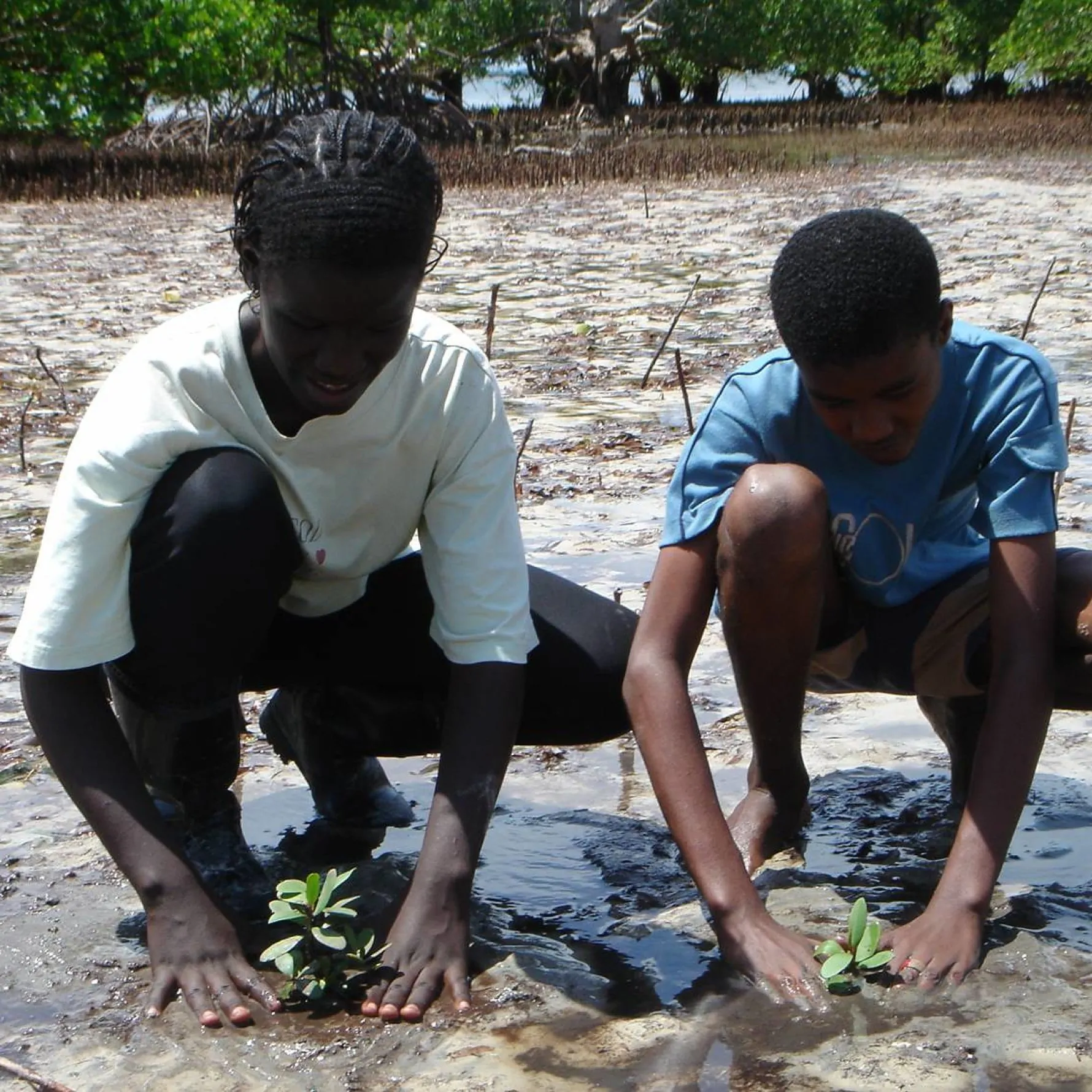
The Mikoko Pamoja project conserves and replants mangroves, which provides climate benefits while protecting coastal communities from high water levels and enhancing biodiversity.
About the Project
Mikoko Pamoja, which means 'mangrove together' in Swahili, started in 2010 and is the world's first community-based project to protect mangrove forests through the sale of carbon credits. The project is a collaboration between local groups, research institutions, NGOs and government actors. Together they are working to conserve and restore coastal mangrove forests, using both local knowledge and scientific methods. The project has become a model for how nature-based solutions can combine climate benefits with social and ecological sustainability.
The project has received international recognition, including winning the prestigious UNDP Equator Initiative Prize in 2017. As with all Plan Vivo, 60% of the revenue from the sale of carbon credits goes directly back to the project participants.
Unique feature
The income from carbon offset is not only used to protect and replant the forest, but also to improve the living conditions of the local community. For example, clean drinking water has been provided to 3,500 people, 700 school children have access to educational materials, and a total of 117 hectares of mangrove forest have been preserved.
The project contributes to the following objectives