Paskaia, reforestation in Mosquitia, Honduras - Plan Vivo
Paskaia is building sustainable forestry together with the indigenous people of La Mosquitia, Honduras. The project involves reforestation through both new planting and natural regeneration, combined with the cultivation of cocoa, beans and bananas.
Background information
Paskaia means 'building for the future' in the indigenous language, miskitu. La Mosquitia, located mostly in Honduras, is the second largest rainforest area in the Americas after the Amazon and is home to a very rich flora and fauna. However, logging and fires have caused the forest to disappear from very large areas. What was once rainforest has been transformed into savannah, with no trees or sparse pine forest at best.
About the Project
When the people living in this area finally regained ownership of their land a few years ago, they wanted to start managing it in a sustainable way and started the Paskaia project together with researchers from Sweden and elsewhere.
It is a complex ecosystem and development has been going in the wrong direction for many years in the past, but it is entirely possible to reverse the trend using relatively simple methods. This requires a strong local presence and a humble approach by all involved to truly understand the complex local factors driving deforestation.
To truly achieve long-term sustainable management of the area, it has been necessary to let the people living in La Mosquitia have the initiative in the project. Paskaia works with a co-creative process where it is essential that all groups in the local community participate, not least women and young people who otherwise often do not have a voice. The people living in the area are very enthusiastic about the Paskaia project and there are hopes that together they will be able to restore large areas of forest.
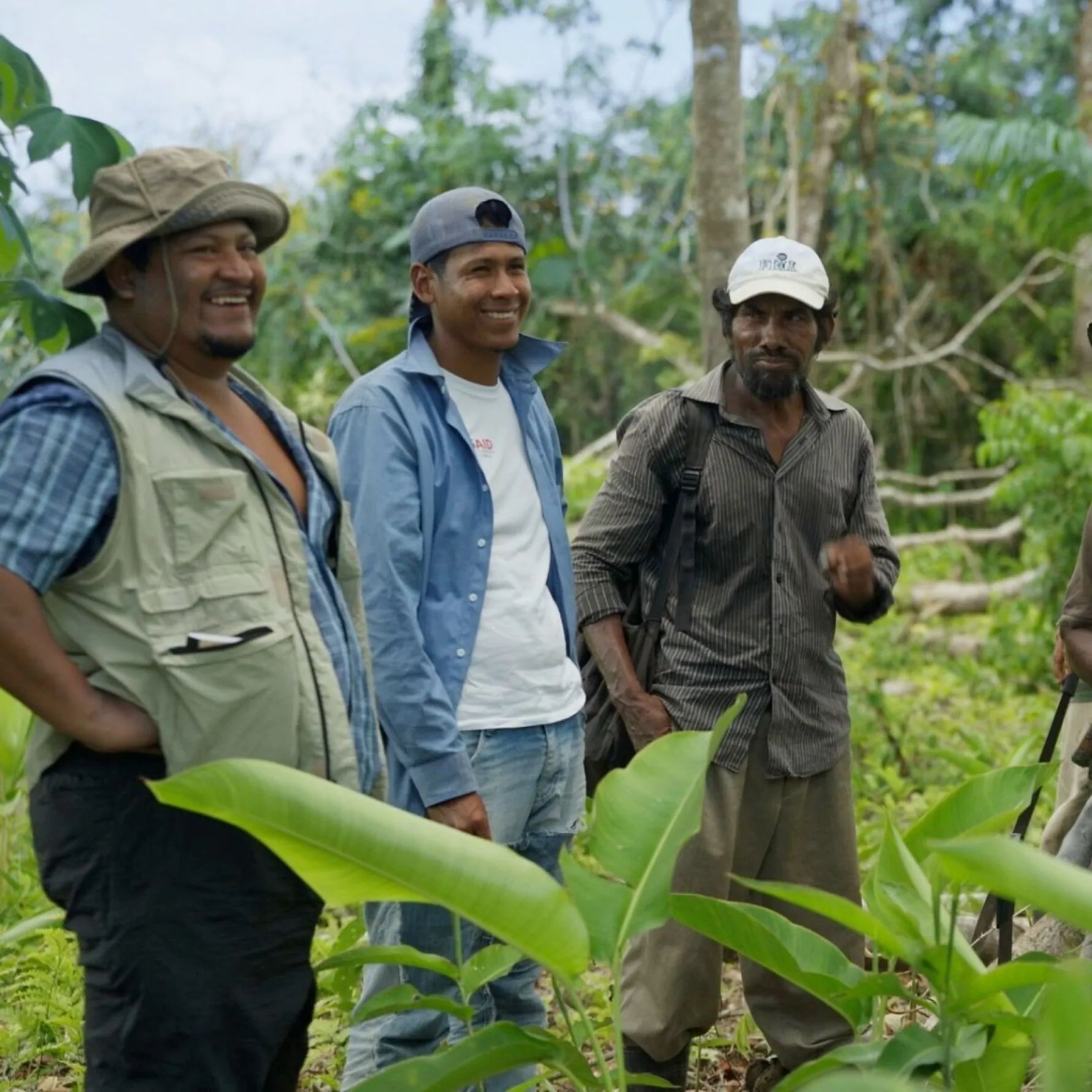
Paskaia employs a collaborative process in which the participation of all groups in the local community is central, particularly women and young people, who are often otherwise not given a voice.
Unique feature
Paskaia has now been working in this way in the area since 2018, developing methods to bring back the lost forest. Perhaps the most important thing has been to first control the fires that otherwise destroy the small seedlings that have managed to take root. Until 2022, the project has protected an area of about 400 hectares where the forest is now coming back. The areas protected by fire are complemented by areas where local tree species are planted.
Reforestation in the project takes place through both new planting and natural regeneration with local tree species such as mahogany and Caribbean pine.
Paskaia reforests in this way both on municipal land and on private land where the trees are combined with the cultivation of, for example, cocoa, beans and bananas. This quickly provides ongoing income and extra food supply for the population in the area, which the Paskaia project has in common with many other Plan Vivo. In this way, the project becomes sustainable in the long term and creates the conditions for, in addition to the climate benefit, several of the UN's sustainability goals to be met.
The project contributes to the following objectives
Here you can watch a recording of a seminar we held on the project on October 2, 2024.