REDD+ Nakau Loru Vanuatu – Plan Vivo
The REDD+ Nakau Loru project aims to reduce the vulnerability of local communities by conserving and restoring forests, while creating sustainable livelihoods for local people.
Background information
The Pacific islands are highly vulnerable to climate change, and their populations are severely affected by floods, soil erosion and saltwater intrusion. These islands are often only a few meters above sea level and are at risk of disappearing if sea levels continue to rise. At the same time, local communities are exposed to extreme weather events such as severe droughts, cyclones and hurricanes.
The area where the project operates is threatened by deforestation. Forests are often cleared to make way for pastures or plantations, with serious consequences. Deforestation causes, among other things, increased soil erosion, reduced biodiversity and faster run-off of rainwater, which dries out the soil and makes it less fertile. Protecting forests reduces these negative impacts while preserving their carbon sequestration capacity.
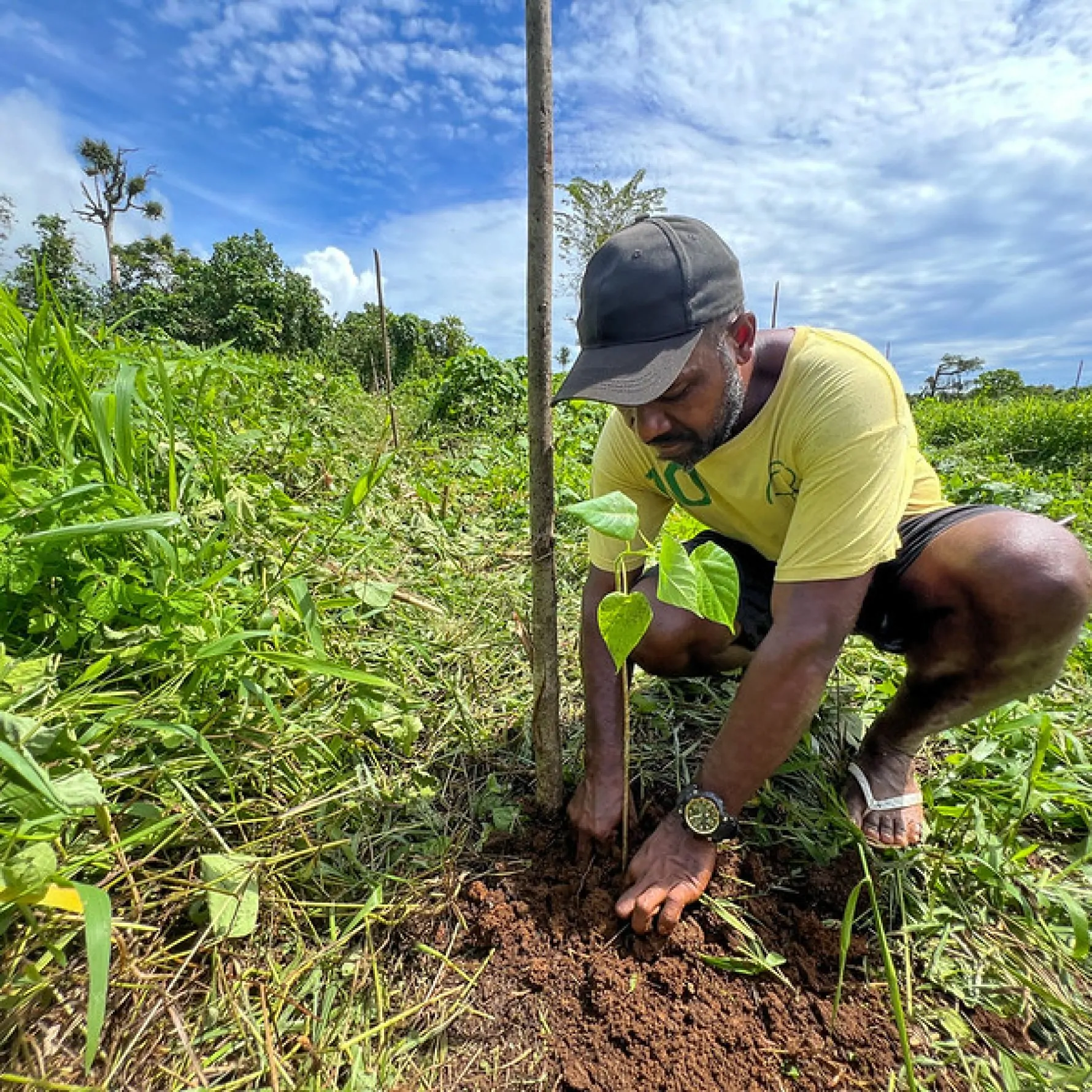
Chief Skip Ser in the Loru Forest, Photo by Diana Wrangham
About the Project
The REDD+ Nakau Loru project, one of the first of its kind in this area, started in 2010 and today protects forests covering an area of 200 hectares. Activities to prevent the spread of invasive species and reforestation are accelerating the regeneration of previously deforested areas. Income from carbon credits is used, among other things, to employ forest guards who protect the forest from encroachment.
Unique feature
In addition to preventing trees from being felled and carbon dioxide from being released into the atmosphere, the project helps to increase income for local villages, enabling more families to send their children to school. The project also protects the habitat for native plants and animals, which benefits biodiversity. The project also contributes to improved resilience to climate change, for example, the forest helps to purify water and provide villages with food. As in all Plan Vivo projects, 60% of the revenue goes directly to project participants.
The project contributes to the following objectives