Clean drinking water for schools and households in Uganda - Gold Standard
Every year, around 2.2 million people die as a result of lack of clean drinking water or inadequate sanitation. Those most at risk are children. To counter this, the project is working to increase access to safe drinking water for schools and households, improving health and reducing the need to burn wood.
Background information
In Uganda, about 40% of the population boil their water for purification, a practice that requires large amounts of wood and leads to the degradation of local forests. At the same time, smoke from indoor wood burning is dangerous to health and contributes to respiratory diseases.
About the Project
This project aims to address these challenges by distributing water purification systems to low-income households and schools in Uganda. By reducing the need to boil water, the project achieves both climate benefits and improved public health. The project began in 2013 and has since had a significant impact in the regions where it has been implemented.
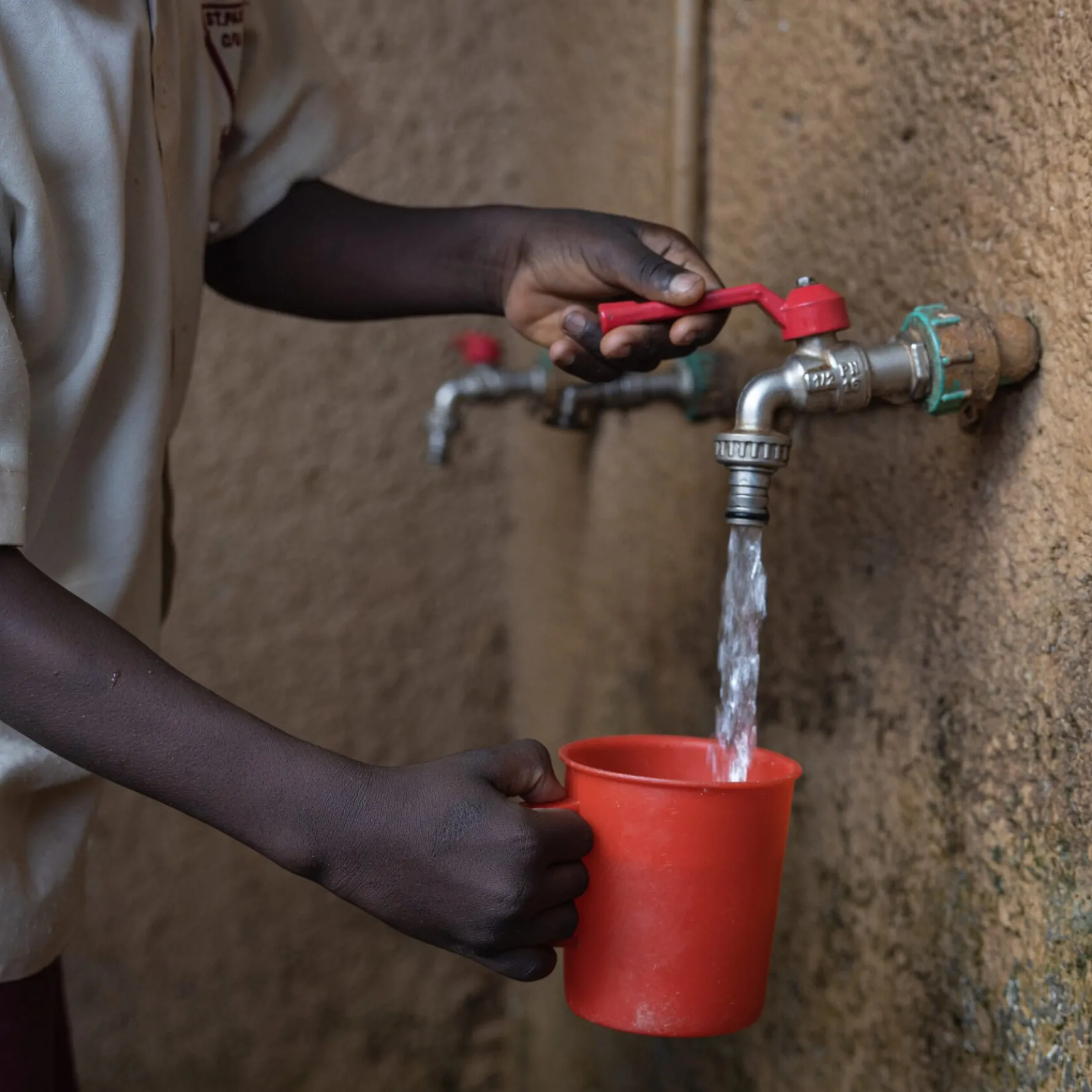
In addition to the project contributing to children in school having access to clean water, it also contributes to reducing the need to bring water from home. When the water purification system is installed, it replaces the previous methods of purifying the water, methods that have led to deforestation and the use of coal. In this way, over half a million tons of carbon dioxide are saved each year.
The water purification in the schools consists of a filter and a water tank with a capacity for 450 to 1,000 liters. The filter purifies the water in three steps. In a first step, the largest contaminants in the water are filtered out. In step two, an activated carbon filter is used, which absorbs the smallest particles and volatile organic contaminants, ensuring that the water does not smell or taste strange. In the final step, a UV filter is used, which kills microorganisms such as bacteria, viruses and pathogens. Thanks to the project, students' attendance at school increases, as they are less likely to get sick from the water they drink.
Unique feature
In addition to the project contributing to children in school having access to clean water, it also contributes to reducing the need to bring water from home. When the water purification system is installed, it replaces the previous methods of purifying the water, methods that have led to deforestation and the use of coal. In this way, over half a million tons of carbon dioxide are saved each year.
The project contributes to the following objectives