Upper Tana, Kenya - Plan Vivo
The Upper Tana Nairobi Water Fund Trust (UTNWF) runs this project, which operates in a water catchment area north of Nairobi, Kenya. Years of deforestation for agriculture have previously resulted in land that has become highly exposed to erosion and therefore vulnerable in various ways.
Background information
The area is heavily hilly, and eroding soil pollutes the drinking water used by 95% of Nairobi's residents. At the same time, the hydroelectric power plant that provides over 40% of Kenya's energy is at risk of being clogged by the sludge that forms in the water upstream. In addition to these systemic effects, farmers' yields have become low, creating poorer food security.
About the Project
The Upper Tanna project works with around 170,000 smallholders to better manage their land in exchange for performance-based rewards. Following a visit from the UTNWF, smallholders are supported in making a farm-specific action plan where the measures that create the greatest impact are discussed and can be implemented. Step one is usually to start terracing sloping land and planting Napier grass along the terraces. Terracing prevents erosion, keeps the soil fertile and prevents silt from entering downstream water reservoirs. The roots of the Napier grass further stabilize the soil while the grass provides a high protein source for livestock.
In the next step, native tree species are planted to increase agricultural yields, support biodiversity and provide the opportunity to create carbon credits. Alternatively, food-bearing trees such as avocado or tree tomato can be grown. All seedlings are provided free of charge by the project.
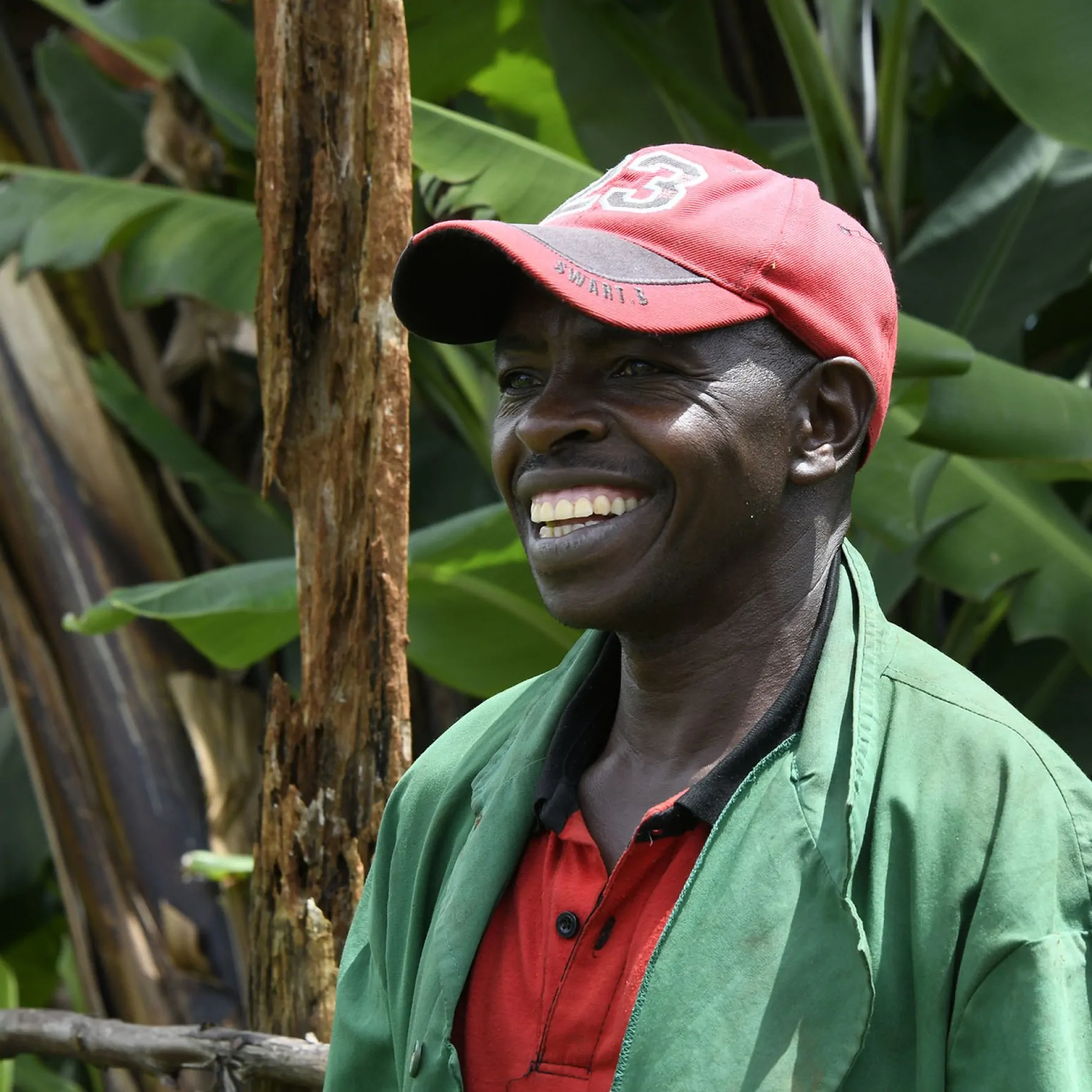
The Upper Tanna Project works with approximately 170,000 smallholder farmers to help them better manage their land in exchange for performance-based rewards. Following a visit from the UTNWF, smallholder farmers receive support in developing a farm-specific action plan in which the measures that will have the greatest impact are discussed and can be implemented.
Unique feature
After progressively completing some key actions on their land, participating farmers are provided with water harvesting equipment. The system works by collecting rainfall in large ponds that can be used to irrigate crops during the dry season and as a space to keep fish. Year-round access to water allows for security in future planning, as the farmer is no longer dependent on rainy seasons for his income or food security.
This is particularly important as Kenya is currently experiencing the worst drought in 40 years after six consecutive failed rainy seasons have led to a situation of severe hunger for 5.4 million people.
This project started in 2017, but due to interruptions caused by COVID 19, the first credits were only issued in 2022. ZeroMission is very proud to be the first company to purchase from the Upper Tana project.
Madame Felice – Diversified Farming in Upper Tana That Provides a Higher and More Secure Income
Madame Felice started working with the project in 2019 and has managed her land with support from UTNWF for the past four years in exchange for seedlings, a water pond and an irrigation system.
She is a single woman in her 60s whose children have left home. She has a plot of one hectare that was previously used to grow cabbage. With capacity building and resource provision from UTNWF, she has terraced her sloping land and started growing avocados to sell at the local market, but her biggest income now comes from strawberries.
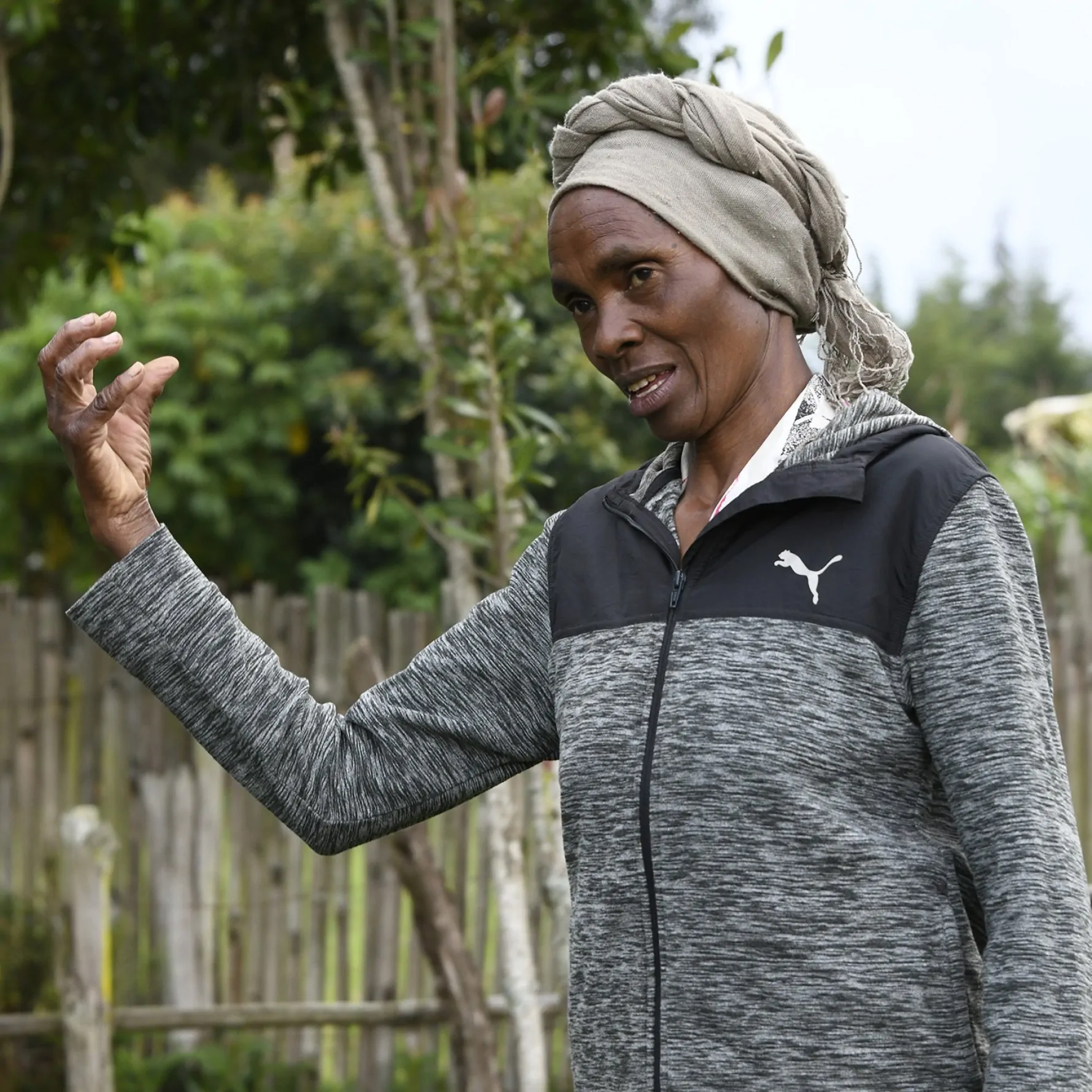
Madame Felice, one of many participants in the Upper Tana Kenya climate project.
After being provided with a water harvesting system, she built a greenhouse and installed a drip irrigation system to grow strawberries year-round. She now employs a few people locally to harvest every two weeks to sell at the local market. She gets a good price for her products because her neighbors grow other crops, compared to the time before the project when most grew the same crop, which made sales at the market more difficult and less profitable.
The conversion of her farm has significantly increased her income and standard of living. When we visited her property in May 2023, we could see the newly built brick house in front of the wooden hut that used to be the farmhouse. It is now occupied by chickens and used as a storage room. She said her extra income is now used to support her children at university.
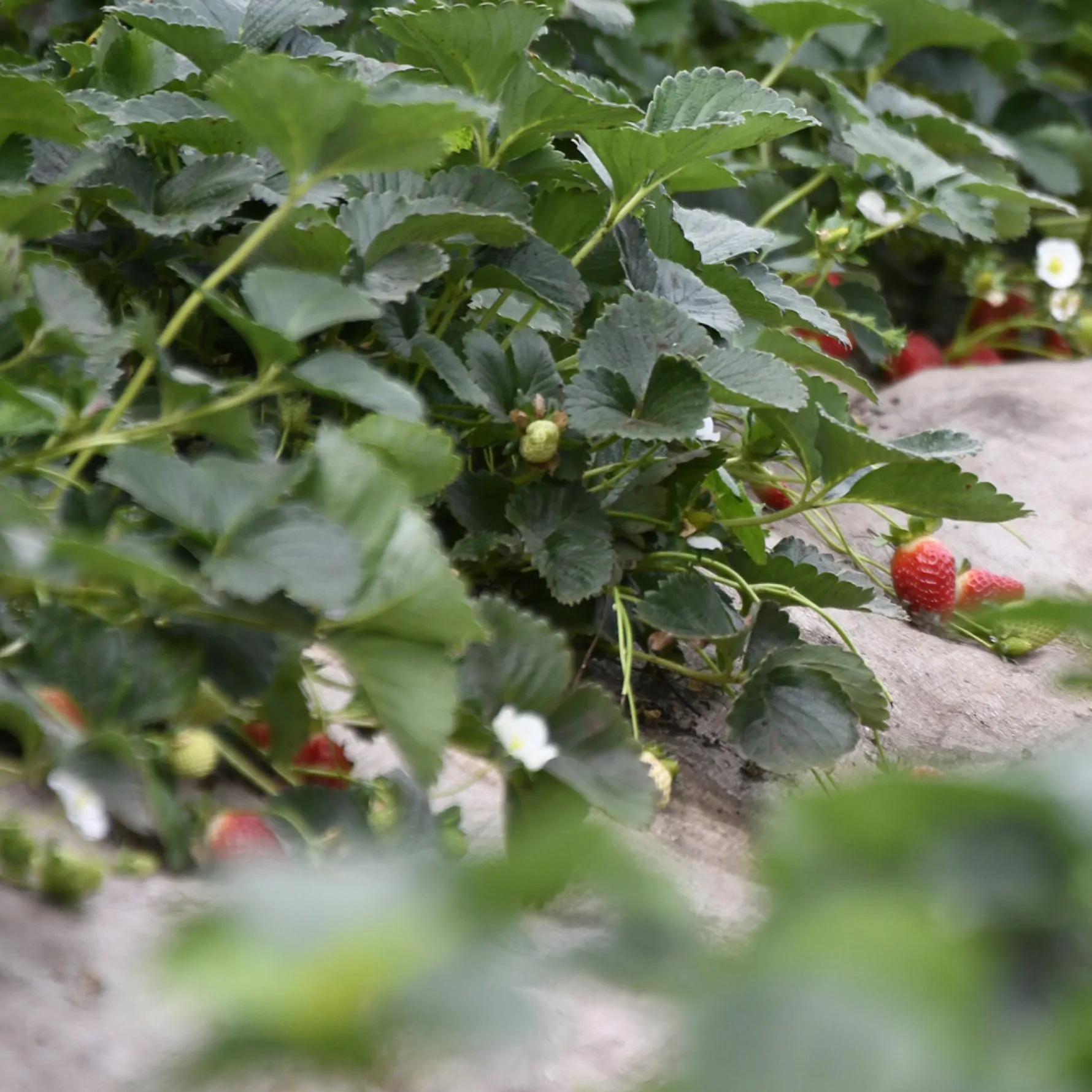
Among other things, strawberries are grown in Madame Felice's garden.
The project contributes to the following objectives