Warning: Trying to access array offset on false in zeromission.php online 5
Project visit Central America - Part 2 of 3
December 4, 2023
"BUILDING FOR THE FUTURE". Honduras, November 9-12, 2023.
At ZeroMission , we travel to the carbon offset projects we work with as the visits contribute to increased understanding, transparency and knowledge exchange between us and project developers and participants. In November this year, our colleagues Cecilia Hall, climate strategist, and Henrik Juhlin, CEO of ZeroMission, traveled to Central America. Here you can read the second part of their travelogue.
Paskaia project - background
The project is building sustainable forestry with the indigenous people of Mosquitia, in eastern Honduras. Paskaia means 'building for the future' in the indigenous language, Miskito. Mosquitia, which is mostly in Honduras but also extends into Nicaragua, is an area with very rich flora and fauna. But logging and fires have caused the forest to disappear in huge areas.
When the people living in this area regained ownership of their land a few years ago, they wanted to start managing it in a sustainable way. That's why the Paskaia project was launched together with researchers from Sweden and elsewhere.
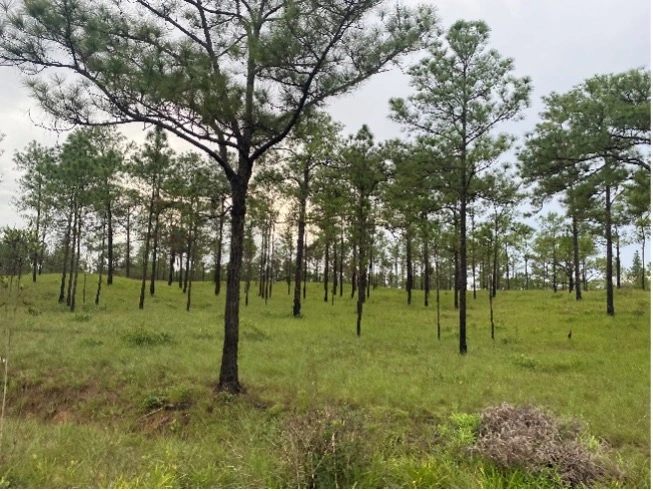
"When we were in the car on our way to the project area around the village of Tipi where the project is operating, we passed many grasslands with a few large trees."
- Cecilia Hall
To truly achieve long-term sustainable management of this vast area, it is necessary to let the people living in Mosquitia have the initiative and feel ownership and influence in the project. Therefore, the project is working with co-creative processes where it is crucial that all groups in the community participate, not least women and young people who otherwise often do not have a voice. About 50% of all project participants are women. The project is in the final stages of the process to become certified by Plan Vivo.
Summary of the project visit - Cecilia's words
"Many people in Honduras dream of moving to the United States, but when we ask people in Mosquitia, their dream is to stay where they are. Those who go away to study, for example, move back home. This says something about people having a very strong connection to the area. Like the other Plan Vivo projects we visited on the trip, we experienced a very open and close relationship between the project developers and the participants from the Mosquito people.
The Paskaya project has incredible potential to have a positive impact in the area. In just a few years, the project members have already managed to protect a large amount of land and the results are clear as we drive through the project area. On the protected land, small pines and other trees are popping up everywhere. We are very much looking forward to following the development of the project in the future!"
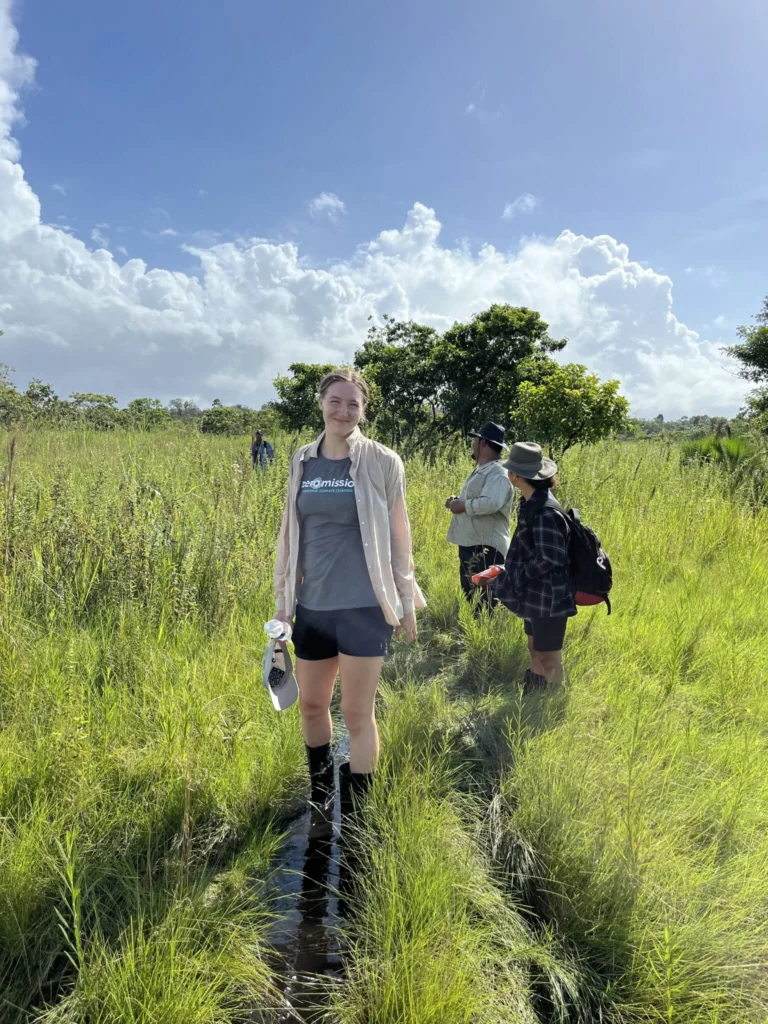
Cecilia Hall, Climate Strategist, ZeroMission
The visit
Arrival in Puerto Lempira
We flew from San Pedro Sula in northern Honduras to Puerto Lempira, which is near the coast of the Caribbean Sea, early in the morning of November 10, in a tiny plane where it rained in (!!) as we went through a rainstorm. But the trip went well and we landed on a small gravel runway next to a small shed that turned out to be the gate itself. There we were picked up by Loly, who is coordinating the project on site, and Marvin who works as a forestry engineer for Paskaia.
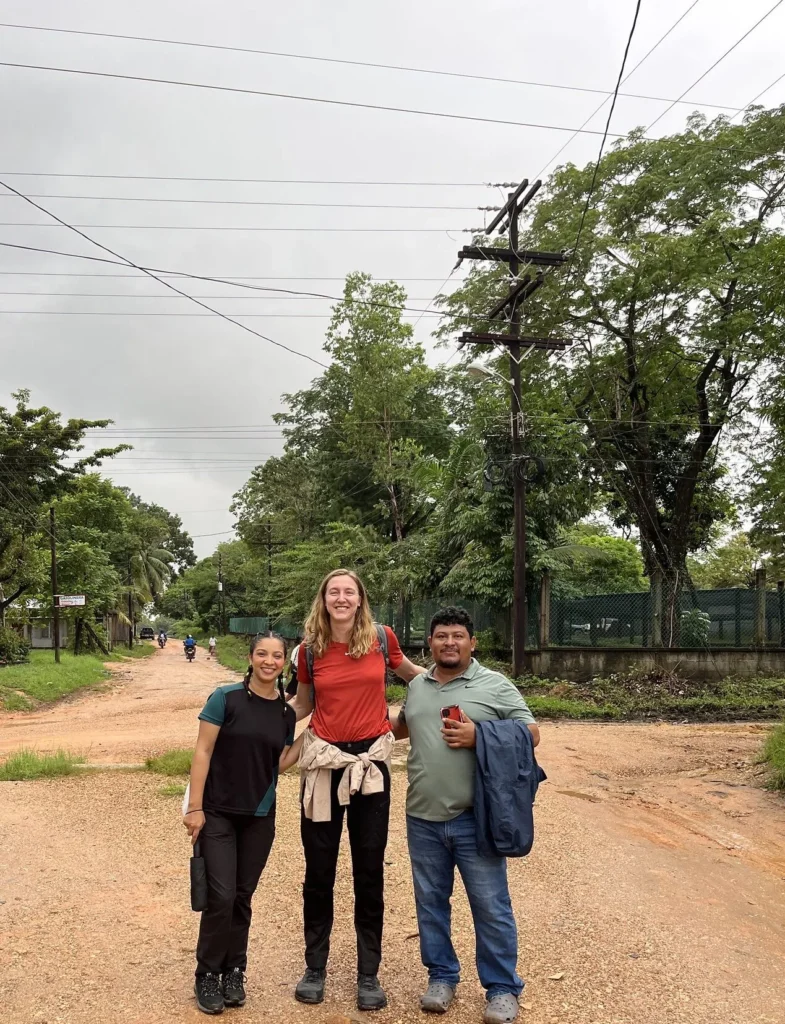
Loly divides her time between Sweden and Honduras and works as a project coordinator for the Paskaia project. Marvin works for Paskaia as a forestry engineer.
On the way to the Tipi
The start of the Paskaia project was not a smooth one, says Marvin. Initially, many smallholders were interested in the project, but when he came back a few months after the initial contact, few of the smallholders had planted any trees. They simply didn't believe that Paskaia would come back, as it is common for projects to be initiated by outsiders and then not followed up. When they realized that Paskaia is actually coming back and is serious about running the project long-term, many became interested.
As we sat in the car on our way to the project area around the village of Tipi where the project is operating, we passed many grasslands with a few large trees. No small trees or seedlings were visible, and the trunks of the trees were black with soot. Nothing is grown in this area, and the plains are mostly empty. Mr. Loly told us that fires are very common and that the grasslands burn almost every day in summer, preventing natural reforestation. For this reason, fire protection is one of the key elements of the Paskaya project.
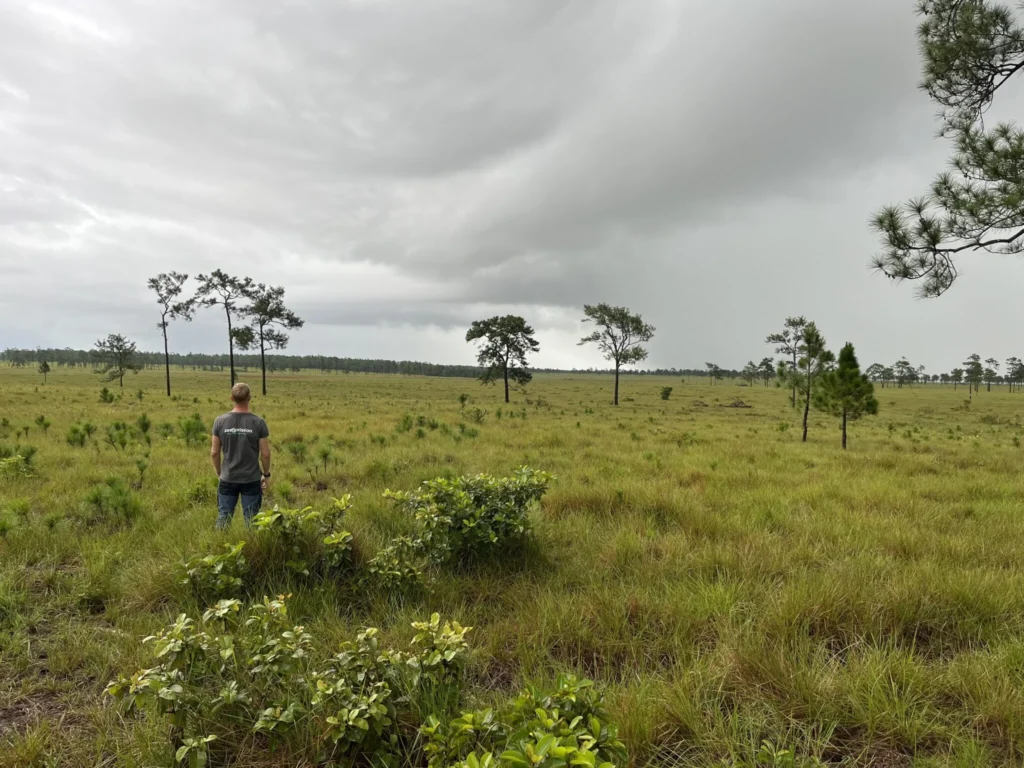
Loly told us that in this part of Honduras it is really poor. People might have some rice and beans that they grow in their garden, but not much else.
Until 2023, the project has protected an area of about 450 hectares where the forest is now slowly coming back. To prevent new fires, they are building firebreaks that need to be continuously kept open and worked to prevent them from growing back, they are building towers where they can watch for fires, they are buying water pumps and training project participants in forest fire management. All this requires a lot of labor and therefore money. Marvin said that this is where the big work for the participants lies, as to get to the project area they need to walk 2-3 hours. If the project would manage to get funding for e.g. a tractor with a trailer, or a bus that can handle bad road conditions, it would help enormously.
Arrival at Tipi and visit to the nursery
Once in Tipi, our first visit was to one of the nurseries run by the project. It is best if the seedlings are retrained and planted out at the end of November, as this gives them time to take root before summer begins. In another nearby greenhouse, the seedlings were preserved to be planted out later by the four new families that joined the project this year. By using nurseries, the project can bring down the cost per plant produced. On the market, a seedling costs 45 lempira, but as the project grows itself from seeds they buy, they can bring the cost down to 10 lempira, which corresponds to about SEK 4. If the project receives funding for an even larger greenhouse, this cost can go down more.
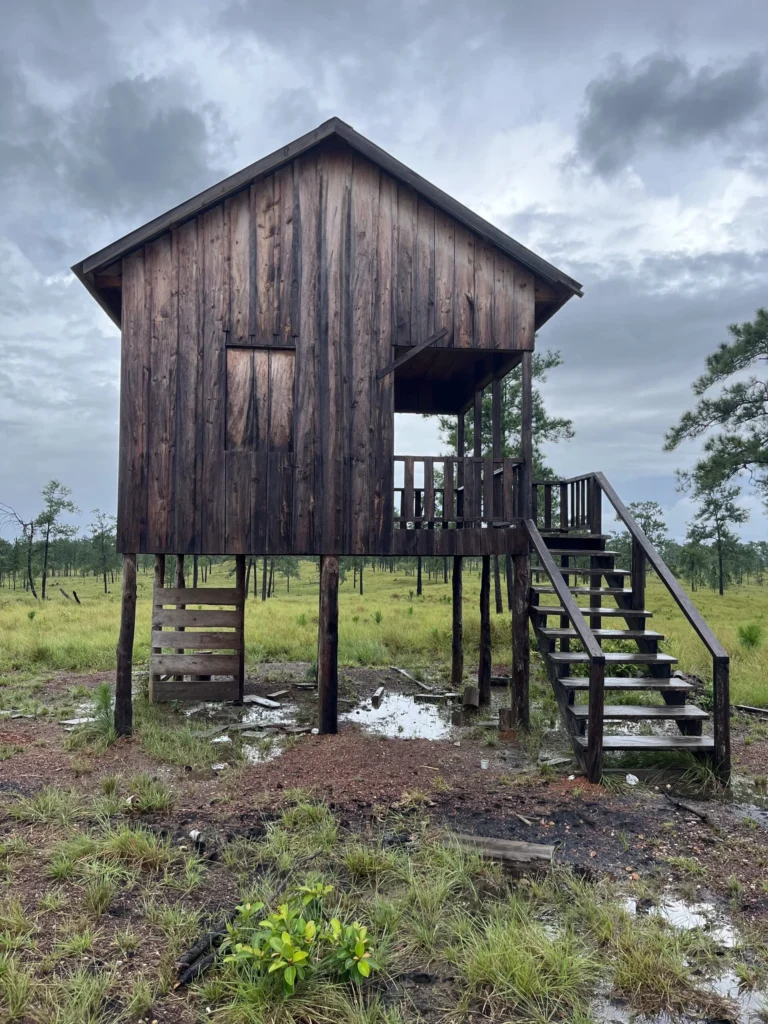
In the village of Tipi there is a school and a health center, but teachers and nurses live in Puerto Lempira, which is 3 hours away by car, so they only come once in a while. Therefore, very few can read or write.
The greenhouses grow mahogany, known locally as caoba, and cedro, which is a cousin of mahogany, but not as precious. Mahogany does not self-seed unless it is established in one place, but must be planted out as cuttings for them to take root. The seedlings in the greenhouses were about three months old and ready to be planted. The idea in the Paskaya project, as in many other Plan Vivo projects, is not to plant only one type of tree as different tree species help to increase biodiversity. Different seedlings and trees also have different characteristics that contribute in several ways to improving soil health and soil microlife.
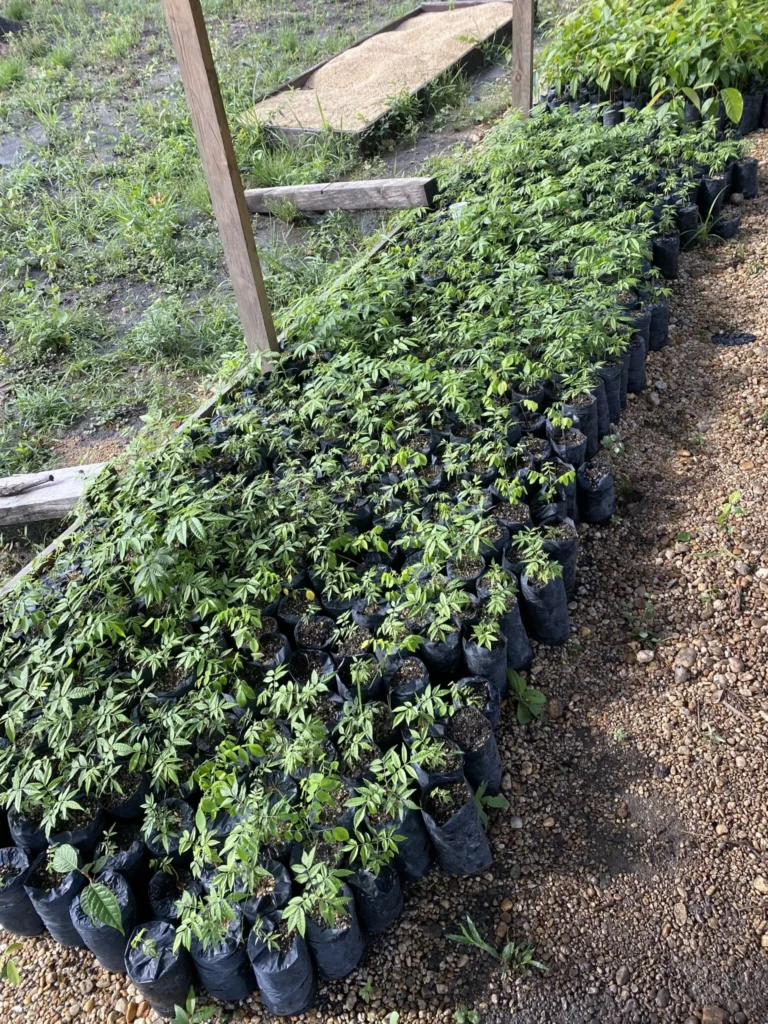
One of the project's many nurseries grows mahogany and other types of wood, all carefully selected for their different characteristics. In accordance with Plan Vivo, only native trees are used.
As part of working on agroforestry systems, where a certain part of the crop is used for food production, the project wants to bring in cocoa plants and rambutan trees. Marvin told me that his brother was working in a place 80 km away where they found cocoa bushes that are over 300 years old! His hope is that the Paskaya project will also be able to access these cocoa beans to grow.
Recruitment of new smallholders
During our time in Tipi, a woman and her daughter came by to sign a contract with Paskaia to join the project, and we were able to follow part of the process. The woman sat down with representatives from Paskaia, and as she only spoke Miskito, the local language, another colleague had to help translate. It is always crucial that the smallholders understand what is being said and what the contact says. Slowly and methodically, they went through the contract together, before the woman finally signed to join the project. The woman rolled up her copy and put it in her handbag. The next step in the process is for them to draw up their land and what she wants it to look like in 10-15 years.
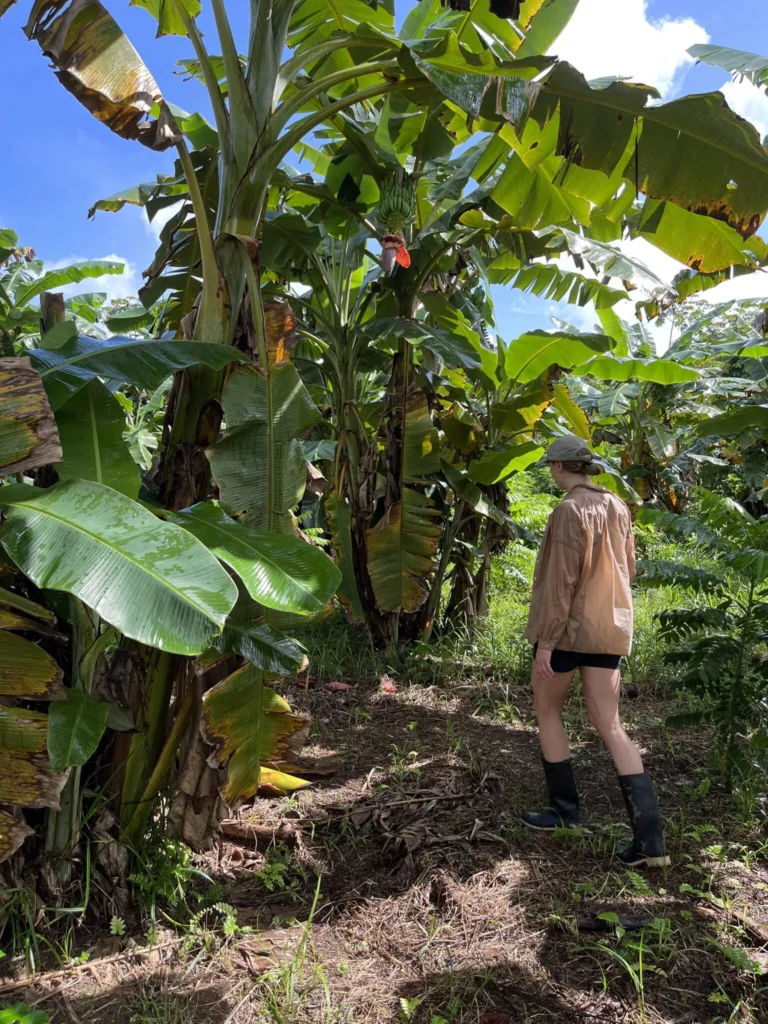
Here we learned to walk with wet feet. We waded through streams with water levels far above boot heels and through jungle-like nature.
Visit to Rugamas farm
We were sitting under Rugama's house when it started raining. Two women and two small children were also sitting there. A hen came by and flew up and sat in a plastic basket hanging like a bag from the roof. After Rugama arrived, he wasn't there when we arrived, we went out into his garden and looked at the caobas (mahogany plants) planted there. Marvin pointed out some trees planted too close to already established seedlings and some planted with more space. There was a big difference where it had been planted 'right' in the way the trees had grown and had space to spread their branches.
Rugama was one of the first 11 families to join the project in 2022, but also one of those who needed to supplement with some seedlings because some died. We notice and understand that there has been a steep learning curve initially in the project, both for participants and representatives from Paskaia. Today, they have a better understanding of what works and what doesn't and what needs to be done or explained in a better way. On Rugama's farm, caoba and cedro were planted among plantains, yucca and other crops. The land can be cultivated until the trees reach a certain size, then the cultivation is rotated to another land.
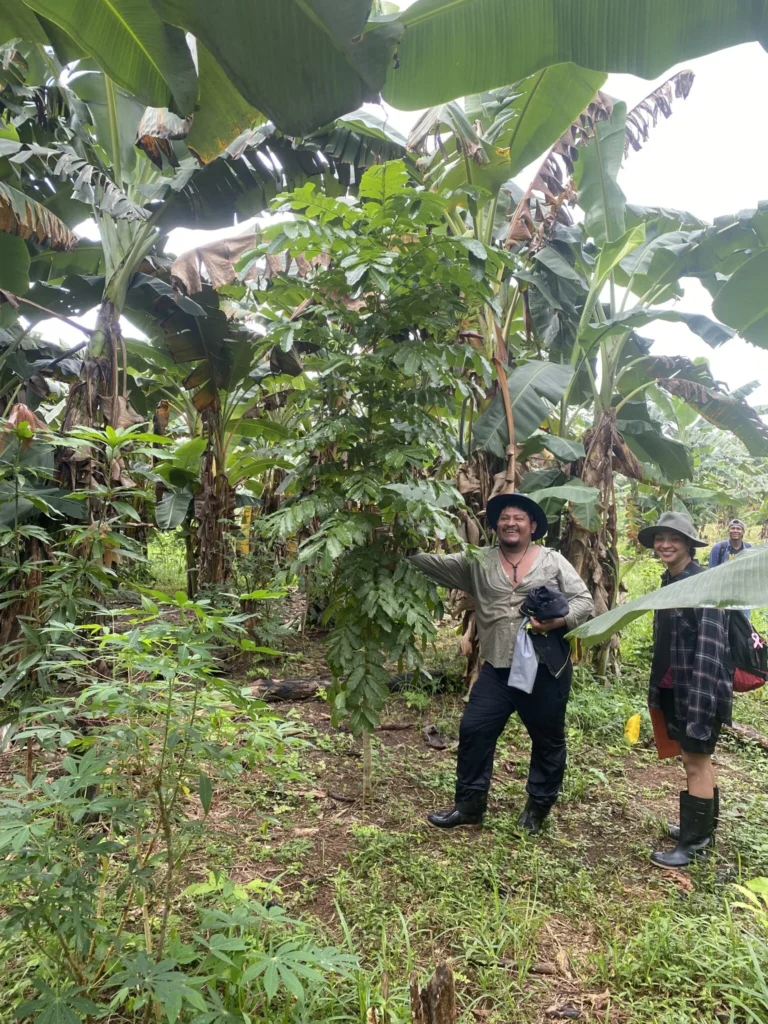
Henrik asked what Mr. Loly and Mr. Marvin would like to convey about the project to potential buyers. Marvin briefly answered that the earth has two lungs, one is the Amazon and the other is La Mosqitia, the area where the Paskaya project operates, which emphasizes the importance of reforestation in this area.