Is there enough land to offset rising emissions?
January 12, 2021
Is the world's available land sufficient to offset historical and future emissions to avoid a 1.5 degree temperature increase? The obvious answer is no. No negative emissions technology will be enough to stop the temperature increase we are heading towards without a substantial reduction in emissions. But how should we view tree planting as an offset mechanism, and should it be used to offset emissions at all?
The discussion should be set against where we are today.
Since the 1960s, more than half of the world's tropical forests have been deforested (IUCN, 2020). Globally, deforestation and land-use change account for about 23% of global net emissions annually (IPCC, Special report on climate change and land, 2019). Thus, forest and land use change represent the main drivers of the climate crisis we are facing. But it also represents one of the main solutions.
In the study The global tree restoration potential published last year in Science, the researchers estimate that reforestation has the potential to sequester two-thirds of the total anthropogenic emissions present in the atmosphere. Their analysis found that 1.7 billion hectares of land could be reforested, an area the size of the United States and China combined, without encroaching on food production or urban areas.
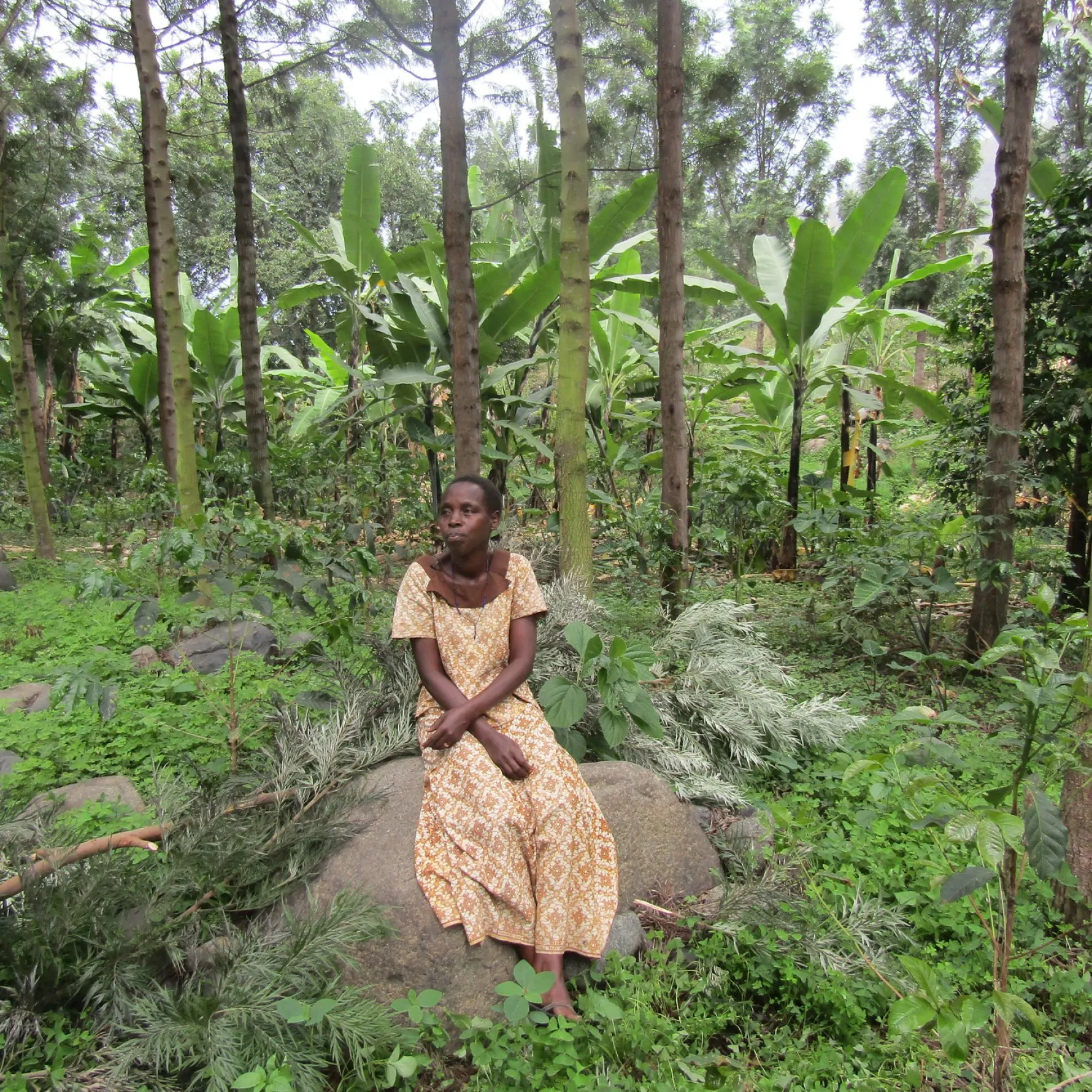
A smallholder farmer on his land in the Trees for Global Benefit carbon offset project, Uganda.
But how big is the carbon offset market today and is there enough land? In 2018, the voluntary carbon offset market traded credits equivalent to the volume of 100 million tons of CO2e (Ecosystem Marketplace 2020). The total volume traded since the market started is 1.2 billion tons of CO2e, which is equivalent to Japan's annual energy-related emissions. Globally, 33 billion tons of CO2 were emitted at the same time from energy-related activities alone (IEA, 2019). This means that the voluntary market addresses around 0.3% of global annual energy-related emissions. Although the market is growing and has several important spin-off effects by influencing the mandatory market (trading of emission allowances between countries) and generating innovation for emission reductions, it is still too small to have a significant impact on global anthropogenic emissions.
It can therefore be concluded that, for the foreseeable future, there is no problem with available land for tree planting. It would be an ideal scenario if all companies in the world calculated their climate impact and were willing to pay to take responsibility for it, but we are not there today. On the contrary, the global forest area is decreasing by about 10 million hectares per year, with the fastest deforestation occurring in southern Africa, South America and Southeast Asia (FAO, 2020).
The new reality under the Paris Agreement, where all countries must submit voluntary reduction targets, known as Nationally Determined Contributions (NDCs), clearly shows that there is an urgent need for action to reduce climate impacts. With current commitments, the world will warm up to 2.8 degrees by the end of this century (Climate Action Tracker, 2019), provided that countries meet the targets set. The voluntary carbon offset market could play an important role in closing this gap by financing additional reduction measures that are either not covered by countries' climate targets or to support them.
Measure, reduce, bind
The criticism of carbon offsetting as insufficient in light of what is required in terms of actual emission reductions is one we can all agree on. Carbon offsetting is not and has never been a comprehensive solution to the crisis we are facing. The argumentation is based on a business as usual perspective, that emission levels will continue at current levels and that companies and organizations consider carbon offsetting through natural climate solutions as a solution to address their emissions.
Few companies today have this view of carbon offsetting. On the contrary, companies that offset spend more on emission reductions and reduce emissions to a greater extent than companies that do not offset, as shown in a study by Ecosystem Marketplace.
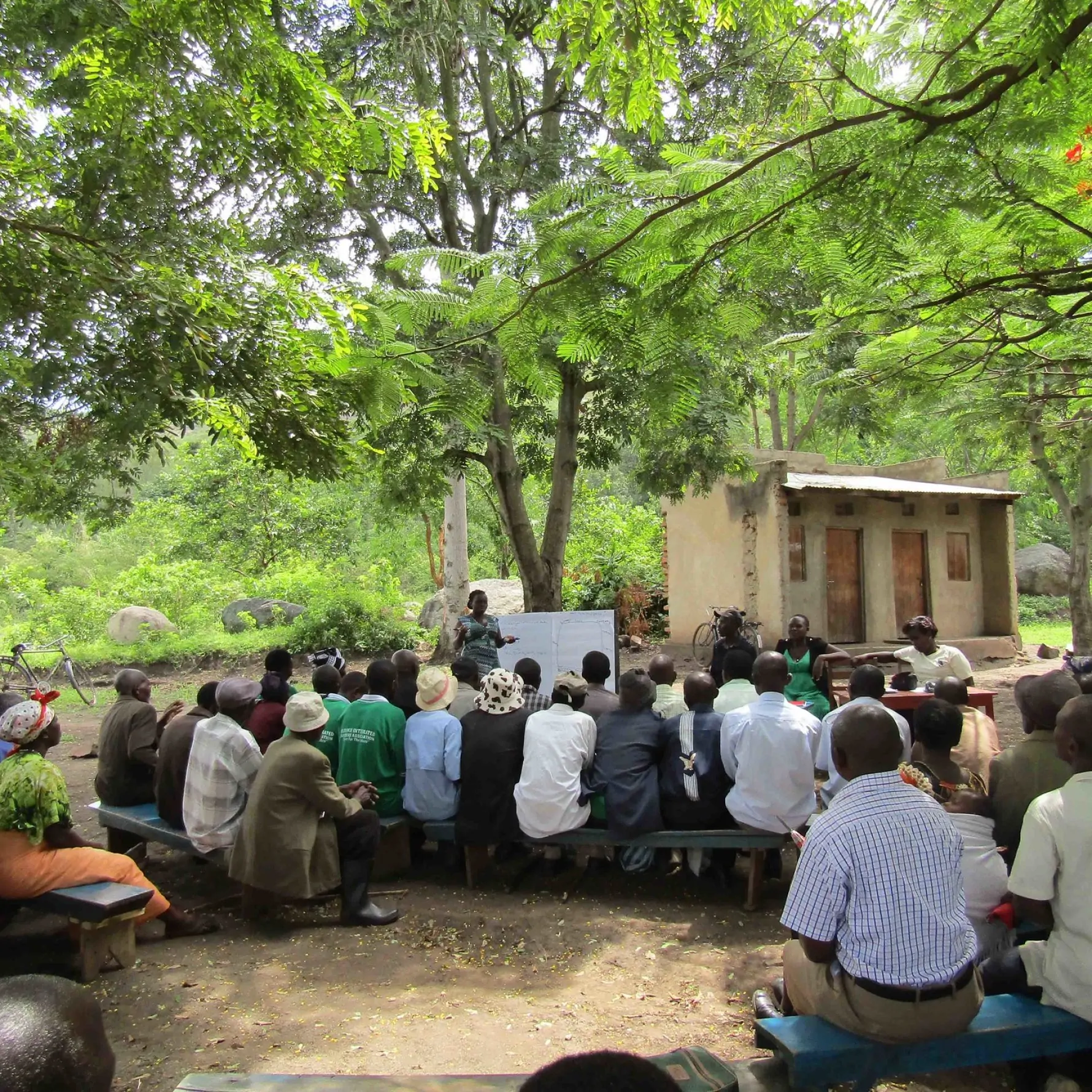
Smallholder farmers in the Trees for Global Benefit project.
It is true that the land area that would be required to offset global anthropogenic emissions is simply not enough. There is neither the time nor the technologies to deal with the existing emissions that have already occurred since industrialization while anthropogenic emissions continue at the current rate.
The IPCC's special report on the 1.5 degree target makes it clear that it is not enough to change and reduce emissions, we must create negative emissions in parallel. It is therefore not an option for countries, companies or individuals to compensate without reducing emissions, but society as a whole must reduce according to the carbon budget that remains to be in line with the 1.5 degree target. At the same time, it is not enough to simply reduce emissions; the world must reach net-negative emissions within a few decades for the world's temperature to remain below 1.5 degrees Celsius.
References
FAO (Food and Agriculture organization of the United Nations) (2020). State of the WORLD'S forests 2020: Forestry, biodiversity, and people.
Climate Action Tracker. (2019) Warming Projection Global Update.
Ecosystem Marketplace (2020). State of the Voluntary Carbon Markets 2020.
IEA (2019), Global Energy & CO2 Status Report 2019, IEA, Paris.
IPCC (Intergovernmental Panel on Climate Change) (2019). Special report on climate change and land, summary for policy makers.
Bastin, J. F., Finegold, Y., Garcia, C., Mollicone, D., Rezende, M., Routh, D., ... & Crowther, T. W. (2019). The global tree restoration potential. Science.