Our colleague Håkan Emilsson from U&We has written about carbon offsetting:
Once significant emissions are identified, work to reduce climate impacts can begin. This requires an action plan and sometimes a more comprehensive strategy, such as Vision & Action.
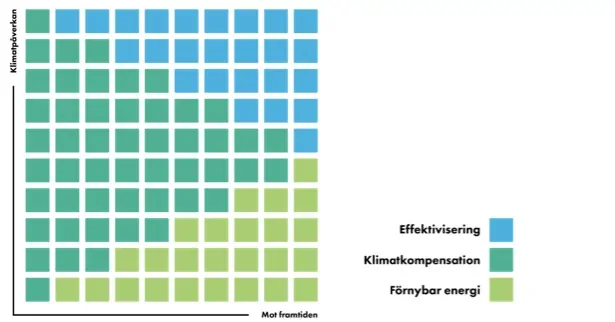
A climate strategy needs to include measures that reduce climate impact (such as switching to renewable energy and energy efficiency). Offsetting can be both an incentive to continue implementing measures and demonstrate a responsible approach in the meantime, but few companies can achieve zero climate impact directly. One way to demonstrate responsibility is to offset the climate impact that you cannot get rid of immediately. It is also a way to create an incentive for the company to reduce the climate impact and get a continuity over time, all reduction measures that succeed will reduce the cost of carbon offsetting so that you save money over time by reducing emissions.
But speaking of costs, how can you justify the cost?
Actually, carbon dioxide and other greenhouse gases are waste, just like glass and metal packaging or used light bulbs and batteries. They are materials in cycles, which need to be managed and to some extent returned to the cycle to be useful, otherwise they accumulate in the wrong places and cause big problems. Carbon from fossil fuels should not be in the atmosphere, just as heavy metals from the Earth's crust should not be in the biosphere. And just as a company pays for someone to come and collect its waste from the office, it needs to pay for someone to bind the extra climate impact it has caused by burning fossil fuels. The difference with the regular waste fractions is that greenhouse gases are not visible and paying for their disposal is still voluntary.
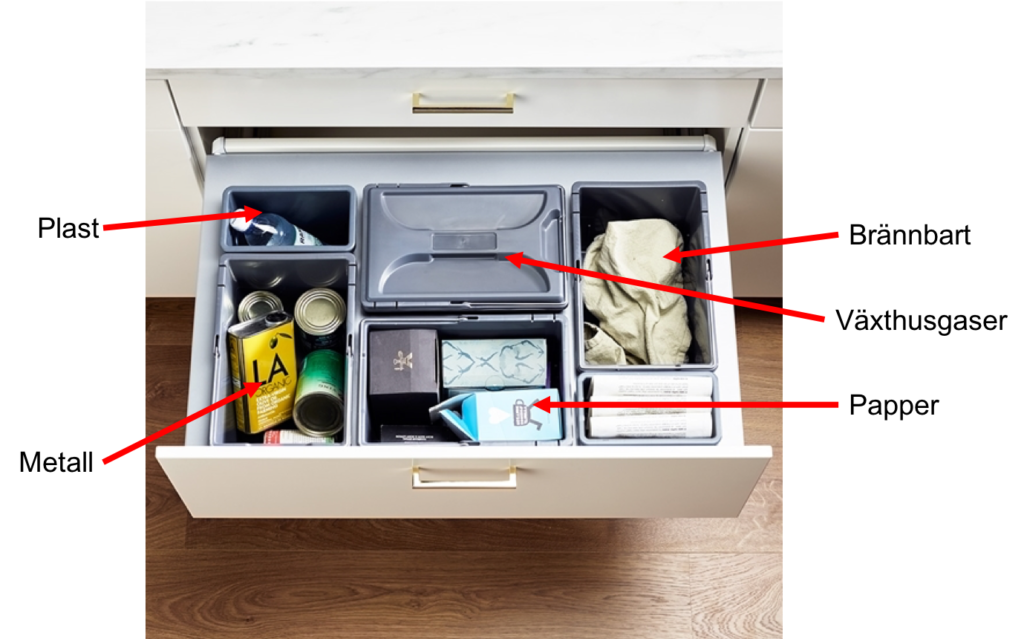
Today, most waste fractions are disposed of, but some have seen greenhouse gas disposal as a gift. In several companies, the view has already shifted. The cost needs to be paid by someone regardless, and if no one pays now, the cost will only be greater and less fairly distributed, as more people will then be affected by the effects, primarily people in what the United Nations Framework Convention on Climate Change (UNFCCC) refers to as developing countries. According to the UN definition of offsets, only projects in developing countries are allowed to issue credits that can then be sold on the offset market. The usual certifications for carbon offset projectsPlan Vivo, Gold standard etc) only sell credits from projects in developing countries. The background to this is a principle of the UN Climate Commission, and a consequence is that many of the projects also contribute to poverty reduction and climate adaptation. Read more about ZeroMission's carbon offset projects.
Some carbon offset projects contribute avoided emissions, others sequester carbon(negative emissions), such as tree projects. To ensure that tree projects can deliver the negative emissions promised, there is a buffer system where several different projects cooperate and set aside a small part of the area as a buffer, which can be used if a project is affected by fire, drought or other disturbances.
There are also other technologies for negative emissions. Biochar projects exist, but on a small scale, and BECCS risks leading to such negative impacts on society that few want to develop and apply it. Sustainably harvested biomass is a prerequisite for scaling up both biochar and BECCS, so tree planting in deforested areas, which many of the projects in Plan Vivo are based on, has a possible synergy with the use of other technologies in the future. Biochar projects are also something that could be developed in Sweden, already today there is a project for individuals and companies who want to invest in negative emissions through biochar, EcoEra.
So my call to action is:
- - measure your climate impact from a life cycle perspective,
- - launch an action plan to reduce climate impact (focus on the significant emissions)
- - offsetting the climate impact; and
- - communicate the responsibility you take.




Many companies choose to carbon offset. It can be a strategy to differentiate their products (e.g. Arvid Nordqvist), a way to show responsibility towards their stakeholders (e.g. Enjoy Wine and Spirit) and beyond that be more or less integrated into the company's overall business strategy (e.g. Max). Companies choose different paths depending on their market, their stakeholders' view of the company and their level of ambition. As offsetting is used in so many different situations, the reasons for offsetting also differ. However, some common approaches can be found.
At its core, this is about companies having a responsibility for the climate impact they create. As an organization, there is really only one way to address this if you want to continue to be perceived as responsible - by reducing the climate impact of your entire value chain.
The division into scopes from the Greenhouse Gas Protocol. Scope 1: direct emissions from own fixed assets. Scope 2: indirect emissions from purchased energy. Scope 3: other indirect emissions How do we distinguish our climate impact from that of others? The Greenhousegas Protocol's division into scopes is the starting point, but scope 3 also includes emissions that companies can reasonably influence to almost the same extent as in scope 1.
It is crucial to map the climate impact of the entire company from a life cycle perspective, to identify which stages of the life cycle account for the company's significant climate impact. One way to do this is to conduct a Camel Analysis.