VSME – Voluntary Sustainability Reporting Standard
VSME is the standard that enables small and medium-sized enterprises to meet the requirements of customers, banks, or investors without having to establish a full-scale CSRD process. Here, we’ll go over what VSME entails, who should report, and how to get started.
What is VSME?
Voluntary Sustainability Reporting Standard for SMEs (VSME) är en frivillig standard som ger små och medelstora företag en strukturerad och hanterbar väg in i hållbarhetsrapporteringen, utan att behöva möta samma krav som stora börsnoterade bolag.
Standarden är utvecklad av samma organisation som tagit fram ESRS-standarderna för CSRD, vilket gör att VSME är utformad för att passa naturligt ihop med CSRD-rapportering. Detta kan till exempel vara en fördel om du är leverantör till ett större bolag, och kan också förbereda dig för eventuella kommande lagkrav.
Standarden täcker samma hållbarhetskategorier som CSRD – klimatpåverkan, vattenanvändning, biologisk mångfald, arbetsförhållanden och styrning – men bygger på principen "om tillämpligt". Det innebär att du bara rapporterar på de ESG-aspekter som faktiskt är relevanta för din verksamhet.
Why is VSME becoming increasingly important?
En vanlig drivkraft för VSME-rapportering är krav från större kunder eller finansiärer som själva omfattas av CSRD och behöver data från sin värdekedja – till exempel från leverantörer. Att ha en strukturerad rapport på plats kan alltså bli en konkurrensfördel, inte bara ett sätt att möta andras krav.
Det finns flera skäl till att fler små och medelstora företag väljer att börja rapportera redan nu:
• Finansiering: Banker och investerare efterfrågar i allt högre grad ESG-data även från mindre bolag i sin kreditgivning och riskbedömning.
• Framtidssäkring: En grundstruktur på plats gör det enklare att skala upp om företaget växer in i CSRD-krav, eller om regelverket ändras.
• Varumärke och förtroende: En tydlig, dokumenterad hållbarhetsrapport stärker trovärdigheten gentemot kunder och samarbetspartners.

How to Get Started with VSME
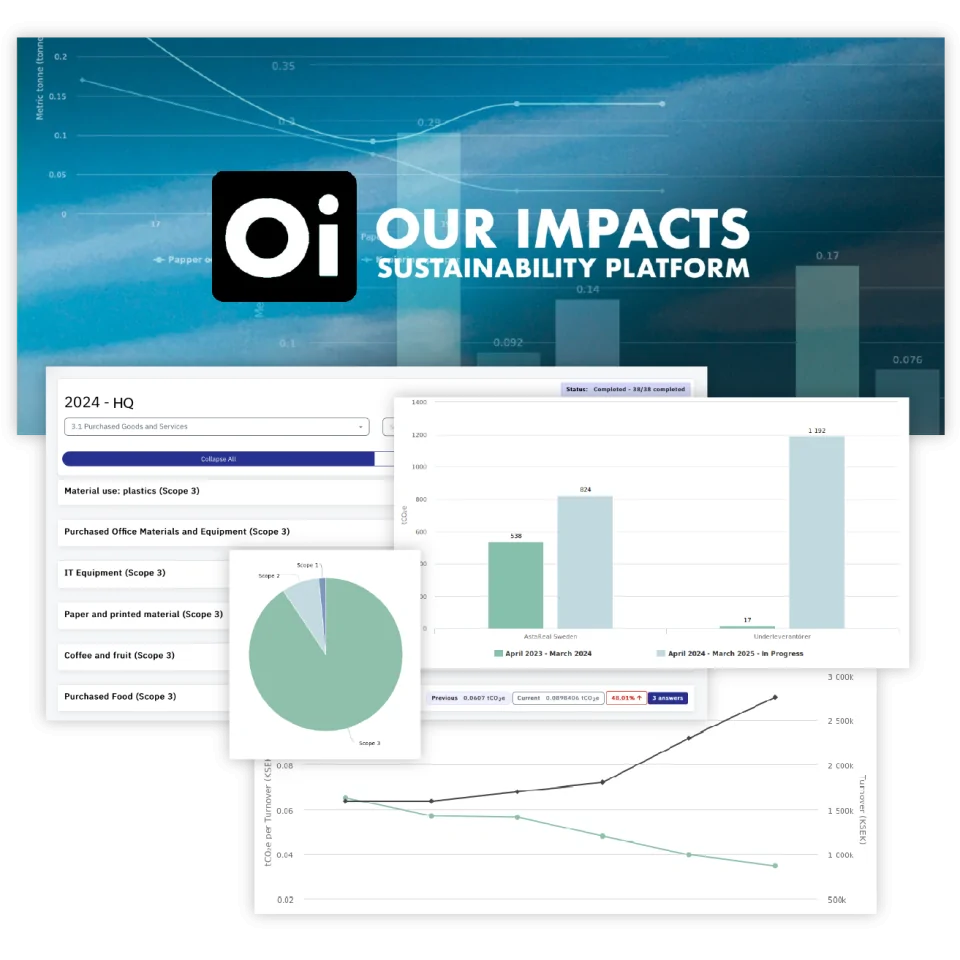
On ZeroMission’s sustainability platform, Our Impacts , you can easily select the information relevant to your VSME reporting without having to set up a full CSRD process.
Here’s how the process works with ZeroMission:
1. Needs Analysis: We review your operations and identify which parts of VSME are relevant to you: the basic module, the comprehensive module, or a combination.
2. Data Collection: Climate calculations and energy data are collected and quality-checked by our climate strategists.
3. Report: We help you structure the responses according to the VSME format.
4. Follow-up: We provide you with ongoing guidance so that the report can evolve as your needs change.
Frequently Asked Questions About VSME
Standarden VSME
-
Is VSME mandatory?
No. VSME is a voluntary standard intended for small and medium-sized enterprises that are not subject to the mandatory requirements of the Swedish Financial Supervisory Authority ( CSRD).
Here you can read more about CSRD.
-
Do I need to perform a double materiality analysis within VSME?
No, it is not a requirement. VSME follows the “as applicable” principle, which means that you only report on the ESG topics that are relevant to your business.
A simpler, internal materiality assessment can still be valuable as a foundation for your sustainability efforts.
-
Who should start using VSME reporting?
VSME is particularly well-suited for those who:
- Are a supplier or subcontractor to a larger company that is subject to CSRD
- Addresses questions about sustainability data from banks, investors, or procurement processes
- Want to build credible sustainability communications without burdening the organization with a full-scale CSRD process
- Want to stay one step ahead in case your company outgrows its current reporting requirements?
Do you need help with reporting? At ZeroMission , you can hire an experienced climate strategist on a part-time basis or as needed. Read more here.
VSME jämfört med andra standarder
-
What is the difference between VSME and CSRD?
VSME covers the same sustainability categories as CSRD, such as climate impact, water use, biodiversity, labor and governance, but contains several important differences:
- Mandatory vs. voluntary reporting
- ESRS: Mandatory for large companies under CSRD.
- VSME: voluntary and targeted at SMEs outside the scope of the CSRD.
- Reporting principle
- ESRS: Requires a double materiality assessment (DMA), where companies must assess both how sustainability issues affect the company and how the company affects the environment and society.
- VSME: Follows an "if applicable" principle, which means that companies only report on those ESG topics that are relevant to their business.
- Reporting structure and scope
- ESRS: Comprehensive requirements with detailed quantitative information and action plans.
- VSME: Modular structure with two levels: a basic module with 11 items of information and a comprehensive module with 9 additional items of information. The reporting allows for simpler, narrative-based answers.
- Publication
- ESRS: Requires disclosure of sustainability information in accordance with CSRD.
- VSME: Inget krav på offentliggörande. Små och medelstora företag kan själva välja att dela sin rapport med specifika intressenter, till exempel investerare.
- Support and guidance
- ESRS: Detaljerad vägledning och krav, men kan vara komplexa för små och medelstora företag att implementera utan externa resurser.
- VSME: Utvecklad med tanke på små och medelstora företag begränsade resurser, med förenklade krav och stödmaterial för att underlätta implementeringen.
-
Could VSME reporting lead to " CSRD" compliance in the future?
Yes. Preparing a VSME report lays the groundwork for a potential future transition to the European Standards for Reporting on Sustainability ( CSRD, ESRS), should the company grow to meet the mandatory requirements.
Other services



We help you pick up the pace
Contact us for an informal meeting on how to calculate, reduce or take responsibility for your emissions through the purchase of carbon credits.
Latest News
Sign up for our newsletter.