Biogas in Indonesia – Gold Standard
In Indonesia, the use of firewood and expensive fossil fuels for cooking and water heating is still widespread, especially in rural areas. This contributes both to deforestation and greenhouse gas emissions, as well as having negative health impacts for those who spend a lot of time in the smoke of open fires. The Biogas in Indonesia Gold St project therefore aims to install small-scale biogas plants for households with livestock, as a sustainable energy source for cooking, lighting and water heating.
Background information
Biogas is produced by mixing pig and cow manure with compost and water in an airtight container, where methane gas is released and collected for domestic use. The digestate from the production is used as a valuable biological fertilizer, which can improve soil fertility and thus crop yields.
About the Project
The project is located on the island of Sulawesi, a region where many households live from small-scale agriculture. It subsidizes the purchase and installation of biogas plants, with the aim of spreading the technology as a local, sustainable energy solution. At the same time, a commercial, market-oriented sector is being developed, creating jobs and business opportunities for masons, technicians and partner organizations in the construction and energy sectors.
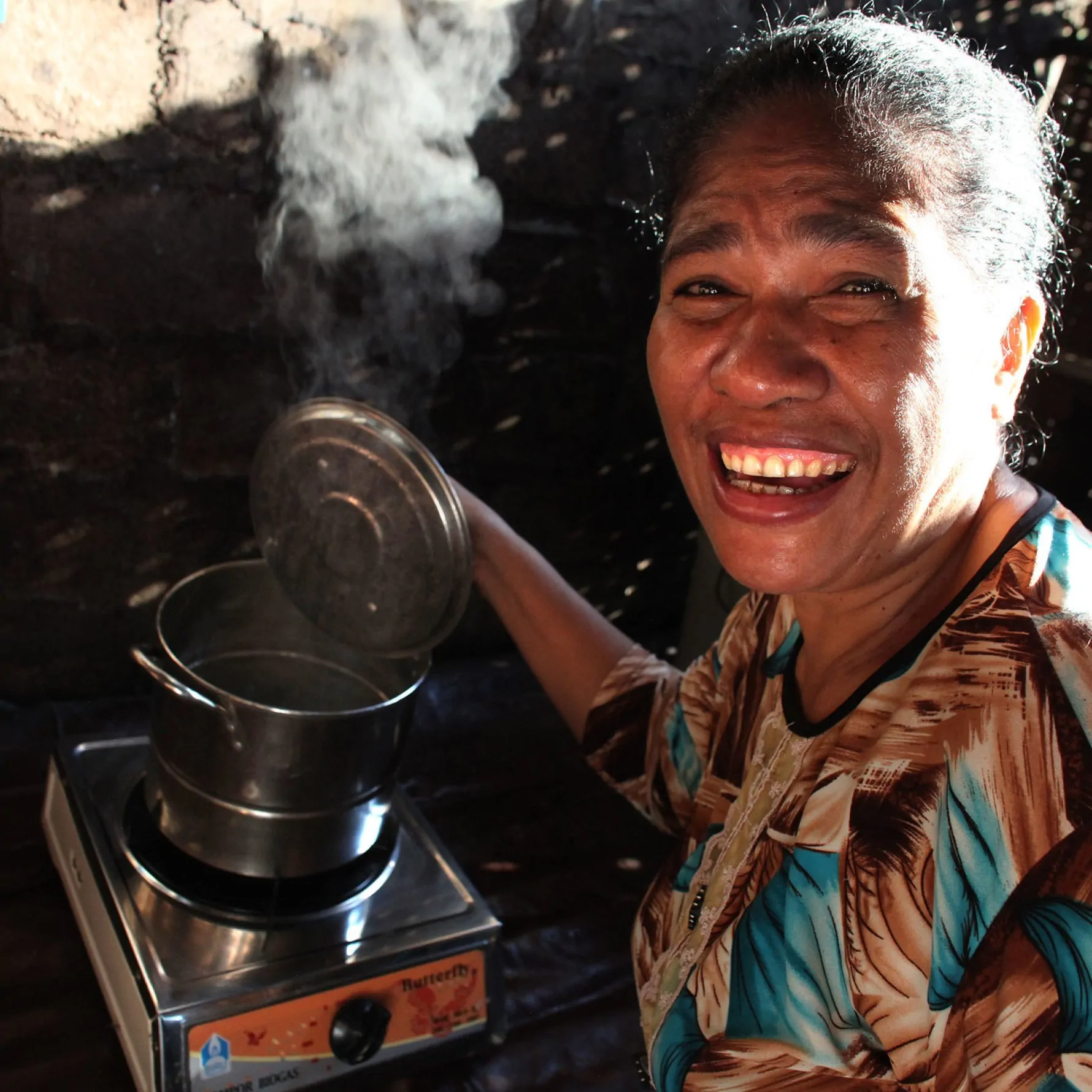
An important social benefit is that women and girls, who are usually responsible for cooking and collecting firewood, save time every day. The clean energy also means better indoor air, which improves health. Families also save money by no longer having to buy fuel or fertilizer, making the Biogas in Indonesia project an investment in both environmental and social sustainability, with long-term benefits for household finances and quality of life.
In addition to avoiding emissions from wood burning and fossil fuels, the project reduces methane emissions from manure that would otherwise ferment openly. The biofertilizer also replaces chemical alternatives, reducing emissions from manufacturing and transport, and reducing the risk of soil degradation. It also has three times the nutritional value of conventional animal manure.
Unique feature
An important social benefit is that women and girls, who are usually responsible for cooking and collecting firewood, save time every day. The clean energy also means better indoor air, which improves health. Families also save money by no longer having to buy fuel or fertilizer, making the Biogas in Indonesia project an investment in both environmental and social sustainability, with long-term benefits for household finances and quality of life.
The project contributes to the following objectives