Biokol.se, carbon storage in Sweden – Rainbow
Biochar has the ability to store carbon for hundreds – even thousands – of years, while also offering other beneficial properties. For example, it can be used to improve soil quality in agriculture or to purify water. ZeroMission with the company Biokol.se, which supplies high-carbon biochar and generates certified carbon credits in collaboration with Swedish farmers and environmentally conscious companies.
Background information
Converting biomass (organic material from plants) into biochar is a very useful way of storing carbon for a very long time. Through a process called pyrolysis, biomass is burned without oxygen, which leads to the formation of biochar and the heat being used in heating networks. The resulting biochar has a high carbon content and a low risk of carbon dioxide being returned to the atmosphere.
When charcoal is added to soil, it also improves the soil's structure, water retention capacity, and ability to retain nutrients, leading to higher agricultural yields. The production of biochar from the projects we work with only uses residual products from agriculture and the forestry industry that would otherwise have released carbon dioxide during combustion or decomposition. Overall, this contributes to a circular economy where waste is transformed into a resource.
One of the biggest advantages of biochar is its ability to sequester carbon dioxide for a very long time. By purchasing carbon credits from a biochar project, you are directly contributing to reducing the amount of carbon dioxide in the atmosphere over a very long period of time.
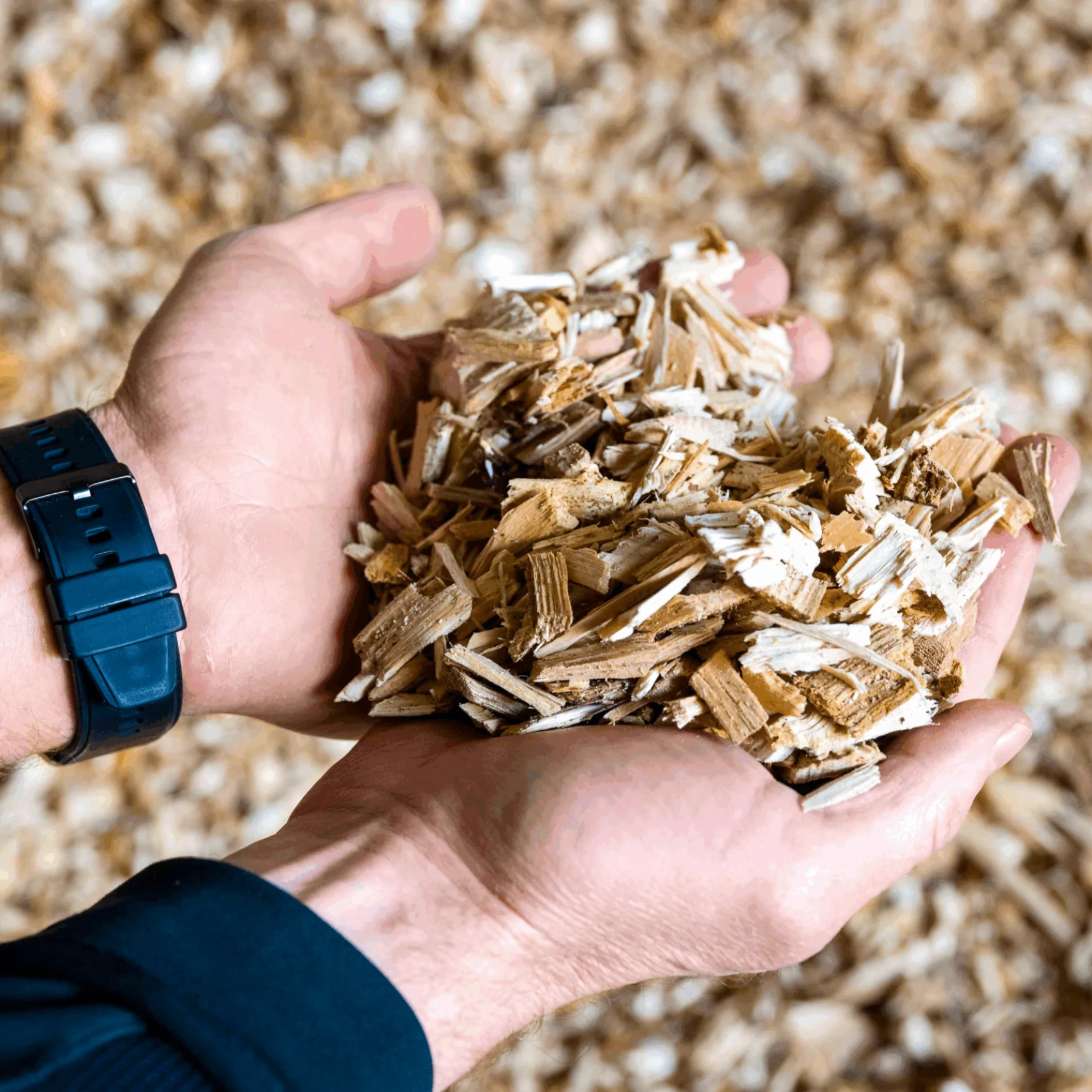
Biokol.se produces its biochar from local, FSC-certified wood chips and local crop residues.
About the Project
Our supplier of biochar credits is the company Biokol.se, a Swedish company that since 2018 has been bringing together small-scale Swedish biochar producers who convert certified forest residues into high-quality biochar.
The carbon credits in this biochar project are certified by the Rainbowstandard and are only issued once the biochar has been added to the soil and the climate benefits have been realized. As with ZeroMission's other projects, the standard ensures that the carbon credits truly correspond to the amount of carbon dioxide sequestered. With this standard, you as a buyer can be sure that your funding is doing good. The credits that are certified are generated in collaboration with Swedish farmers.
The heat from the pyrolysis process can also be utilized and replaces fossil fuels, electric heating, or biomass combustion in greenhouses, workshops, and homes. Each additional credit income enables the production of extra biochar per year, which means that more carbon is sequestered while local heating with low carbon dioxide emissions is supplied to the local community.
Biokol.se produces its biochar from local, FSC-certified wood chips. The biochar is also certified in accordance with the EBC (European Biochar Certificate), which means, among other things, that all non-organic waste is removed during production, that the biomass is not contaminated by paint or solvents, and that the biomass is not transported more than 80 km before it reaches the biochar boiler.
Unique feature
Together with Rainbow, Biokol.se has succeeded in issuing one of the first carbon credits on the market with a durability of over 1,000 years. Traditionally, carbon credits for biochar have been certified for over 100 years, but by using Brachio's pyrolysis technology, Biokol.se is able to produce biochar of exceptional quality. This results in a durability that is 10 times longer than most other biochar credits on the market today.
The project contributes to the following objectives
Frequently asked questions
What is biochar?
-
Biochar is a type of wood chip created through a process known as pyrolysis, which means that dry organic material is broken down under oxygen-free conditions at temperatures between 350 and 1,000 degrees Celsius. The organic material can consist of residual products, such as seed husks and other harvest residues from agriculture, or waste, wood, algae, and garden waste.
-
What are the benefits of biochar?
-
In addition to binding carbon for long periods of time, biochar also has a number of soil-improving properties. The use of biochar improves soil structure and increases its ability to retain water and nutrients. It also increases the number of microorganisms in the soil, as they thrive in the many porous spaces and cavities in biochar.
Why is it beneficial to purchase carbon credits from biochar?
-
Purchasing biochar credits is an innovative and effective way to help reduce carbon dioxide in the atmosphere, while also helping to finance soil improvement measures in areas such as agriculture. Once in the soil, biochar can store carbon for hundreds or even thousands of years.
Is it possible to visit the project?
-
Yes, it is often possible to visit the project located outside Lidköping. Contact ZeroMission your request for a visit.