Efficient stoves with digital technology in Zambia – Emerging Cooking Solutions
Here, digital technology ensures the calculation of the climate benefit of each individual stove, making this project stand out. The Emerging Cooking Solutions project aims to reduce the use of coal and kerosene in cooking, leading to reduced deforestation. At the same time, the indoor climate of users is improved, time is reduced and costs are lowered.
Background information
Approximately 2.6 billion people use coal or other fossil fuels for cooking. This often involves areas of the world characterized by simple living conditions and located beyond electrical grids. More modern stoves that are energy-efficient, inexpensive, and easy to use are one solution.
About the Project
Emerging Cooking Solutions was founded with the ambition to replace charcoal with pellets. With its efficient SupaMoto stove, users have the option to get a stove and free home delivery of pellets through a subscription. Using pellets costs about half the price of charcoal, the stoves are much faster and more efficient, and the indoor environment is significantly improved.
Deforestation is unfortunately common in areas where wood or charcoal is primarily used for daily cooking. The pellets used with SupaMoto are locally produced from residual products and do not drive deforestation. The climate benefits are therefore reduced greenhouse gas emissions and reduced deforestation.
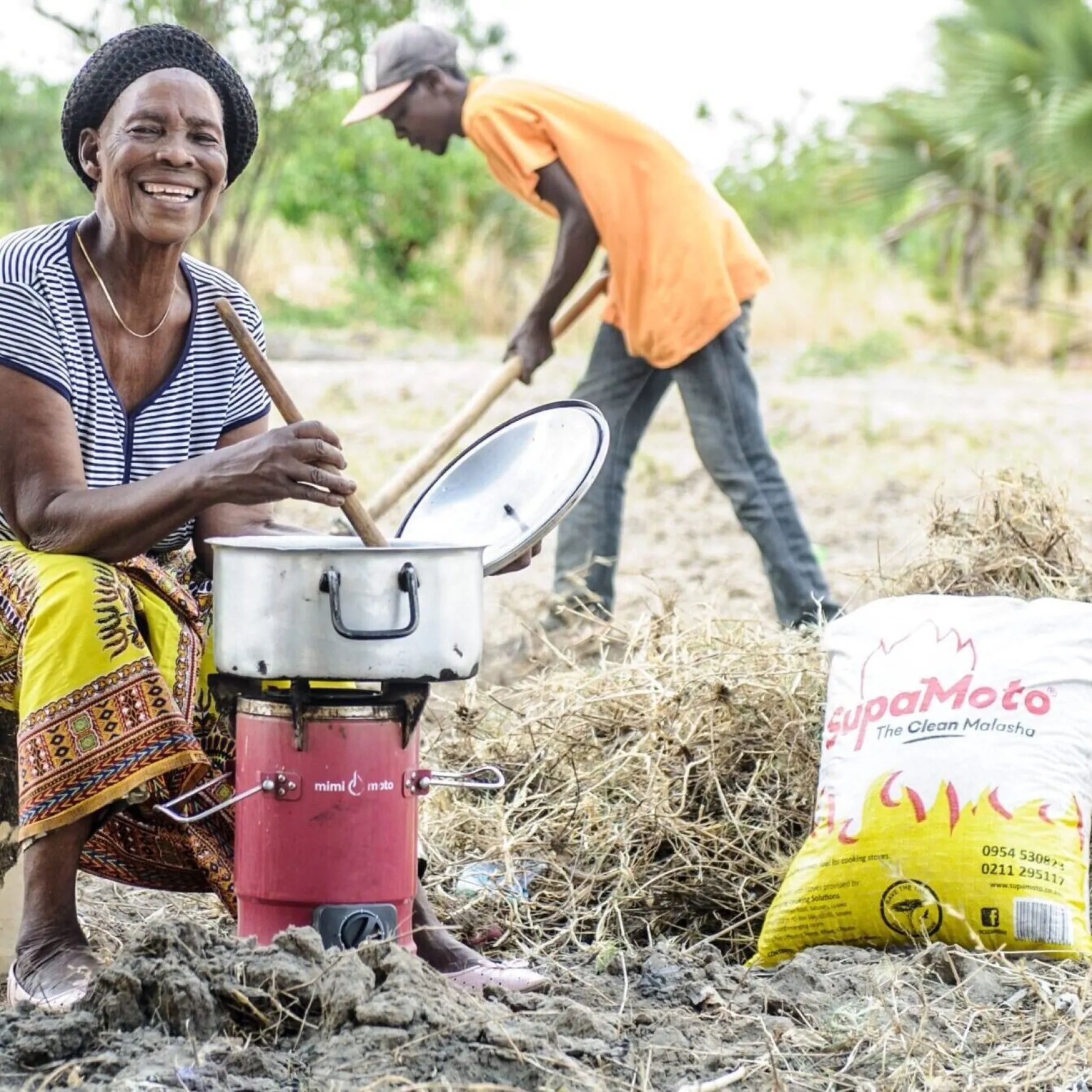
The environmental benefits of stove projects, in which food is often cooked over an open fire, include reduced greenhouse gas emissions and reduced deforestation.
Cooking with these stoves is much faster than with wood or charcoal. The stoves heat up quickly, freeing up a lot of time that can be used in other ways, such as education, work, or other productive development. There are also significant health benefits as users avoid inhaling toxic fumes for extended periods on a daily basis.
The stoves have begun to be launched in Zambia with the ambition of expanding the project to other areas where there is a need and the opportunity to sustainably produce pellets. The distribution model is based on users subscribing to bags of pellets that correspond to their monthly consumption. The bags are distributed free of charge, and the stove itself is free. The threshold for moving away from charcoal and starting to use the stove is therefore much lower than if it needed to be purchased. Since these pellets are also cheaper to use than other energy sources, such as charcoal or kerosene, this is a solution that benefits both the user and the climate.
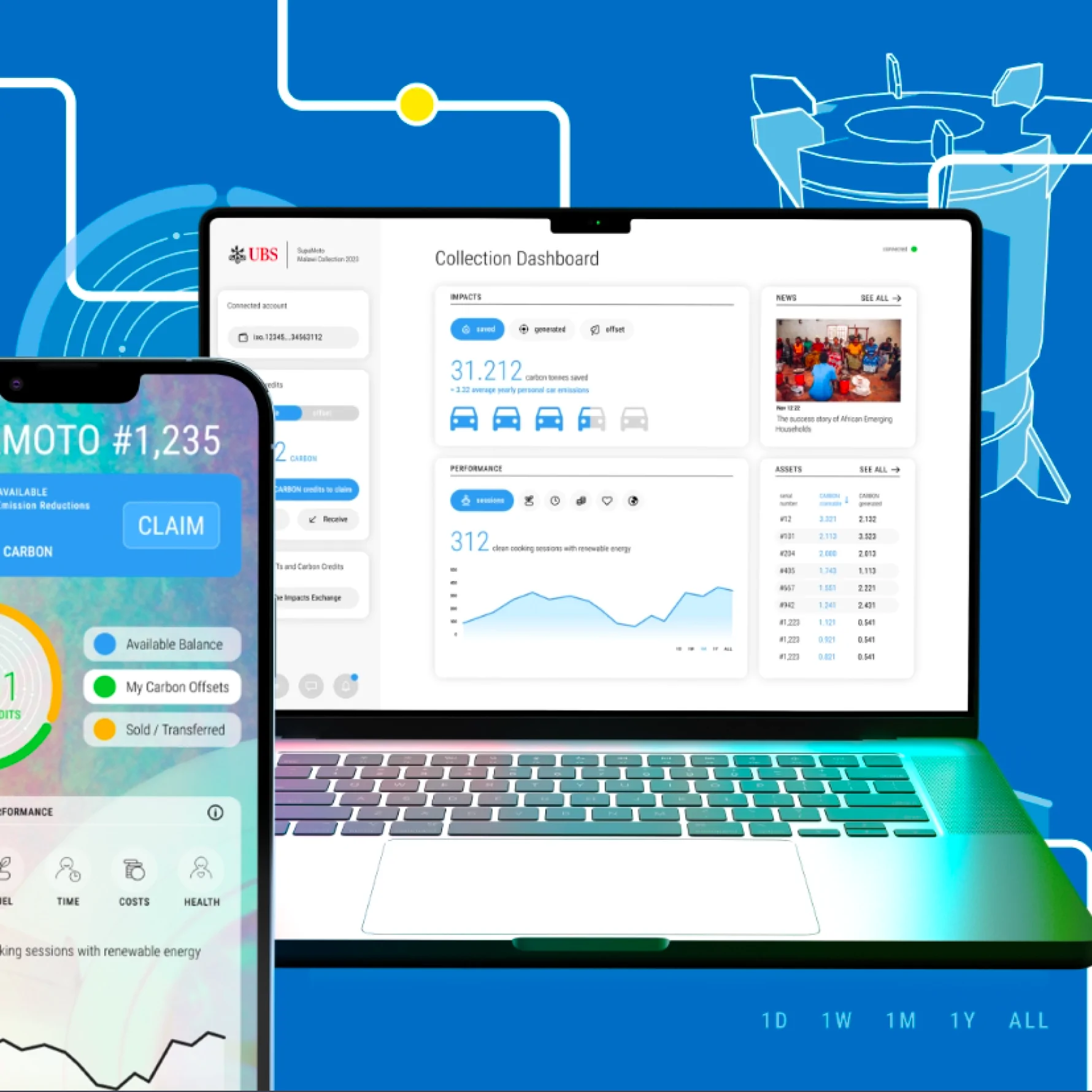
What makes this project truly unique is how the climate benefits are tracked and recorded. Each stove is connected to the internet, and every use of the stove is measured.
Unique feature
What makes this project truly unique is how the climate benefit is tracked and registered. Each stove is connected to the internet, and each use of the stove is measured. All purchases of pellets are also registered, as the purchases are made via a mobile app. With primary data for both usage and purchases, the amount of emissions, converted into carbon credits, is much more accurate and can be calculated based on primary data rather than assumptions. While the methodology for the project is based on the established cornerstones of Gold Standard, the measurement of the climate benefit is significantly improved.
Because stove activity and pellet purchases are tracked, they can be registered on a digital blockchain platform, meaning that the climate benefit is traceable, completely transparent, and non-manipulable. Furthermore, instead of just buying carbon credits, this project also gives virtually anyone who wants to support the project the opportunity to buy or rent a stove, or at least a digital twin of it. The performance of that stove can be tracked on the digital platform so you can see how much it reduces emissions over weeks, months, and years!
The project contributes to the following objectives