Warning: Trying to access array offset on false in zeromission.php online 5
Project visit Central America - Part 3 of 3
December 11, 2023
"THE TREES THAT TAKE ROOT". Nicaragua, November 13-17, 2023.
At ZeroMission , we travel to the carbon offset projects we work with as the visits contribute to increased understanding, transparency and knowledge exchange between us and project developers and participants. In November this year, our colleagues Cecilia Hall, climate strategist, and Henrik Juhlin, CEO of ZeroMission, traveled to Central America. Here you can read the third and final part of their travelogue.
Background to the project
The CommuniTree project is managed by the Canadian company Taking Root and the Nicaraguan organization APRODEIN, Asociación de Profesionales para el Desarrollo Integral de Nicaragua. Both APRODEIN and Taking Root were founded more than 15 years ago by Elvin Castellión and Kahlil Baker, who at the time had recently earned a PhD in Forest Management and is now CEO of Taking Root.
Together, the two organizations started the CommuniTree project, which today involves thousands of smallholder farmers and is virtually nationwide in Nicaragua. CommuniTree is a "removal" project, i.e. a project that binds carbon dioxide from the atmosphere, where the foundation lies in working with and helping local small farmers to plant trees and reforest their land in a long-term sustainable way. Today, Taking Root has about 30 employees and APRODEIN over 200.
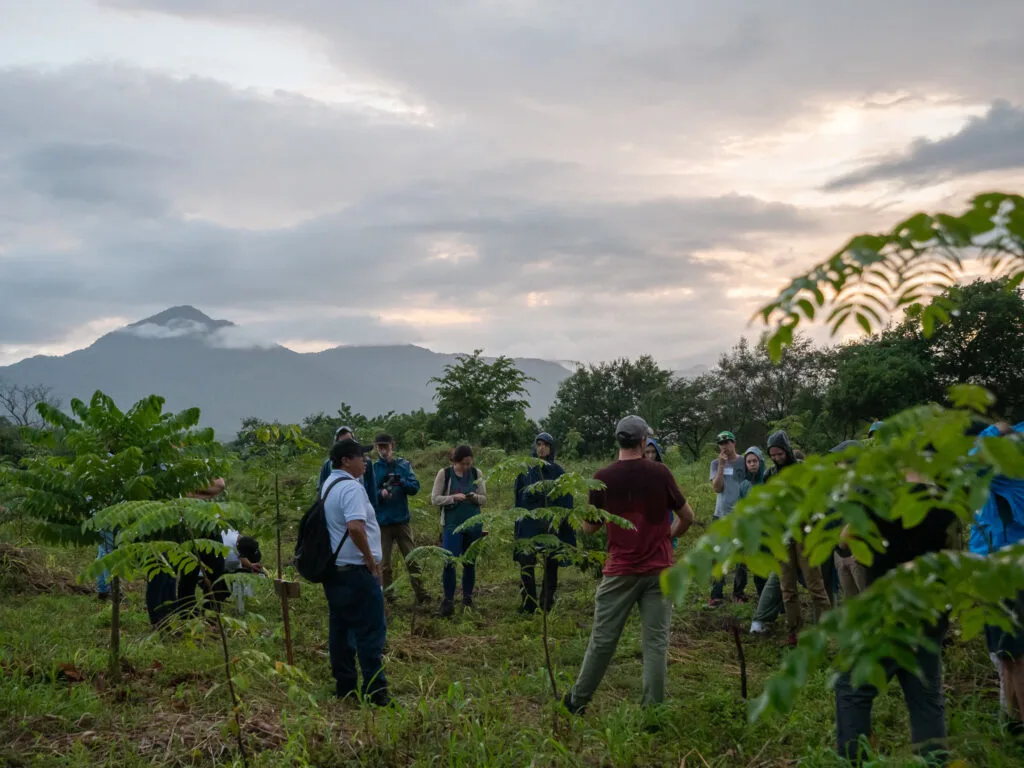
Close to the biochar plant, Taking Root has a demo area where they test and compare different types of soil and biochar mixes at planting, while comparing this against conventional methods.
In 2022, the project reached a milestone by issuing more than 1 million tons of certified carbon credits, equivalent to the same amount of CO2e, since the start of the project. Today, in the fall of 2023, the project has 3,326 smallholders across Nicaragua and in 2022, 6.3 million trees were planted on an area of 4,740 hectares.
Unfortunately, forest loss is a major problem in Nicaragua. It is happening at a rapid pace, with an average of over 100,000 hectares of forest disappearing every year. Don Elvin, founder of APRODEIN, says that the goal must therefore be to plant an equivalent area to what is removed, and that it must also be something that future generations continue with.
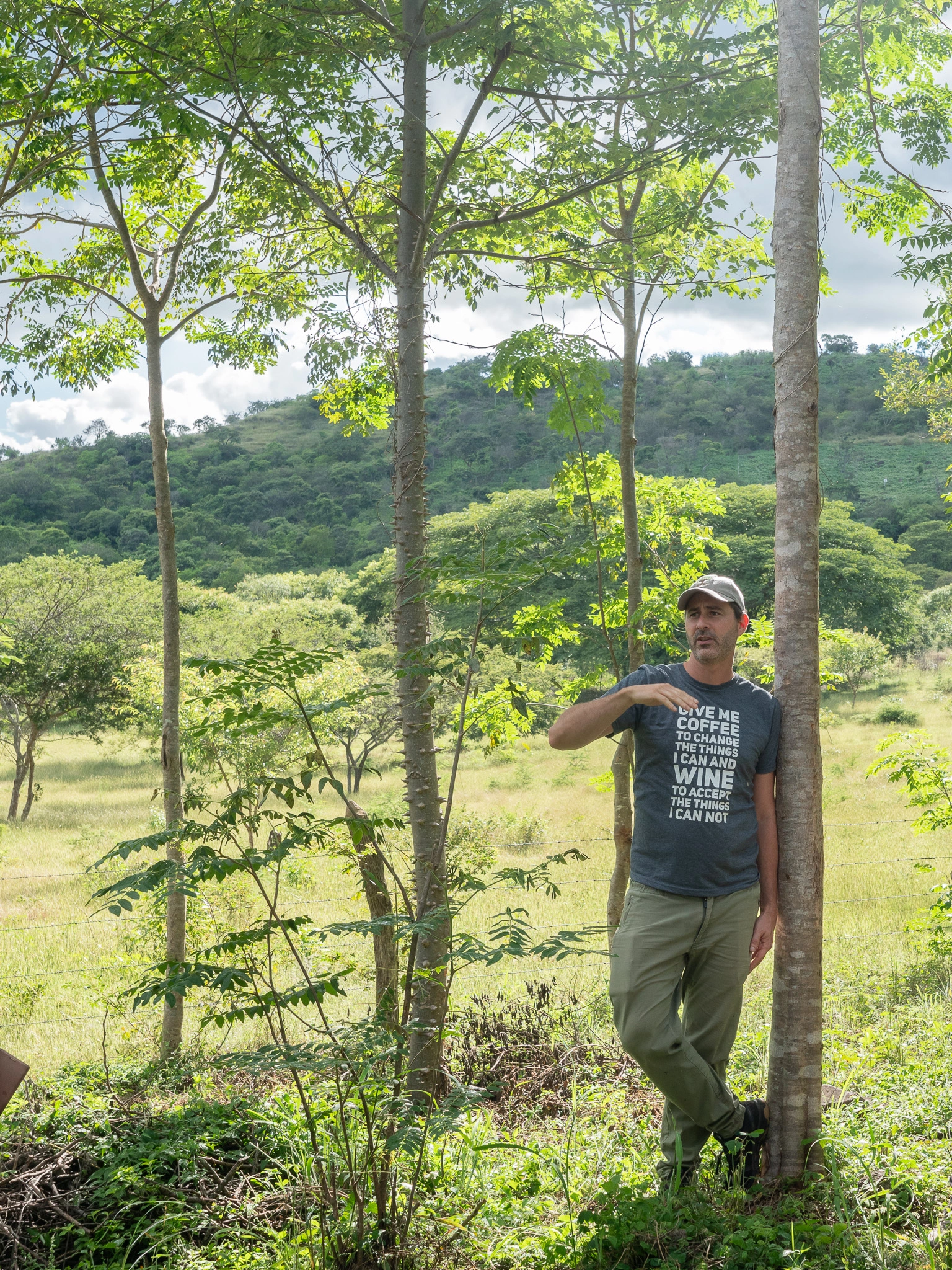
Kahlil Baker, CEO of Taking Root, has a close connection to Nicaragua, having lived there for many years.
Taking Root has a model that is built around one crucial motif - long-term sustainability. From the start, their concept has been built on the idea that trees must be left standing for a long time to make a difference to the climate. For the trees to do that, the person who owns and plants the forest must get continuous value from it. What Taking Root therefore strives for in the project model is to lift land from one level of value to a new higher level. Otherwise, there is always a risk that the landowner, who are usually farming families, will choose to harvest the forest instead.
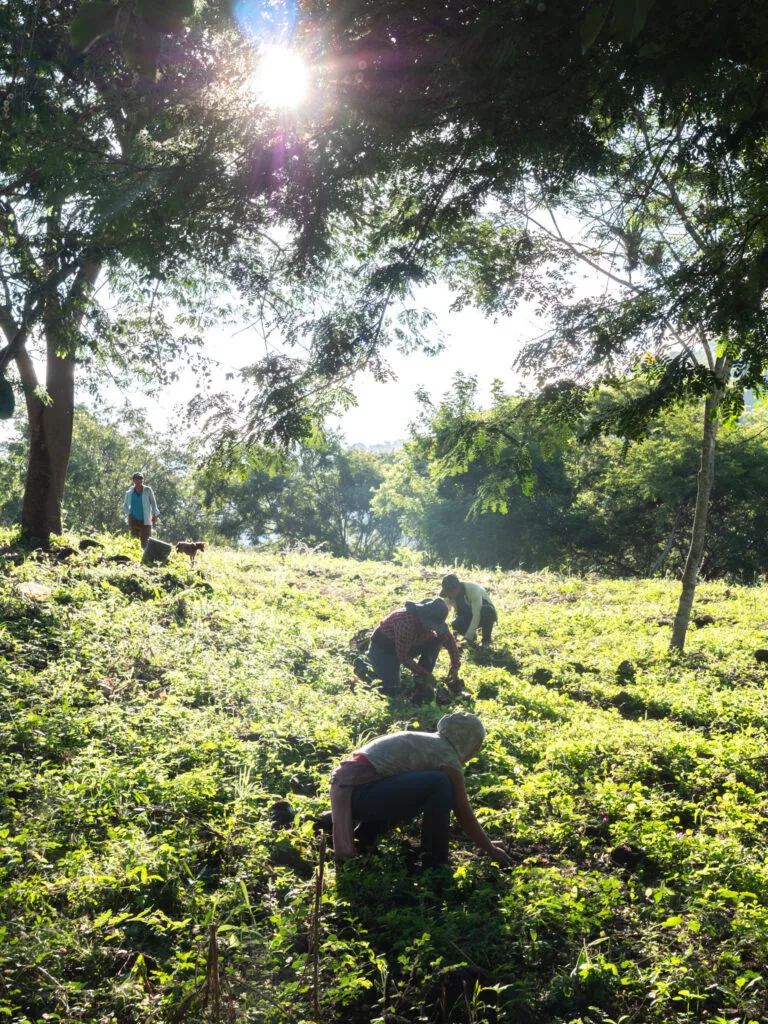
Preparing the land surface for planting is one of the activities that smallholders undertake by joining the project.
Since planting forests is a long-term investment that starts to generate an economic value only after 5-10 years, in principle no farmers are able to start planting trees themselves. This simply means that the initial investment is too high. This is where the project and the sale of carbon credits play a crucial role. Payments from the sale of carbon credits are made as the farmer performs and achieves various milestones for his planting.
These milestones are:
- Preparation of the soil surface for planting
- Planting of trees
- Clearing weeds around the plants
- Thinning to allow trees to grow more and faster
When the forest starts to reach a stable size, after about 5-6 years (what Taking Root calls a non-voulnerable state), the farmer can start to have cows or other livestock on the land around the trees. The trees provide the animals with necessary shade and the animals in turn give back by helping to improve soil health through fertilization and tillage. Smallholders can also choose to grow beans, coffee or maize between the trees at this point.
CommuniTree mainly works with three different methods of planting:
- Silvorpastoral - A method that incorporates livestock husbandry and tree planting.
- Mixed species - Planting of different types of trees, some that grow a little slower e.g. mahogany and cedar, and some that grow quickly and can be thinned out after just a few years. In this way, value is created from land that is not suitable for either cultivation or livestock.
- Agroforestry - A mix of trees and crops, such as coffee or cocoa plants.
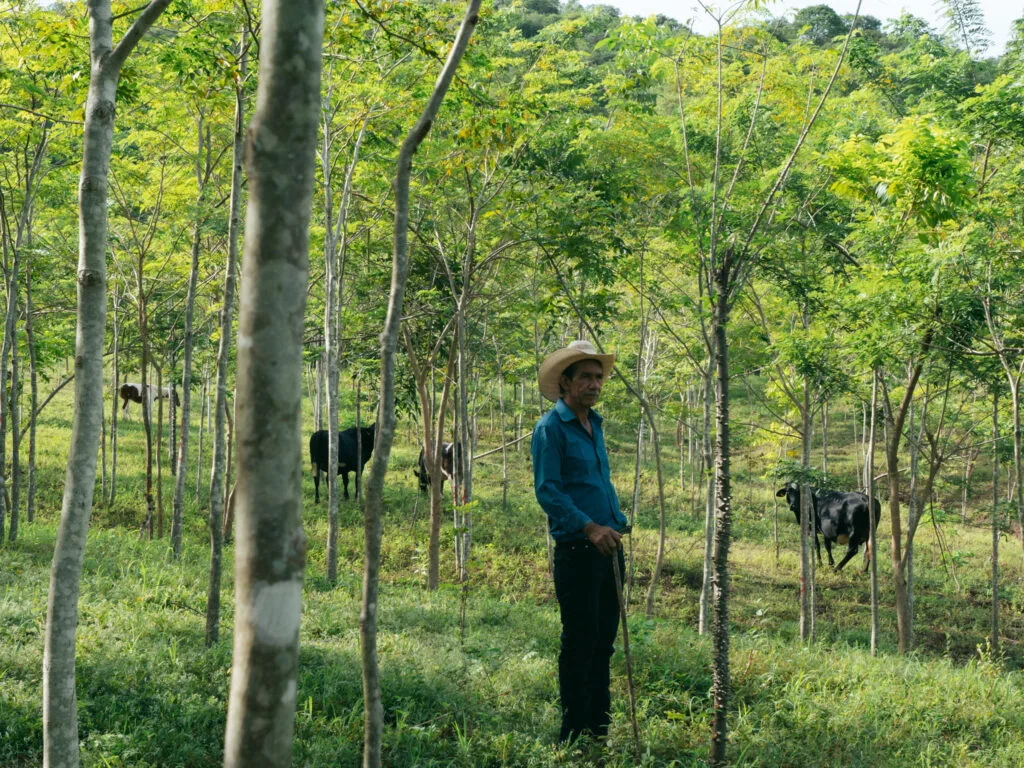
Silvopastoral systems of cultivation involve the inclusion of livestock as a method to improve soil health and contribute to biodiversity. Francisco de Jesús Pérez with his cows.
Summary of the visit - Henry's words
"The expectations to see this project in place were very high. ZeroMission has been working with Taking Root since they started almost 13 years ago, and we know that projects are developed with great speed and with a strong focus on quality and transparency. Moreover, with the stated vision of becoming the world's best carbon credit project.
It is truly incredible to see what Taking Root together with APRODEIN have achieved in the CommuniTree project. They have made and are making a huge difference in local communities, for biodiversity and above all for the climate with the millions of trees planted and now real forests.
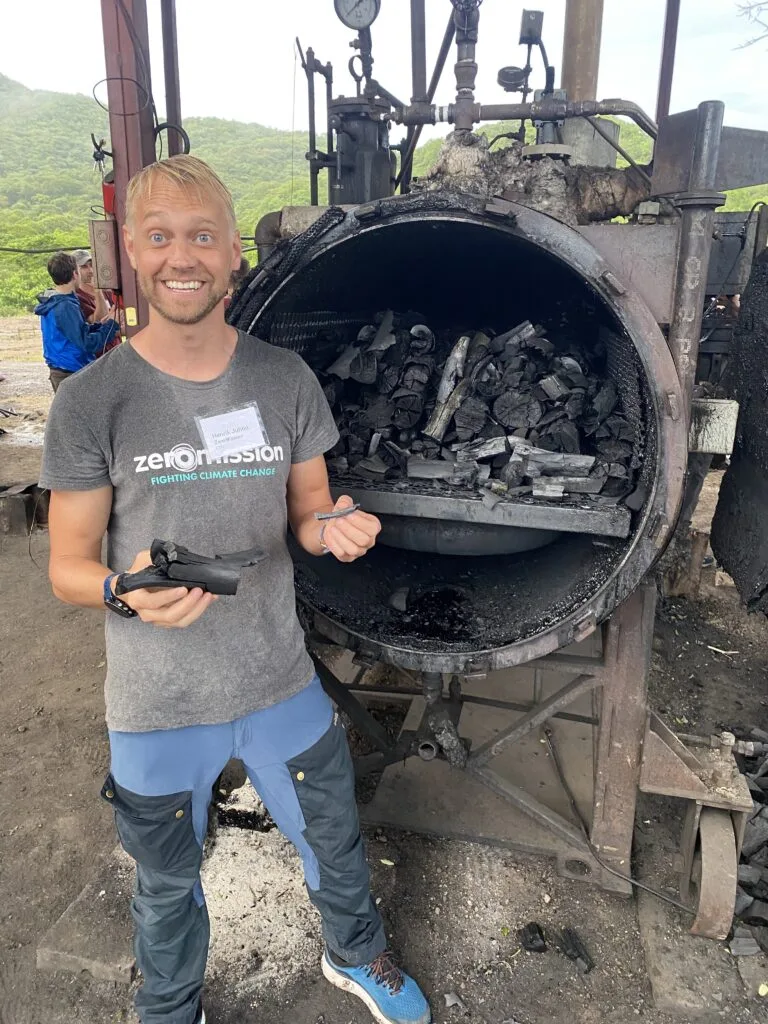
During the visit we saw the Taking Roots plant where they make biochar which they then use when planting new trees. Henrik Juhlin, CEO of ZeroMission.
After seeing the organization and how professional and thoughtful everything is, their structured improvement work, the planting of trees from different vintages, and after hearing the smallholders themselves describe what a difference the project has made for them, I can vouch for the fact that this is truly one of the best tree planting projects of this scale in the world.
The project shows what a difference companies in Sweden can actually make for the climate but also for local families and communities in these developing countries, as well as for biodiversity, by investing in carbon credits."
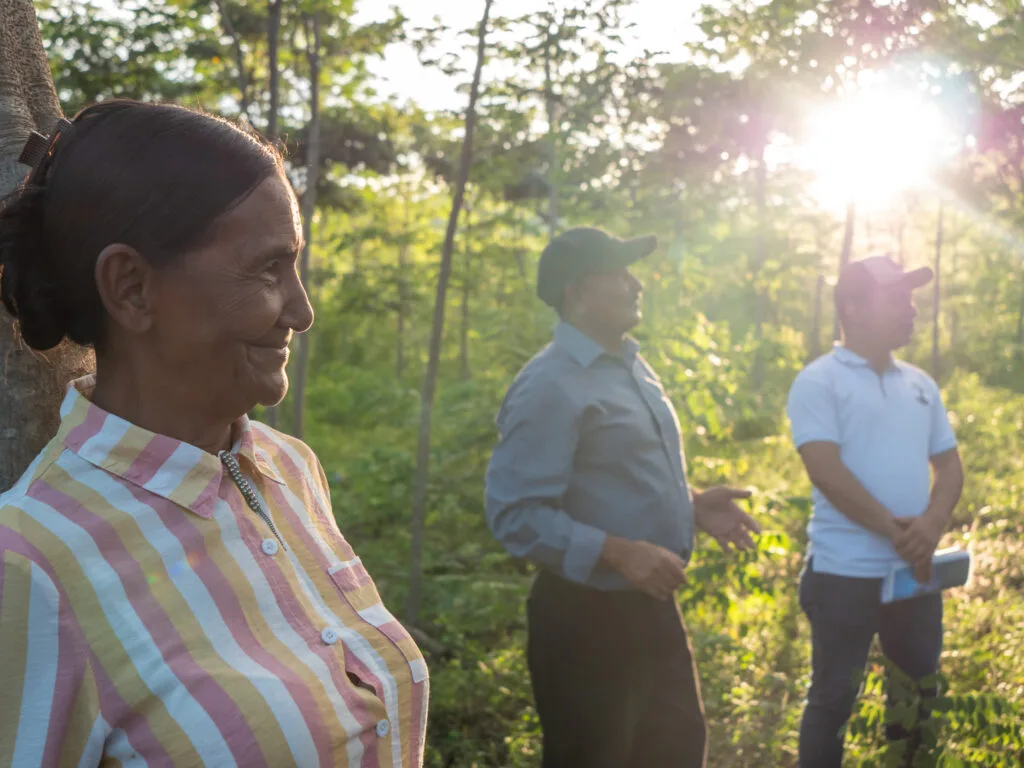
Don Martin and his wife Estér, who have been involved in the CommuniTree project since 2020. "I'm doing this for the environment and for my children and grandchildren," says Don Martin.
THE VISIT
Day 1 - Wood workshop and biochar plant
We started our visit by looking at a workshop where Taking Root makes different wooden products with wood that has been thinned out. The products are sold all over Nicaragua. There is no export yet, but you can buy wooden salad servers and cutting boards from the project at Nicaragua's international airport. We also saw a small sawmill where they can make planks to sell to local house builders.
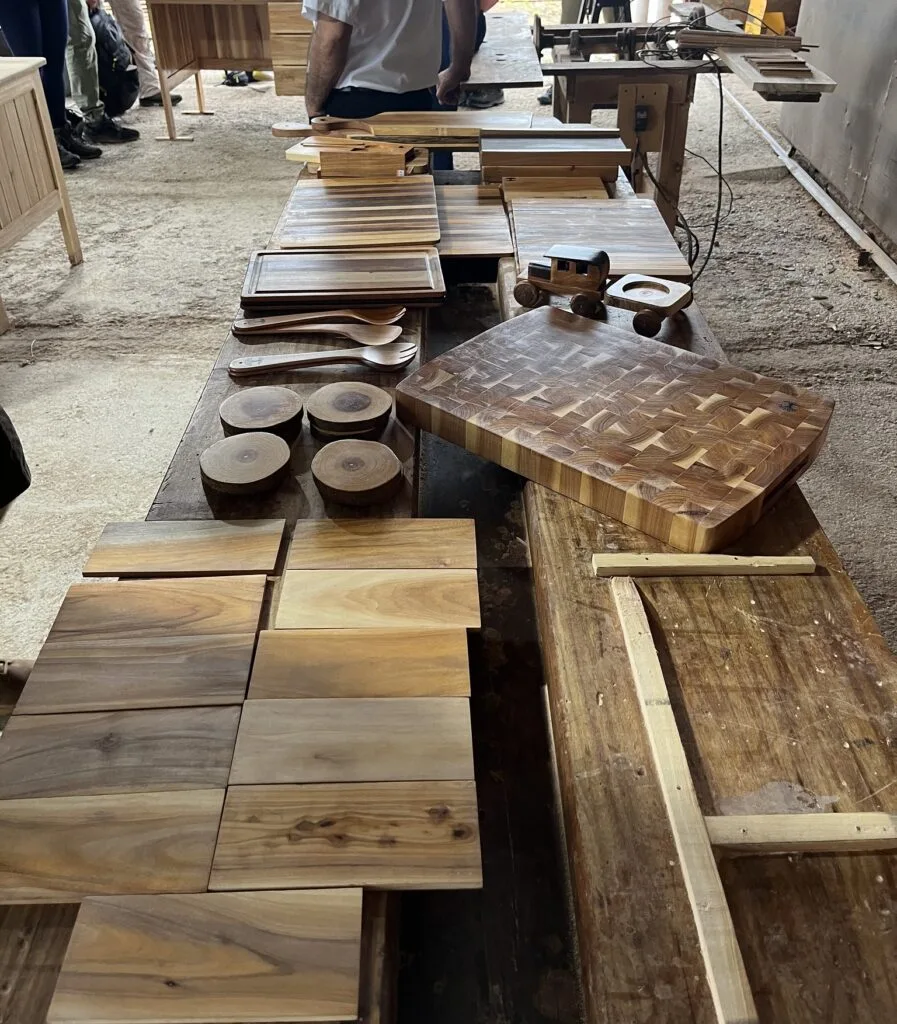
Being able to manage trees into long-life products not only provides long-term income for farmers from forestry, but also creates jobs and employment for the local community. Over 70 people currently work at this particular workshop, the sawmill and the biochar plant we later visited.
After the sawmill, we went to an area where Taking Root produces biochar. Biochar is another way to create permanence in carbon sequestration as it improves the soil and promotes the growth of the trees. All biochar produced is used in the tree planting. Close to the biochar plant, Taking Root has a demo area where they test and compare different types of soil and biochar mixtures in planting, while comparing this to conventional methods. We walked around and were able to compare the size and health of the different soil mixtures ourselves and could clearly see a difference that the trees planted with biochar have grown significantly larger and stronger in the approximately 1.5 years since the tests were initiated.
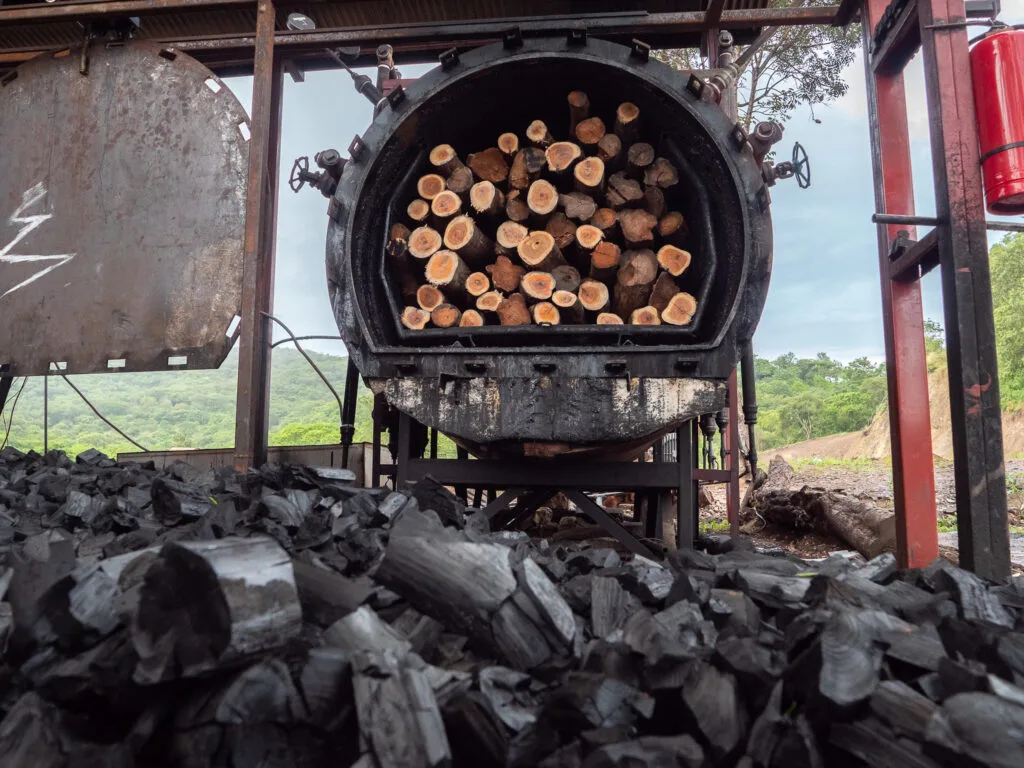
Using biochar for planting makes the soil airy and easy to work. Biochar sequesters carbon in the soil, preserving moisture and nutrients. Biochar also helps to improve the overall structure of the soil.
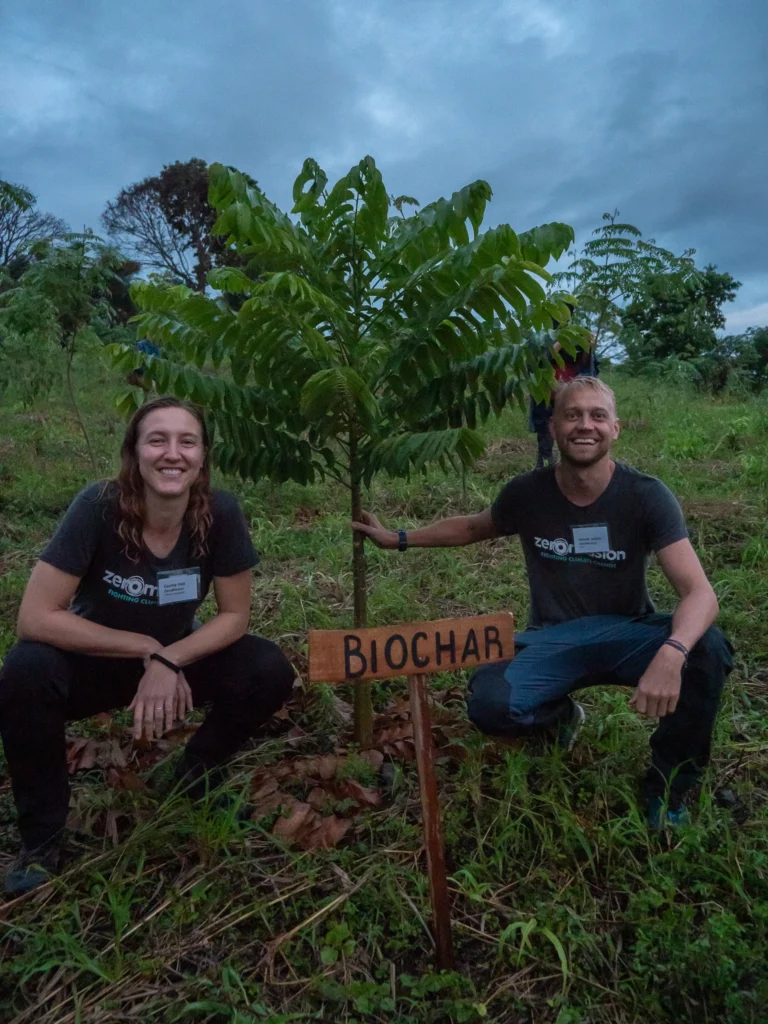
We were able to compare the size and health of the different soil mixtures, and could clearly see a difference that the trees planted with biochar grew significantly larger and stronger. Cecilia Hall, Climate Strategist at ZeroMission and Henrik Juhlin, CEO.
Day 2 - Recruitment and visit to Don Elvin
The first part of day two focused on the recruitment process of new participants. The project has recruited several thousand farmers and smallholders in recent years, and for next year has planned a slightly larger campaign that will go on the radio and advertising in newspapers to increase the growth rate of the project.
APRODEIN has 12 full-time employees who work solely on recruiting new participants. It is often a relatively long process with several meetings with the landowner. In the first place, it is about creating trust in contact with new smallholders. Trust is extremely important for the long contracts that are signed between participants and the project organization, and therefore APRODEIN makes an evaluation based on a checklist of the farmer and the family before they even go out and look at the land itself and evaluate the potential. APRODEIN likes to meet the whole family and says that women are usually the ones who understand the economy best. In these meetings, APRODEIN also often educates about the climate crisis and how the rising temperature is a threat at local and global level.
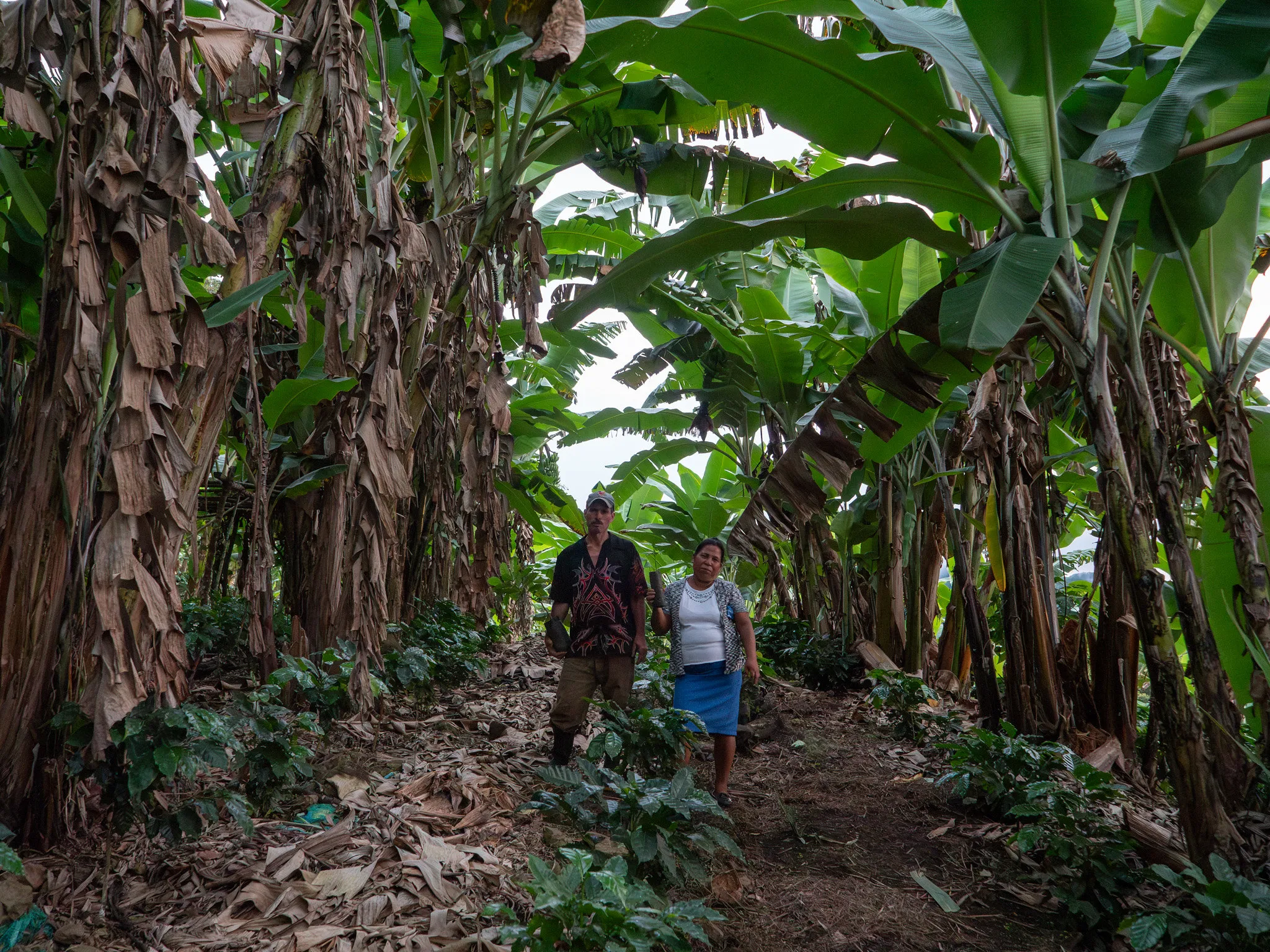
Alvaro Santiago Centenoy and Amalia del Carmen Merlo Ramirez in an agroforestry cultivation including different varieties of trees and coffee bushes.
Once both sides are ready to proceed and the farmer fully agrees with the project approach and the contract, they decide together what type of method would be suitable for the smallholder's land and needs. The factors they look at include soil quality, altitude and slope of the land. Ultimately, it is the farmer who decides what they want to do with the land and what type of method to use.
Next, we meet nut farmer Don Elvin. Since joining the project, he has reforested a total of 11 hectares for CommuniTree with different species, mainly mahogany. Some of the land where he planted trees he can now rent out to neighboring farmers who don't have much land themselves but need space to grow maize and beans. Don Elvin then uses the leftover harvest as feed for his cows. The trees also provide great shelter and shade for the cows, something that Don Elvin points out has become much more important since the dry season has become so much warmer and longer in recent years. Without that important shade, he doesn't think many of the animals would survive. He can also see that there are many more birds and even squirrels have come back to his land since he joined the CommuniTree project.
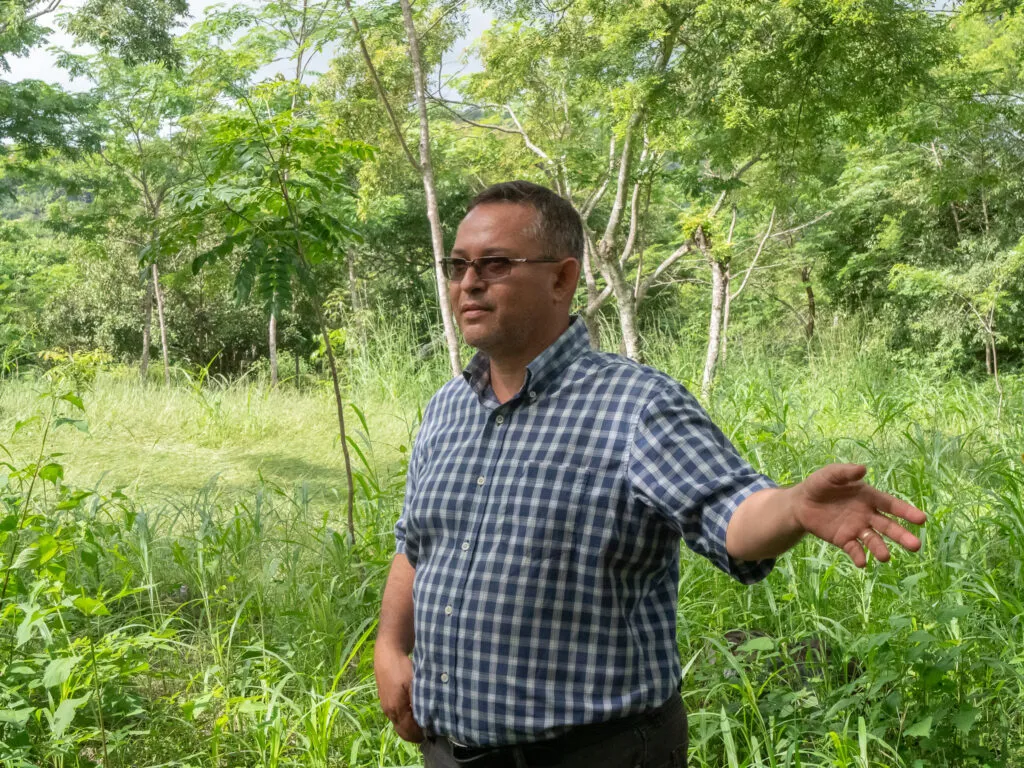
Don Elvin René Pineda Roque.
Day 3 - Doña Gloria and monitoring app
On the third day, we visited a family farm owned by Doña Gloria. Gloria has a total of 97 hectares of land and through the project has planted trees on 9 of these. Doña Gloria also has livestock in the form of cows and donkeys that graze on the land. Doña Gloria and her family joined the project after they started noticing climate change in the area. The stream next to their house was almost completely dried up during the last dry season, they say. Previously, the dry periods lasted 6 months and it rained for as many. Now the dry season is 8-10 months and it only rains for 2-3. Several of the neighbors have started to build small lagoons to save water to survive, something that Doña Gloria's family is also thinking about doing.
They say that planting trees would have been impossible without the support of the project. In the past, they could have planted a tree here and there, but with the project they were able to do it on a larger scale and in a structured way. Doña Gloria's family is very generous and we get to try making our own corn tortillas. Everything is done very traditionally and Gloria uses a stone she inherited from her grandmother to make the dough. The breads are then baked in an open fireplace.
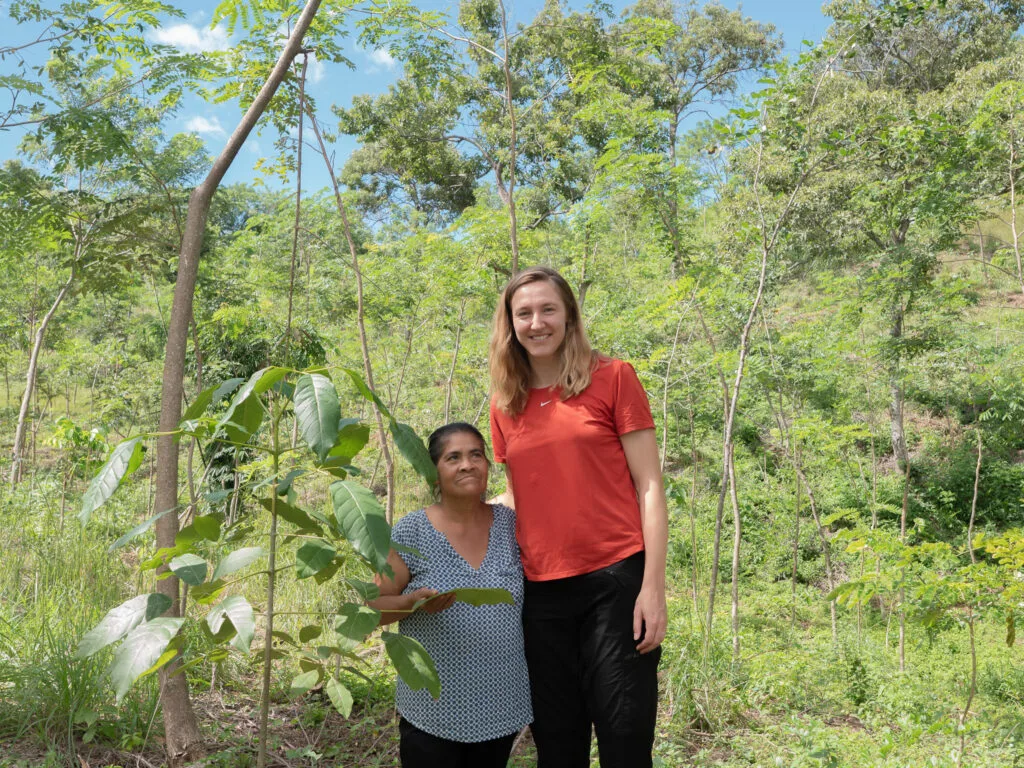
Cecilia and Justina Guitérrez Muños, who is also one of the CommuniTree project participants.
We ended the day with a lesson from Kahlil Baker, CEO of Taking Root, and Randolfo, who is the manager of the 12 field technicians who work full-time with measurement from APRODEIN, on how to monitor and report the growth of the trees. Taking Root itself has developed an app for monitoring the trees to make the work more time-efficient and to minimize errors in the measurements.
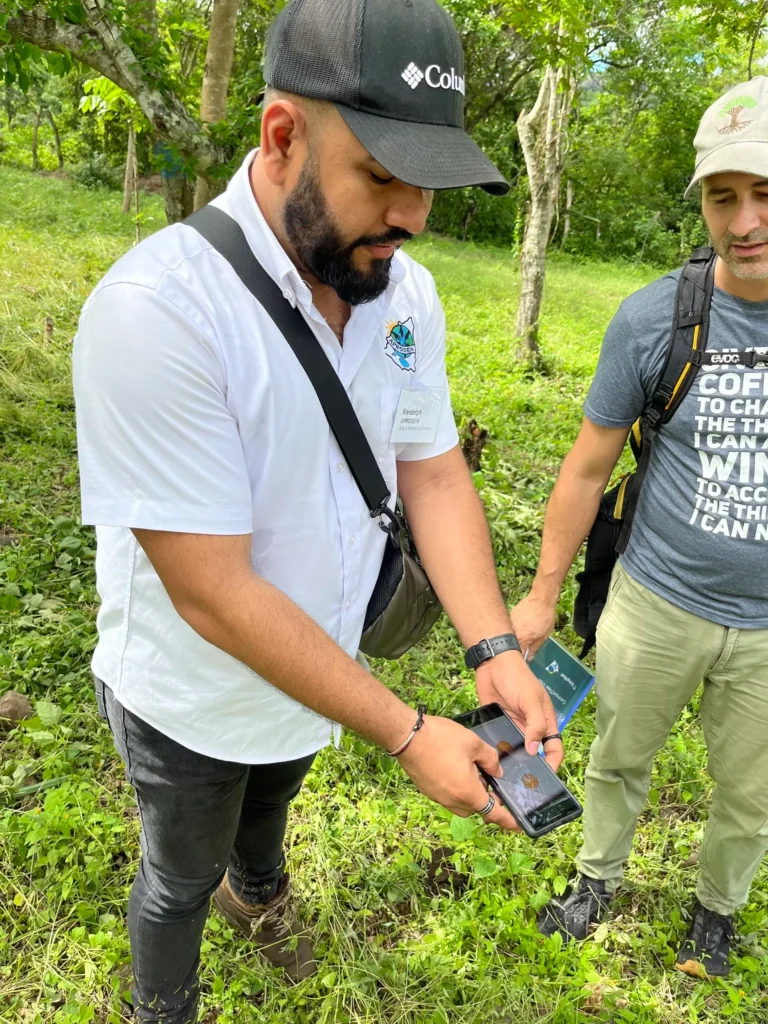
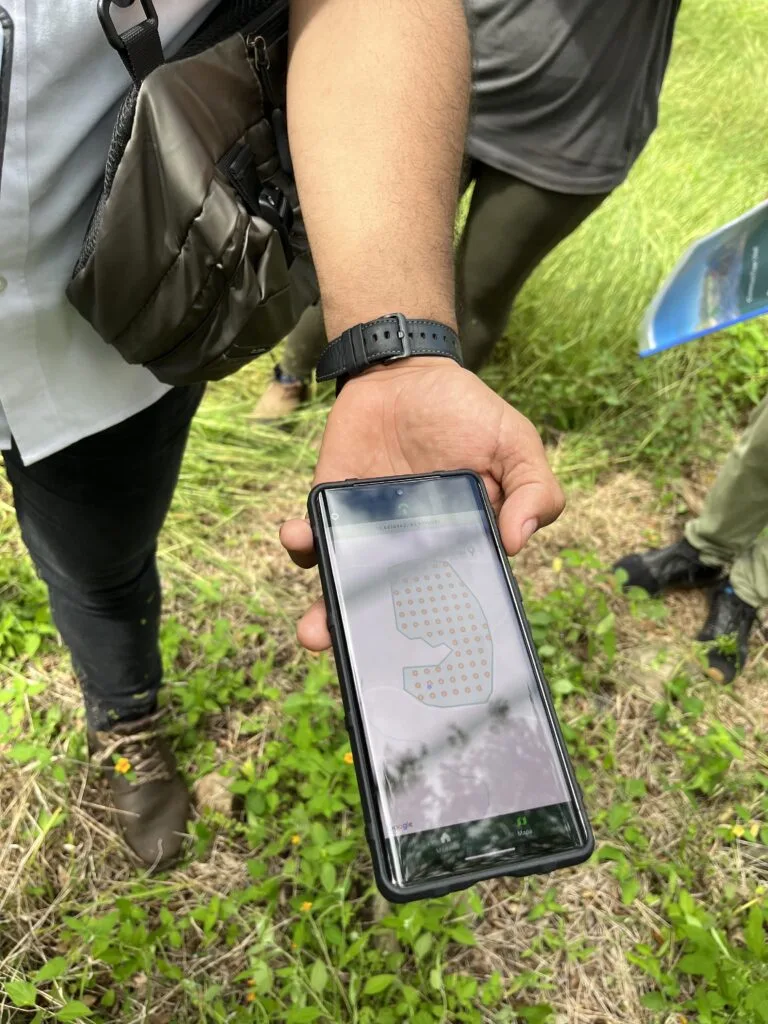
With an app on the phone, the field technician is provided with the coordinates to be measured.
For each land area, 6 smaller test areas are randomly marked out per hectare of land included in the project, this is done from the office and is automated. The field technicians then work in teams of 2 people and have time to measure and document about 30 hectares in one day per team. The field technician who will then measure is given the coordinates to measure in an app on their phone. Using GPS, the technician positions themselves at the coordinates and pulls out a 7-meter rope that they attach to the GPS point. A photo is then taken and recorded in the app, which also serves as a backup if any measurements later turn out to be wrong. All trees within a circle with a radius of 7 meters from the center point are measured and recorded in the app. All data is thus stored in the Taking Roots system.
At ZeroMission , we are proud and very happy about our long collaboration with Taking Root, and look forward to following the exciting development of the project also in the future!