The Price of Permanance - what we give for what we gain
February 10, 2025
The market for projects that use technology to remove carbon dioxide from the atmosphere is growing rapidly, but despite this, few projects have actually been realized. Leading actors have sold millions of credits for projects that are still under development, often with promises that the carbon will be stored permanently for thousands of years. But what significance do these types of projects have for other sustainability areas, such as biodiversity or ecosystem services? We request a more holistic approach.
Over recent years, the emerging Carbon Dioxide Removals (CDR) market has grown, and millions of credits have already been sold, despite very little CDR yet happening. The leaders in this field have sold 3.3 and 4 million credits respectively to be generated from their bio-energy carbon capture and storage (BECCS) facilities that are currently in development. The CDR industries main selling point is the promise of permanence, meaning that they are sure the carbon represented by your carbon credit will be removed from and not be returned to the atmosphere for thousands of years.
There are many metrics to measure the quality of a carbon credit, and permanence is just one of them. We should also consider how funding from the voluntary carbon market (VCM) can be utilized to deal with the various aspects of the polycrisis* we currently face, weather this is framed through planetary boundaries, sustainable development goals or other frameworks. The interlocking issues we face require holistic solutions that tackle multiple problems together or we risk building solutions to climate change that only exacerbate other systemic issues.
The phenomenon of Carbon Tunnel Vision has turned the attention globally towards climate change at the expense of other issues. Many companies have measured their greenhouse gas emissions, but few understand their impact on water, biodiversity and land use.
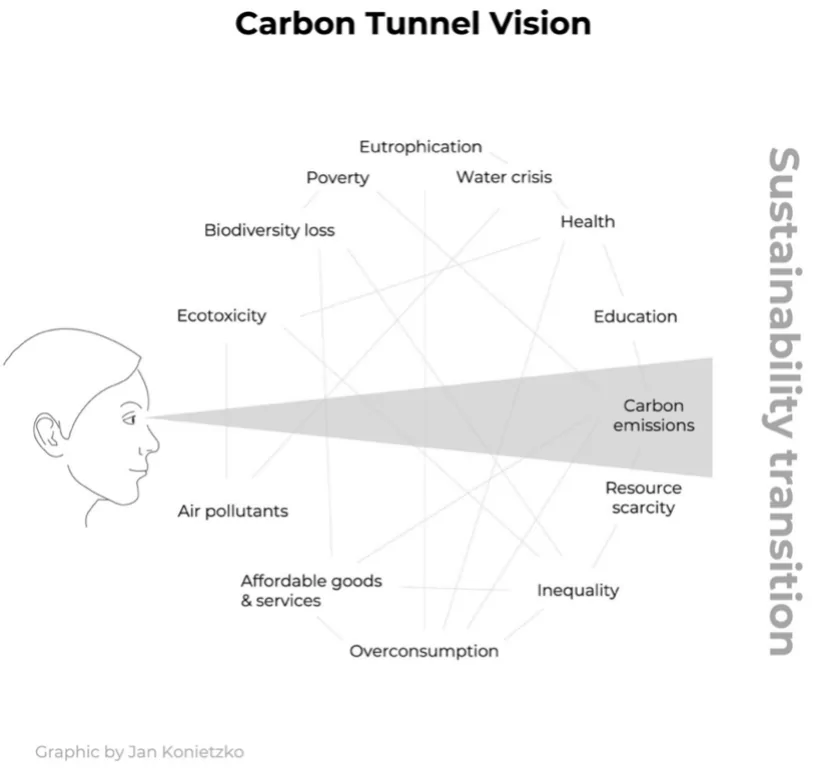
Some nature-based solutions to climate change can have positive impacts on biodiversity, water, poverty reduction and food security. Meanwhile clean cooking technologies improve air quality and reduce health problems associated with indoor smoke. BECCS technology may be able to durably storeCO2, but it does little else where so much more is needed.
This is not to say CDR technologies do not have a role, the current R&D in the field is exciting and it may scale to become a good addition to the toolbox. However, as we have already passed the safe operating space on 7 of 9 planetary boundaries, we must think about how we can positively impact multiple earth and social systems, and take responsibility for our non-climate impacts. Purchasing carbon credits that are embedded in social and environmental justice is just one way to do this.
*Polycrisis refers to a state where multiple crises intertwine, their causes and processes inextricably bound together to create compounded effects.
In recent years, the market for Carbon Dioxide Removals (CDR) technologies has grown, and millions of credits have already been sold despite very little carbon dioxide being removed. The leading players in this field have sold 3.3 and 4 million credits respectively for bioenergy with carbon capture and storage (BECCS) projects, even though these plants are still under development. The main selling point of the CDR industry is the promise of permanence, meaning that they are sure that the carbon stored will be removed from the atmosphere and not returned for thousands of years.
There are many ways to measure the quality of a carbon credit, and permanence is just one of them. We should also consider how funding from the voluntary carbon credit purchase market can be used to address the various aspects of the 'polycrisis' we are facing. Whether this is framed within the planetary boundaries, the Sustainable Development Goals or other frameworks, these complex problems we face require holistic solutions that address multiple aspects simultaneously. If not, we risk creating solutions to climate change that only exacerbate crises elsewhere.
The 'carbon tunnel vision' phenomenon has focused global attention on climate change at the expense of other issues. Many companies have measured their greenhouse gas emissions, but few understand their impact on water, biodiversity and land use.
Some nature-based solutions to climate change can have positive impacts on biodiversity, water issues, poverty reduction and food security. At the same time, projects that distribute efficient stoves, for example, can improve air quality and reduce health problems associated with indoor smoke. BECCS technology can store carbon dioxide sustainably, but does little else where it is needed so much more.
CDR technology has an important role to play. The current research and development in the field is exciting and can be scaled up to become a great addition to the toolbox. But as we have already exceeded the safe action space on 7 out of 9 planetary boundaries, we need to think about how we can positively impact several problems at once. Buying carbon credits from holistically sustainable projects with positive impacts on local communities, biodiversity and ecosystems is one way to do so.
*Polycrisis refers to a condition where multiple crises interact, their causes and processes are inextricably linked and create compound effects.