What can your organization do here and now to reach net zero?
March 31, 2022
We recently held the second seminar in our mini-series on carbon offsetting and its role in enabling companies to meet the 1.5ºC target. We invited representatives from three of our clients and heard a lot of their thoughts and advice on their climate action.
Johanna Brunge Grant, climate strategist at ZeroMission, moderated the conversation where three of our customers shared their experiences. It was a nice mix of advice, thoughts on strategies, choice of projects and messages to those who want to move forward in their climate work with the goal of reaching net zero. For those who could not attend, the entire seminar is recorded with a link below, but here we offer some of what was said a few excerpts.
Sara Bronner, sustainability developer at the Church of Sweden in Örebro parish:
"Our employees are generally very engaged and see the urgency of acting for the climate. Carbon offsetting was a good fit for us because it affects the internal process - we are doing something concrete here and now, not just working on reducing our own emissions. Furthermore, poverty reduction and fairness are important to us. The Fairtrade projects in which we carbon offset also contribute from these perspectives, which further gives our employees a sense of pride that we are doing something important and good."
"We are trying to show that offsetting is part of the whole. Why would we NOT offset and pay for our emissions? It's a question that is quite difficult to argue against! In our case, we are simultaneously working on reducing our footprint, for example by making energy consumption more efficient, and in doing so we are also reducing costs quite a lot!"
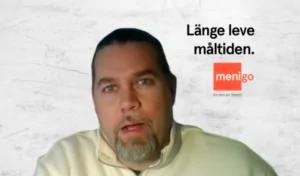
Christian Carlsmose is sustainability manager at Menigo, whose main business is to create good logistics solutions for food and drink in both the food trade and the restaurant industry, schools, etc.
"We've started with the low-hanging fruit, such as reviewing our vehicle fleet, but we realize that it takes time to implement changes throughout the business. We want to meet the expectations we have of ourselves here and now and charge our brand with responsibility, which is why we think the carbon offset projects we are involved in feel good. It was natural for us to look at projects that are linked to our business - for example, preserving forests as a counterpoint to palm oil plantations. This has created a sense of pride within us. What we do is completely transparent, we carbon offset for what we have so far been able to measure (which is not everything) and we have received good guidance from ZeroMission , for example in the choice of projects."

Kaj Török is head of sustainability at Max Burgers, which started measuring, reducing and sequestering its emissions as early as 2008: "Through carbon offsetting, we have taken on a voluntary backpack - an extra tax that we have imposed on ourselves. In this way, we feel that we are part of the solution rather than the problem and it is a journey we want to continue. Our internal work to reduce emissions continues with determination. Our short-term goal is that by 2022 only every second meal will contain red meat. We will know by the end of the year! The long-term goal is for the average meal to have a carbon footprint of 0.5 kg CO2, today that figure is 2 kg."
Kaj Török says the focus should be on carbon offset projects that capture carbon from the atmosphere. "We know that we need to invest much more in these types of projects to meet the 1.5ºC target. Tree planting paves the way for investment in the upcoming technology solutions that are still in their infancy. If we only aim to reduce emissions, it is like easing off the gas on the way to a precipice, we might reduce the speed. If we want to steer away from the cliff, we have to choose a different path, we have to suck in carbon from the atmosphere. If we do that, we can ultimately RESTORE the climate. The cost, about 0.4% of turnover to become climate positive is the (marginal) voluntary backpack we take on on the way there."
Don't miss part three of this seminar series. Info and registration here
Watch the full conversation in part two below!
Learn more about climate strategies to reach net zero emissions.